Cleaning and Restoring a Natural-Stone Facade
A weathered or soiled natural-stone facade does not have to be replaced. Cleaning, repair and preventive treatment restore the appearance and performance of a building.
DecoStone Natural Stone
Natural stone specialist · Amsterdam
Table of contents
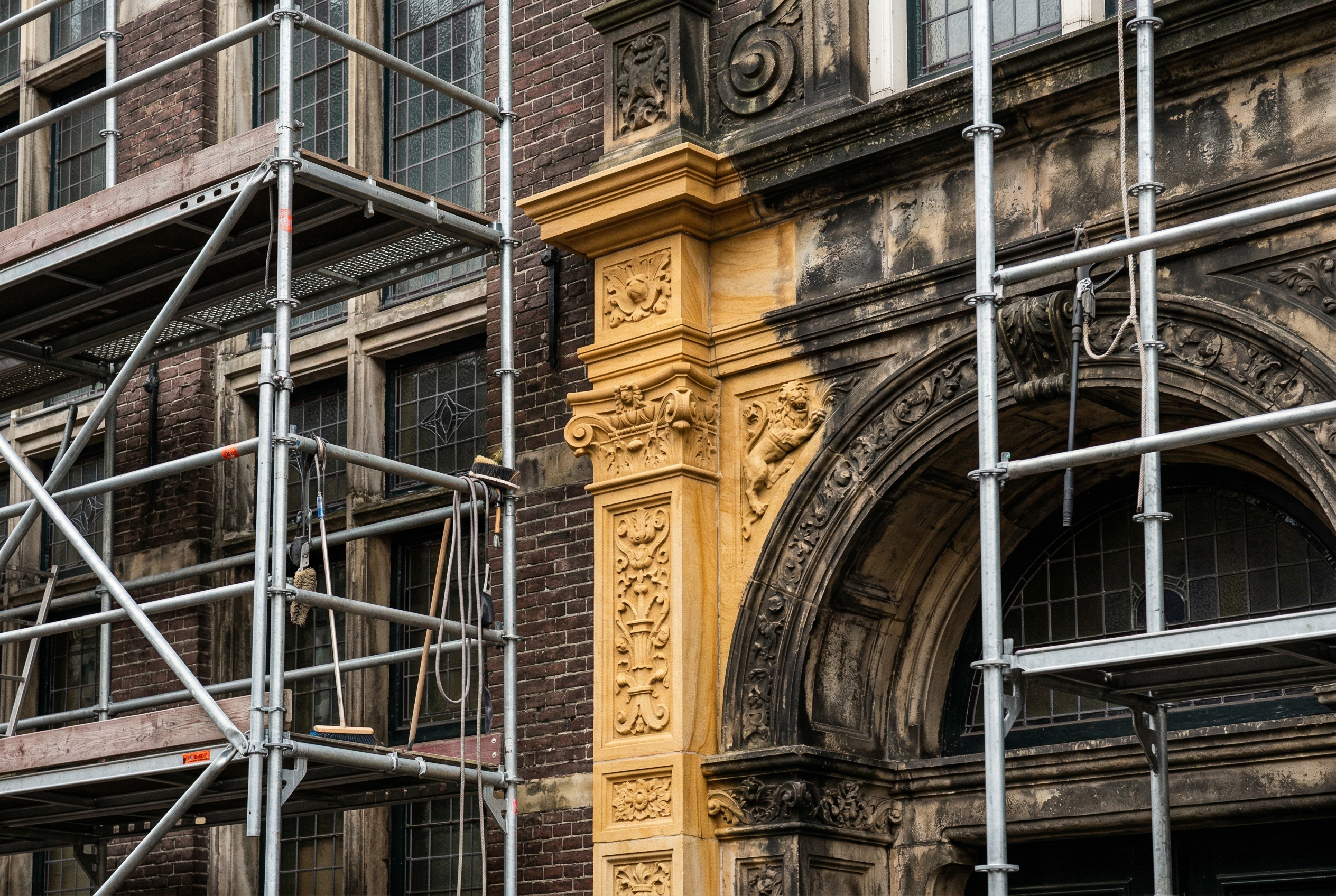
The facade: the face of the building
A neglected or damaged facade stands out. Black deposits, discoloured joints, crumbling details, weathered steps and thresholds — it creates an impression that is hard to ignore.
But a restored facade stands out as well. A canal house whose bluestone frame, thresholds and steps have been cleaned, repaired and treated shows a level of care and craftsmanship that is immediately visible.
Facade restoration is therefore both an aesthetic and a practical investment. But it starts with an honest diagnosis: what exactly is going on, and what is the best approach?
Common problems with stone facades
Biological growth
Algae, mosses and lichens on facade stone are a combination of moisture problems and time. In the Dutch climate, this is the most common complaint. The growth is not only unattractive; it also affects the stone. Organic acids slowly attack the stone matrix.
For an extensive discussion of biological growth, see our article about green deposits on facades. In brief: chemical biocides for light deposits, laser cleaning for stubborn lichens and historic stone.
Black crust formation
In urban environments, a black crust builds up over decades: a combination of soot, dust, sulphur compounds and biological components. This is not a superficial deposit but a layer that settles into the pores of the stone.
Chemical removal is risky, especially on soft stone types. Laser cleaning is the preferred method here: precise, without pressure and without chemicals.
Weathered details and ornaments
Bluestone frames, consoles, capitals and ornaments wear down over generations of rain, dirt and temperature changes. A detail that was once sharp and refined can, after a hundred years, become a blurred version of itself.
Restoration of ornaments is specialist work: stone repairs, precise colour matching and sometimes reconstruction of missing parts with stone paste or a new piece of stone.
Damaged joints
See also our article on replacing joints. On facades there is an extra dimension: joints in an exterior wall are the barrier against water. If they are porous, cracked or missing, rainwater penetrates the wall construction. That leads to moisture damage, salt efflorescence and, in cold winters, frost damage.
Crumbling steps and thresholds
Bluestone steps and thresholds in Amsterdam and other historic cities take a beating: bicycles, scooters, moving vans and the weather. Crumbled nosings and corners can be seen on many canal houses.
Repair is possible with stone paste. Severe damage sometimes requires replacement of a section or the entire step.
Cleaning methods: choose the right one for your situation
Low-pressure cleaning
Gentle water pressure combined with a cleaning agent. Suitable for removing light dirt and superficial deposits from robust stone types. It causes no mechanical damage, but it also has limited effect on stubborn deposits.
High-pressure cleaning
Effective on granite and compact stone types. Never use it on sandstone, marl or weakened limestone. High pressure enlarges the pores of soft stone, causing new deposits to return more quickly.
Chemical cleaning
Biocides or specialist facade cleaners. Effective for algae and mosses. Knowledge of the stone type is essential: the wrong chemistry on the wrong stone can lead to discolouration, etching or surface damage.
Laser cleaning
The most precision-driven method. A laser beam vaporises organic deposits and black crust without pressure, without chemicals and without touching the underlying stone. Ideal for:
- Historic facades with vulnerable ornamentation
- Sandstone and marl
- Lichens that cannot be removed chemically
- Facades where chemical cleaning is too risky
DecoStone has professional laser-cleaning equipment and uses it on listed buildings and complex situations.
Repair after cleaning
A cleaned facade is a good start. But without further treatment, deposits will return, especially if the underlying moisture balance is not right.
Impregnation
A hydrophobic impregnator reduces the stone's moisture absorption. Water beads off the surface. Biological growth has less opportunity to take hold. For facades, this is the most effective preventive measure.
Please note: impregnation is not a coating. The stone continues to breathe. That is essential: a closed coating on a stone facade can cause moisture accumulation and is almost never permitted on listed buildings.
Restoring jointwork
After cleaning and a drying period, damaged joints are repaired or replaced. For historic facades, this means lime mortar with the right composition, matched to the original jointwork.
Stone repairs
Crumbling details, corners and mouldings are repaired with stone paste or by installing a new piece of stone.
What can you expect?
Cleaning and repair produce an impressive result in the vast majority of cases. A facade that still looked reasonably cared for despite its age can look ten years younger after treatment.
With facades that have severe weathering, deep frost damage or a stone type that is heavily worn, the limits of restoration are reached sooner. Some stones exposed to urban air for decades have internal material loss that cannot be reversed.
We always visit the property before making an assessment. Photos are a start, but the true condition of the stone can only be assessed on site.
Owners' associations and heritage authorities
Facade restoration on a building in an owners' association requires coordination with the board and sometimes approval from the members' meeting. For listed buildings, an environmental permit is required for certain works.
We have extensive experience with both and are happy to think along from the permit application through to execution.
Do you have a facade that needs attention? An inspection visit is the best start. Contact us to arrange an appointment.
Need help?
Not sure about the right approach, or would you like to know what is possible? Send us a photo via WhatsApp and we will give you honest advice — without obligation.
Want to be sure which treatment is safe?
Send photos of the surface, room and problem. DecoStone assesses the material, damage pattern and risks before advising on a treatment or quotation.
Related articles
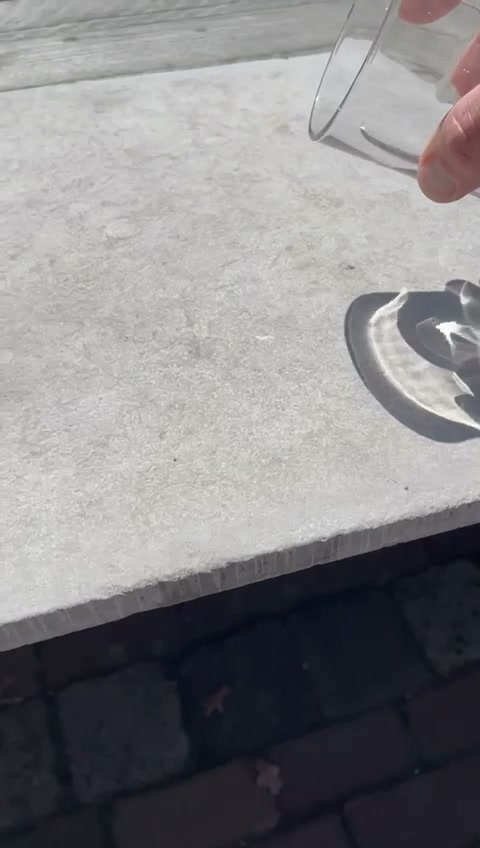
Green Deposits on a Natural-Stone Facade: Causes and Solutions
Green, black or brown deposits on a natural-stone facade are more than an aesthetic problem. Learn the causes and discover the most effective solutions.
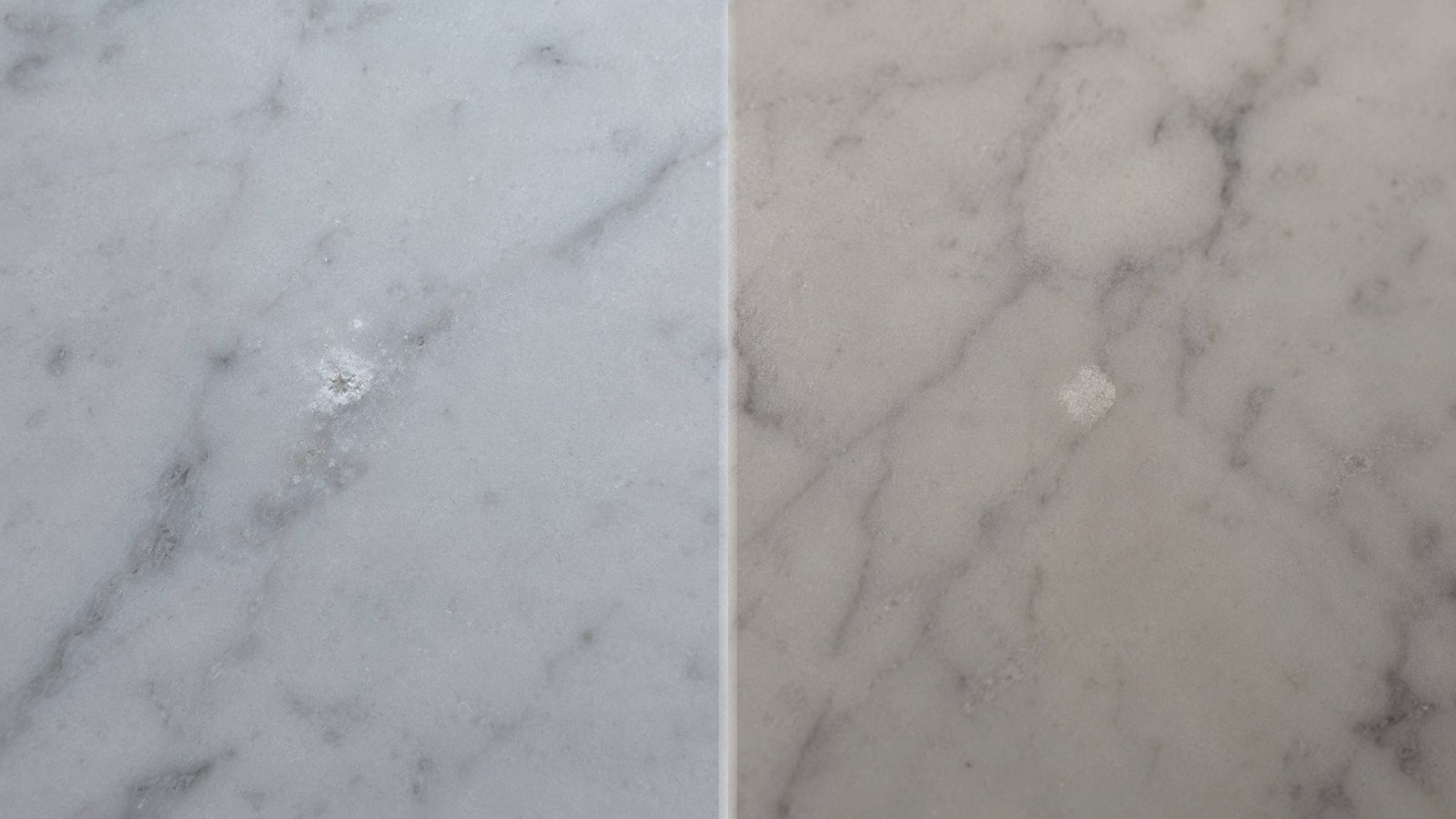
Impact Bruising in Marble: White Marks from Impact or Point Load
A light or white mark in marble after an impact is often not an ordinary stain, but impact bruising: broken crystals caused by impact or point load.
Marks and Polishing Bands in Taj Mahal Quartzite: What Repair Is Realistic?
Taj Mahal quartzite is hard, light-coloured and valuable. Marks or polishing bands after installation are difficult to correct. Read what makes repair realistic and when inspection should come first.