Green Deposits on a Natural-Stone Facade: Causes and Solutions
Green, black or brown deposits on a natural-stone facade are more than an aesthetic problem. Learn the causes and discover the most effective solutions.
DecoStone Natural Stone
Natural stone specialist · Amsterdam
Table of contents
Green deposits: more than an ugly appearance
Owners of buildings with natural-stone facades know the problem: after a few years, the stone begins to discolour. First a subtle grey haze, then green patches, and eventually a dark, affected facade that looks neglected.
But biological growth is not only an aesthetic problem. Algae, mosses and lichens produce organic acids that slowly attack the stone. They hold moisture, accelerate frost damage and can eventually damage the structure of the stone. Timely intervention is always cheaper than restoration afterwards.
What causes biological growth?
Biological growth on facades is a collective term for several organisms:
Algae (green, yellow or brown)
Single-celled organisms that thrive in damp, shaded environments. The green layer you see is chlorophyll. Algae are the most common cause of facade discolouration in the Dutch climate.
Mosses
Multicellular plants that root in cracks and roughness in the stone. Mosses retain moisture and significantly accelerate degradation.
Lichens
The most stubborn and harmful category. Lichens are a symbiosis of algae and fungi. They attach directly to the stone through rhizines, small root-like structures that penetrate the stone matrix. Lichens are difficult to remove without damaging the surface.
Black crust formation
In heavily polluted urban environments, black crust can form: a combination of dust, soot, sulphur and biological components. This is a separate problem that requires specific cleaning.
Which stone types are most vulnerable?
Not all stones are equally sensitive:
| Stone type | Sensitivity | Reason |
|---|---|---|
| Sandstone | High | Very porous, retains moisture |
| Limestone | High | Porous, chemically active |
| Bluestone | Medium | More compact, but vulnerable if impregnation is damaged |
| Granite | Low | Few pores, chemically inert |
| Marble (outdoors) | Medium | Vulnerable to algae in shade and moisture |
Cleaning methods
There are three main methods for cleaning biological growth from facades, each with its own advantages and disadvantages.
1. Chemical cleaning
The most commonly used method for less severe cases. Biocides (algae killers) are applied to the facade, allowing the biological growth to die off before it is rinsed away.
Advantages:
- Relatively inexpensive
- Effective for algae and soft biological growth
- Good biocides provide a preventive after-effect
Disadvantages:
- Chemicals must be chosen carefully for the stone type
- Not suitable for lichens
- Incorrect use can damage or discolour stone
- Rinse water contains biocides, which requires environmental care
We use only professional, certified biocides that are degradable and do not cause permanent damage to the stone.
2. High-pressure cleaning
Water under high pressure effectively removes loose dirt, algae and moss. However, high pressure on soft stone types can damage the surface structure and increase porosity, causing new growth to return faster.
We use high pressure only:
- On granite and very hard stone types
- In combination with a gentle nozzle (low-pressure washing)
- Never on polished marble or sandstone
3. Laser cleaning: the gold standard
Laser cleaning is the most advanced method and the best choice for historic and valuable stone. A laser beam vaporises biological growth and black crust formation without touching the stone matrix.
Advantages:
- No water, no chemicals
- Works precisely on the affected surface
- Safe for all stone types, including sandstone and historic carved stone
- Also removes stubborn lichens and black crust
- No surface damage
Disadvantages:
- Higher cost than chemical cleaning
- More time-consuming for large surfaces
DecoStone has professional laser-cleaning equipment and uses this method for listed buildings, canal houses with historic details and cases where chemicals are too risky.
After cleaning: preventive treatment
Cleaning alone is not enough. Without protection, biological growth returns within 2 to 5 years. Preventive treatment is essential:
Impregnation
A good hydrophobic impregnator reduces the stone's moisture absorption and removes the living conditions algae and mosses need. We recommend BioShield or a comparable professional product.
Biowash treatment
Some professional treatments contain a long-acting biocidal component that inhibits biological growth for 5–10 years.
Structural measures
Sometimes biological growth is a symptom of another problem:
- Leaking gutter above facade stone
- Insufficient ventilation and drip detail
- North-facing or shaded facade with little periodic sun exposure
Solving the moisture source is always better than repeated cleaning.
Costs and planning
The cost of facade remediation depends strongly on:
- Surface area (m²)
- Degree of attack (superficial vs. deeply rooted lichen)
- Stone type and cleaning method
- Accessibility (glazing, scaffolding or aerial platform needed?)
For a canal house in Amsterdam, complete remediation including preventive treatment generally ranges between €800 and €3,500, depending on the scope.
We always offer a no-obligation inspection and tailored quotation.
Owners' associations: maintain on time
For apartment complexes and owners' associations, postponing facade maintenance almost always leads to higher costs. Biological growth that is 10 years old requires more intensive cleaning than growth that is 3 years old.
DecoStone works with various owners' associations in Amsterdam on multi-year maintenance planning. We are happy to help think through a schedule that fits your reserve fund.
Do you have a facade with biological growth and are you unsure of the best approach? Send us a photo via WhatsApp — we will give an initial assessment straight away.
More about laser cleaning natural stone: how does it work and when do you choose it?
Need help?
Not sure about the right approach, or would you like to know what is possible? Send us a photo via WhatsApp and we will give you honest advice — without obligation.
Want to be sure which treatment is safe?
Send photos of the surface, room and problem. DecoStone assesses the material, damage pattern and risks before advising on a treatment or quotation.
Related articles
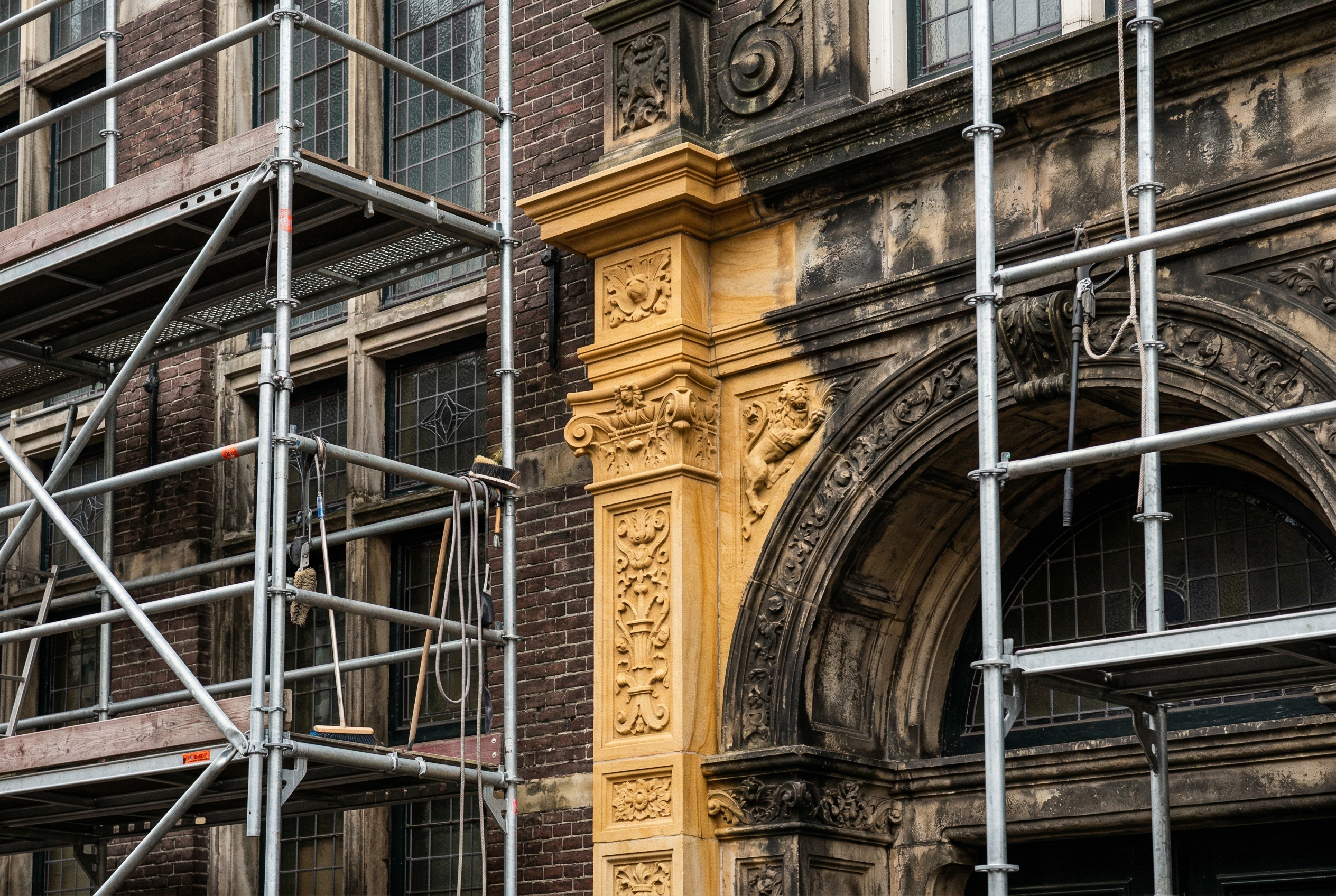
Cleaning and Restoring a Natural-Stone Facade
A weathered or soiled natural-stone facade does not have to be replaced. Cleaning, repair and preventive treatment restore the appearance and performance of a building.
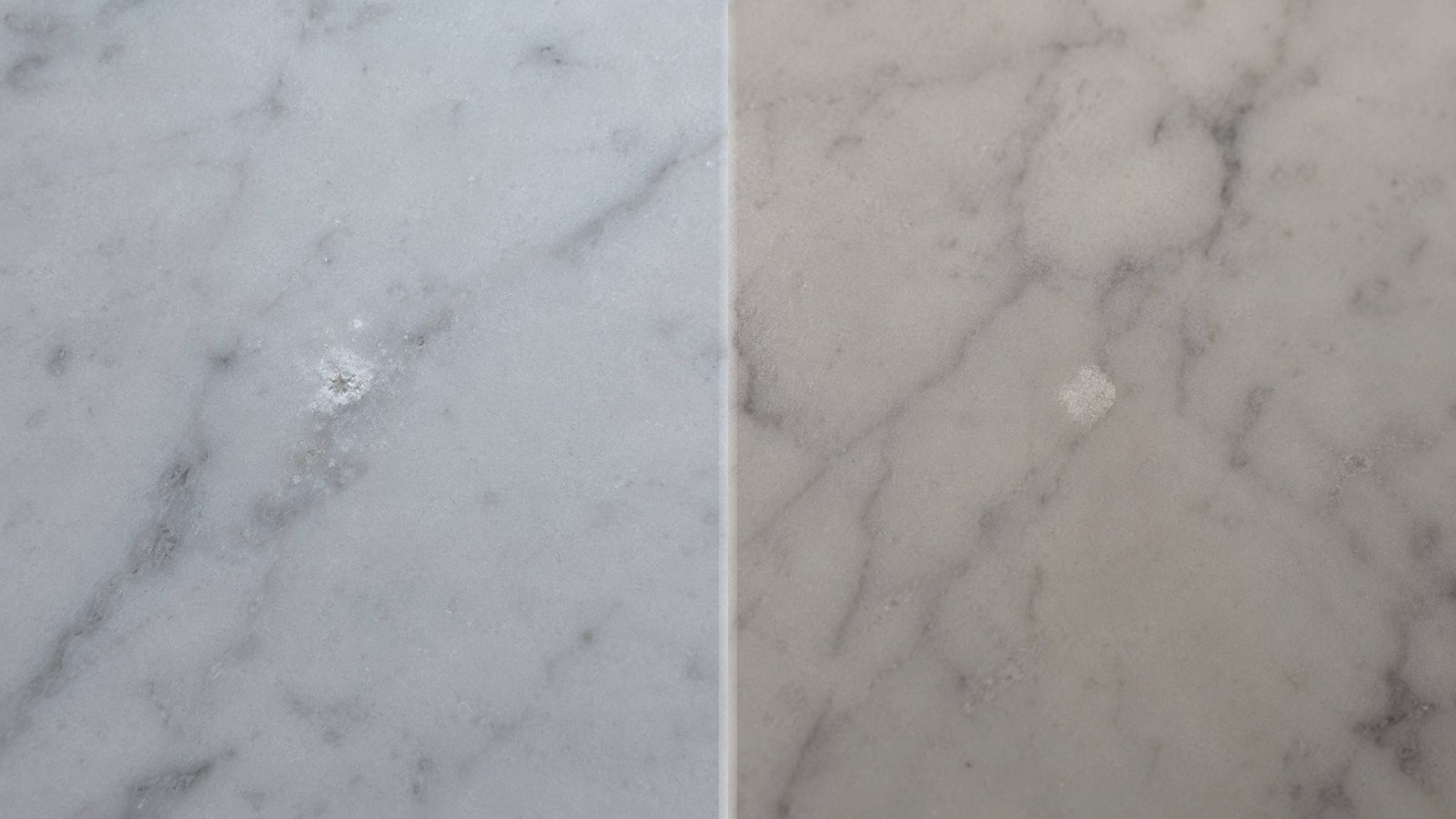
Impact Bruising in Marble: White Marks from Impact or Point Load
A light or white mark in marble after an impact is often not an ordinary stain, but impact bruising: broken crystals caused by impact or point load.
Marks and Polishing Bands in Taj Mahal Quartzite: What Repair Is Realistic?
Taj Mahal quartzite is hard, light-coloured and valuable. Marks or polishing bands after installation are difficult to correct. Read what makes repair realistic and when inspection should come first.