Laser Cleaning Natural Stone: How It Works and When to Choose It
Laser cleaning removes deposits, graffiti and contamination from stone without chemicals or mechanical damage. Learn how the technique works and when it is suitable.
DecoStone Natural Stone
Natural stone specialist · Amsterdam
Table of contents
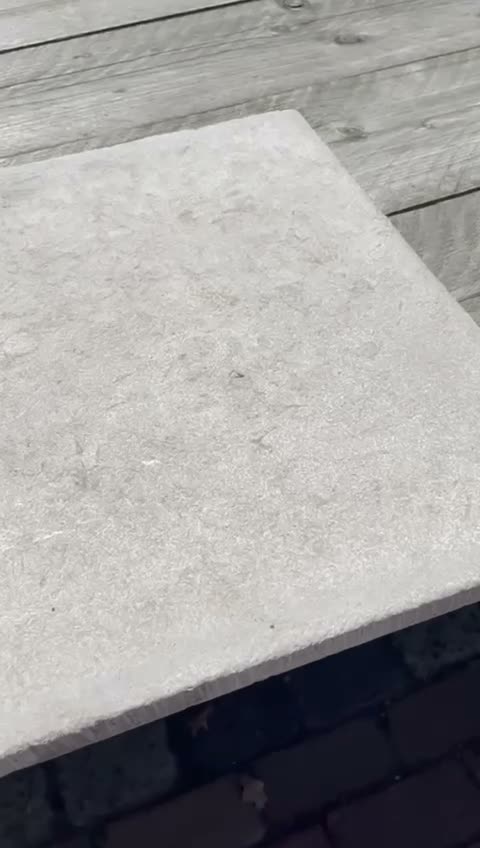
What is laser cleaning?
Laser cleaning — also called laser ablation — is a cleaning technique in which a pulsed laser beam removes contamination from a surface without affecting the material underneath. The laser delivers energy in extremely short pulses, causing the contamination layer (deposits, graffiti, oxide layer or biological growth) to vaporise or detach while the underlying stone remains unaffected.
It is not a new technology. Museums and heritage specialists have used it for decades to clean sensitive art objects. In recent years, however, equipment has become more affordable and more widely applicable, making laser cleaning accessible for private and commercial applications as well.
DecoStone is one of the few companies in the Netherlands that applies laser cleaning professionally to natural stone.
How does the laser work exactly?
A nanosecond-pulsed laser, usually an Nd:YAG type or comparable system, fires extremely short light pulses at the surface. Each pulse lasts only a few dozen nanoseconds but has enormous peak energy.
What happens:
- The laser energy is absorbed by the dark contamination layer (deposits, soot, organic material)
- That layer heats so quickly that it vaporises or detaches through thermal expansion (ablation)
- The lighter underlying stone reflects the laser energy and absorbs much less of it — so it remains undamaged
- Fine particles are removed through built-in extraction
The key: the contrast in absorption between contamination and stone. This makes laser cleaning selective and safe for sensitive materials.
When is laser cleaning better than traditional methods?
Traditional cleaning: chemical or mechanical
Traditional cleaning uses:
- High-pressure cleaning (risk of damaging the surface and joints)
- Chemical agents (risk of stone damage, environmental burden and repeated treatment)
- Mechanical sanding or grinding (always some wear, unsuitable for historic stone)
Advantages of laser cleaning
1. No chemicals The laser works dry. No acids, alkalis or cleaning agents. No rinse water running into the ground or sewer. Ideal for monuments, interiors and locations with strict environmental requirements.
2. No contact, no pressure With high-pressure water or mechanical sanding, force is applied to the stone. On historic or worked stone, that can loosen joints, damage the surface or affect details. The laser does not touch the stone.
3. Selective action Laser cleaning removes only the contamination, not the stone underneath. This makes it highly suitable for detailed sculpture, inscriptions and sensitive material.
4. Long-lasting result Chemical cleaning kills biological growth (algae, mosses) but leaves organic residue behind that can feed new growth. Laser cleaning removes everything. Growth returns significantly more slowly.
5. No repeat treatment in most cases One laser session can replace several chemical treatments. The initial cost is higher, but total costs over several years can be lower.
Applications
Facades and exterior stone
Blackened facades caused by urban pollution, exhaust gases and biological deposits are a classic application. The laser restores the original colour of bluestone, granite, sandstone or limestone facades without damaging the stone.
Typical cases:
- Bluestone facade cladding in urban settings
- Belgian bluestone and limestone architectural details
- Sandstone facade panels
- Granite plinth of a listed building
Historic monuments and gravestones
Gravestones are a typical laser-cleaning application. The material is sensitive, sometimes with inscriptions that can be damaged by high-pressure washing. The laser cleans between letters and in relief.
Churches, cemeteries, municipalities and heritage specialists increasingly choose laser cleaning precisely because of its careful approach.
Graffiti on stone
Paint layers on stone are difficult to remove chemically without damaging the stone. Especially on porous stone types, paint can penetrate deeply. Laser cleaning removes layer by layer without abrasives or aggressive chemicals.
Terraces and paving
A bluestone terrace with years of biological deposits (green, black, brown)? Laser cleaning cleans more effectively than a pressure washer. The result is more complete and the stone stays clean longer because the growth medium is removed.
Interiors and restoration
Floor slabs or walls in historic buildings, courtrooms, churches and museums: laser cleaning cleans sensitive interior material without water, dust development or chemical damage.
What can laser cleaning not do?
In fairness: laser cleaning is not the best choice for everything.
- Structural damage (cracks, flaking, missing material) is not repaired by the laser
- Stains deep inside the stone that are not on the surface are not removed
- Very large surfaces (hundreds of m² of uniform deposits) can sometimes be treated more cost-effectively with pressure washing or chemical cleaning systems, depending on the situation
- Thick coatings or paints with multiple layers may require several sessions
Costs and planning
The cost of laser cleaning is higher than standard high-pressure cleaning, but lower than repeated chemical treatments over several years.
Factors that determine the price:
- Size of the surface (m²)
- Degree of contamination (thin deposits versus years of biological growth)
- Stone type and sensitivity
- Accessibility (is scaffolding needed?)
- Type of contamination (graffiti versus biological growth)
DecoStone always carries out an inspection before issuing a quotation. The price per m² varies depending on the situation.
Comparison: laser cleaning vs high-pressure cleaning vs chemical cleaning
| Method | Stone safety | Environmental burden | Result duration | Cost |
|---|---|---|---|---|
| Laser cleaning | Excellent | None | Long (3–5 yrs+) | High per session |
| High-pressure cleaning | Moderate | Low | 1–2 years | Low |
| Chemical cleaning | Moderate to good | High | 1–3 years | Medium |
Is laser cleaning suitable for your situation?
Laser cleaning is the right choice if:
- The material is historic, sensitive or vulnerable
- Chemicals are undesirable or not permitted
- You want a long-lasting result
- The work involves sculpture, inscriptions or detailed architectural elements
- Graffiti must be removed from porous stone
Also read about removing green deposits from facades: causes and methods
More about cleaning and restoring a natural-stone facade
Need help? Contact DecoStone →
We are happy to carry out a no-obligation inspection and give you honest advice, even if another cleaning method is better suited to your situation.
Need help?
Not sure about the right approach, or would you like to know what is possible? Send us a photo via WhatsApp and we will give you honest advice — without obligation.
Want to be sure which treatment is safe?
Send photos of the surface, room and problem. DecoStone assesses the material, damage pattern and risks before advising on a treatment or quotation.
Related articles
Coloured Natural Stone: Why Deep Colour Is Not Always Natural
Some natural stones are treated with dyes, oil or colour enhancers. That can look attractive, but sanding, polishing or degreasing can reveal colour differences more quickly.
Natural Stone Finishes Explained: Polished, Brushed, Flamed and More
The same stone can look completely different depending on its finish. Polished, sawn, bush-hammered, flamed — each has its own application.
How Is Marble Formed? The Geology Behind the Material
Marble is not a random stone. It is the result of millions of years of pressure, heat and chemical change. Understanding how marble forms helps you understand how it behaves.