Natural Stone Finishes Explained: Polished, Brushed, Flamed and More
The same stone can look completely different depending on its finish. Polished, sawn, bush-hammered, flamed — each has its own application.
DecoStone Natural Stone
Natural stone specialist · Amsterdam
Table of contents
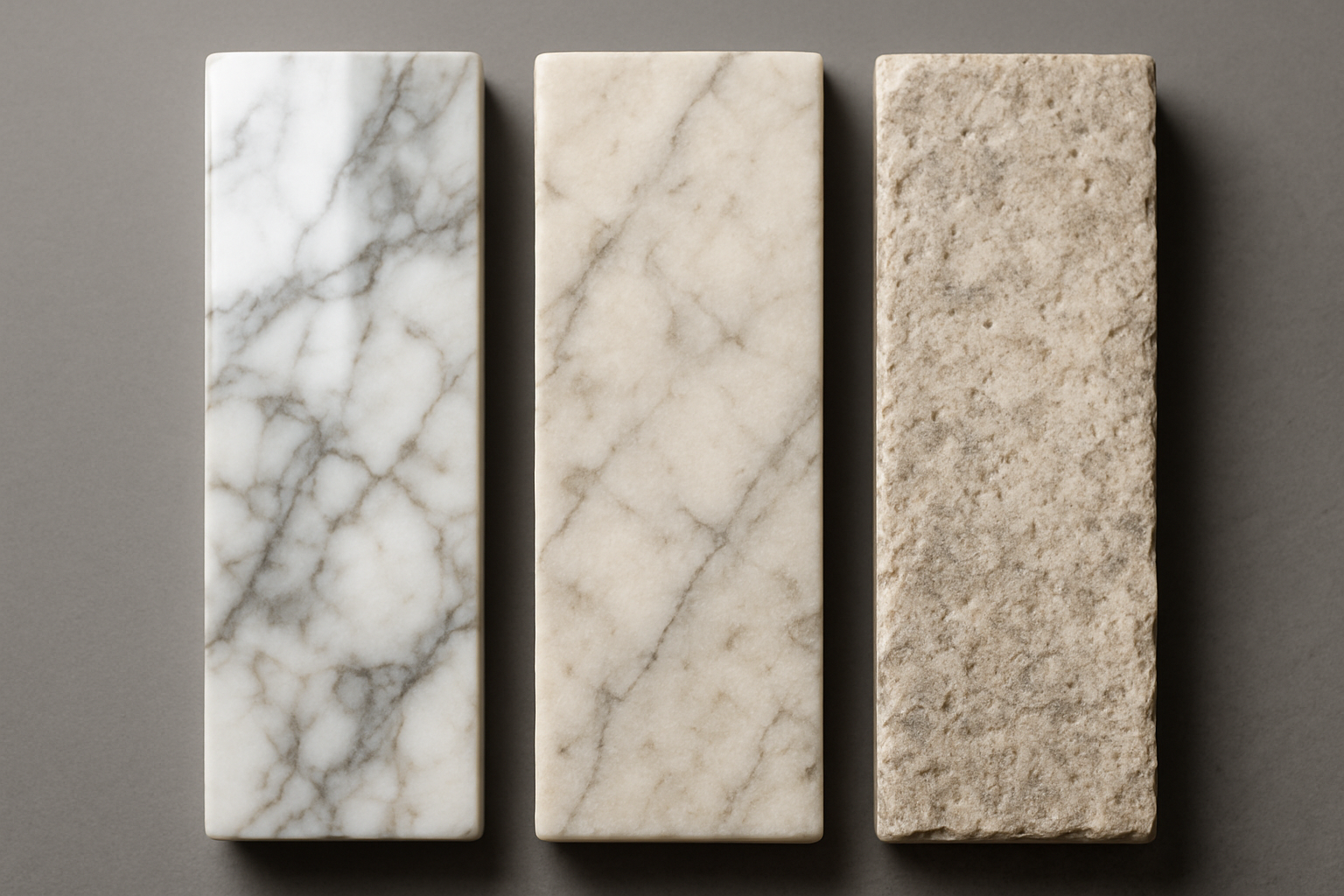
The same stone, four different faces
Take a block of white marble. Saw it into tiles. Those tiles can be polished to a mirror gloss, brushed to a soft matte texture, flamed to create a rough outdoor surface, or simply left as they come off the saw.
The stone is identical. The appearance, use, maintenance and suitability for different applications are fundamentally different. Understanding what each finish does helps prevent the wrong choice.
Polished
How it works: the stone is processed with progressively finer abrasives until the surface is smooth and glossy. The final stage uses a polishing compound that brings the fine crystal structure of the stone to a shine.
Appearance: mirror gloss, maximum colour depth, veining and pattern are most visible
Applications: worktops, indoor floors, wall cladding, window sills
Advantages:
- Maximum development of the stone's colour and pattern
- Relatively few open pores at the surface
- Easy to clean in daily use
Disadvantages:
- Shows scratches and dull marks most quickly
- Wet = slippery — unsuitable outdoors or in wet rooms without an additional anti-slip finish
- Etch damage from acid contact on limestone or marble is immediately visible as a dull mark
- Requires polishing to restore wear
Brushed
How it works: the surface is treated with a wire brush or diamond brush, lightly wearing away the softer minerals and leaving the harder minerals slightly raised. This creates a lightly structured, silky matte surface.
Appearance: warm, matte, tactile — softer than flamed, less sharp than bush-hammered
Applications: indoor and outdoor floors, bathroom floors, stair treads, terraces
Advantages:
- Good grip, even when wet
- Less sensitive to visible scratches than polished stone
- Timeless and versatile — works in both modern and classic interiors
Disadvantages:
- Slightly more open structure than polished stone — somewhat more sensitive to staining
- Impregnation is especially important here — read when natural stone should be impregnated
Flamed
How it works: the stone surface is heated at high temperature with a flame, usually acetylene or propane. The surface crystals burst away, creating a rough, irregular surface.
Appearance: coarse, organic, rough — colours become slightly lighter than the polished equivalent
Applications: granite only (other stones can crack), outdoor steps, driveways, pool edges, industrial floors
Advantages:
- Excellent anti-slip performance, even when wet
- Extremely wear-resistant
- Natural appearance that ages well
Disadvantages:
- Only suitable for granite — marble, slate and limestone are not suitable
- Colours are slightly less deep than in the same stone when polished
- More difficult to clean when grease has dried on the surface because of the open structure
Bush-hammered
How it works: the surface is worked with a bush hammer or bush-hammering machine: a tool with pointed metal teeth that strikes regular pits into the stone.
Appearance: regular, point-like texture — not as rough as flamed stone but clearly structured
Applications: floors, steps, outdoor applications, historic restorations where the finish suits older architecture
Advantages:
- Good anti-slip performance
- Historic and authentic character
- Traditionally used on Belgian bluestone for an authentic streetscape
Disadvantages:
- More maintenance during cleaning because dirt can collect in the pits
- Less suitable if you want a smooth, modern appearance
Sawn (rough-sawn)
How it works: the stone is simply sawn, with no further treatment. Saw marks remain visible as parallel lines.
Appearance: rough, industrial, matte — an "untreated" look
Applications: exterior walls, retaining walls, landscape architecture, rustic applications
Advantages:
- Lowest-cost finish
- Natural, honest appearance
- Good grip
Disadvantages:
- Requires more maintenance because the open structure absorbs dirt
- Less suitable for living areas or applications where cleanliness is important
Honed (specifically for Belgian bluestone)
How it works: specifically for Belgian bluestone: after sawing, the stone is treated with a fine honing stone until it has a matte, even tone. This gives the stone a uniform matte grey colour without gloss.
Appearance: even matte grey — the classic look of Belgian bluestone as seen in historic stairwells and floors
Applications: indoor floors, window sills, worktops, stairs — anywhere the classic bluestone look is desired
Advantages:
- Timeless appearance
- Less sensitive to visible scratches than polished stone
- Repairable: it can be honed again relatively easily
Overview
| Finish | Suitable outdoors | Anti-slip | Maintenance | Appearance |
|---|---|---|---|---|
| Polished | No | Low | Moderate | Maximum gloss |
| Brushed | Yes | Good | Moderate | Warm, matte |
| Flamed | Yes (granite) | Excellent | Moderate | Rough, organic |
| Bush-hammered | Yes | Good | More | Historic |
| Sawn | Yes | Good | More | Industrial |
| Honed | No | Good | Low | Classic matte |
The finish largely determines how the stone feels, how wear becomes visible and how much maintenance it requires. Make that choice consciously — not only based on showroom aesthetics, but also on how the space will be used every day.
Read the difference between sanding and polishing: what does each do for your floor?
Need help?
Unsure about the right approach, or want to know what is possible? Send a photo via WhatsApp and we will give you honest advice — without obligation.
Want to be sure which treatment is safe?
Send photos of the surface, room and problem. DecoStone assesses the material, damage pattern and risks before advising on a treatment or quotation.
Related articles
Coloured Natural Stone: Why Deep Colour Is Not Always Natural
Some natural stones are treated with dyes, oil or colour enhancers. That can look attractive, but sanding, polishing or degreasing can reveal colour differences more quickly.
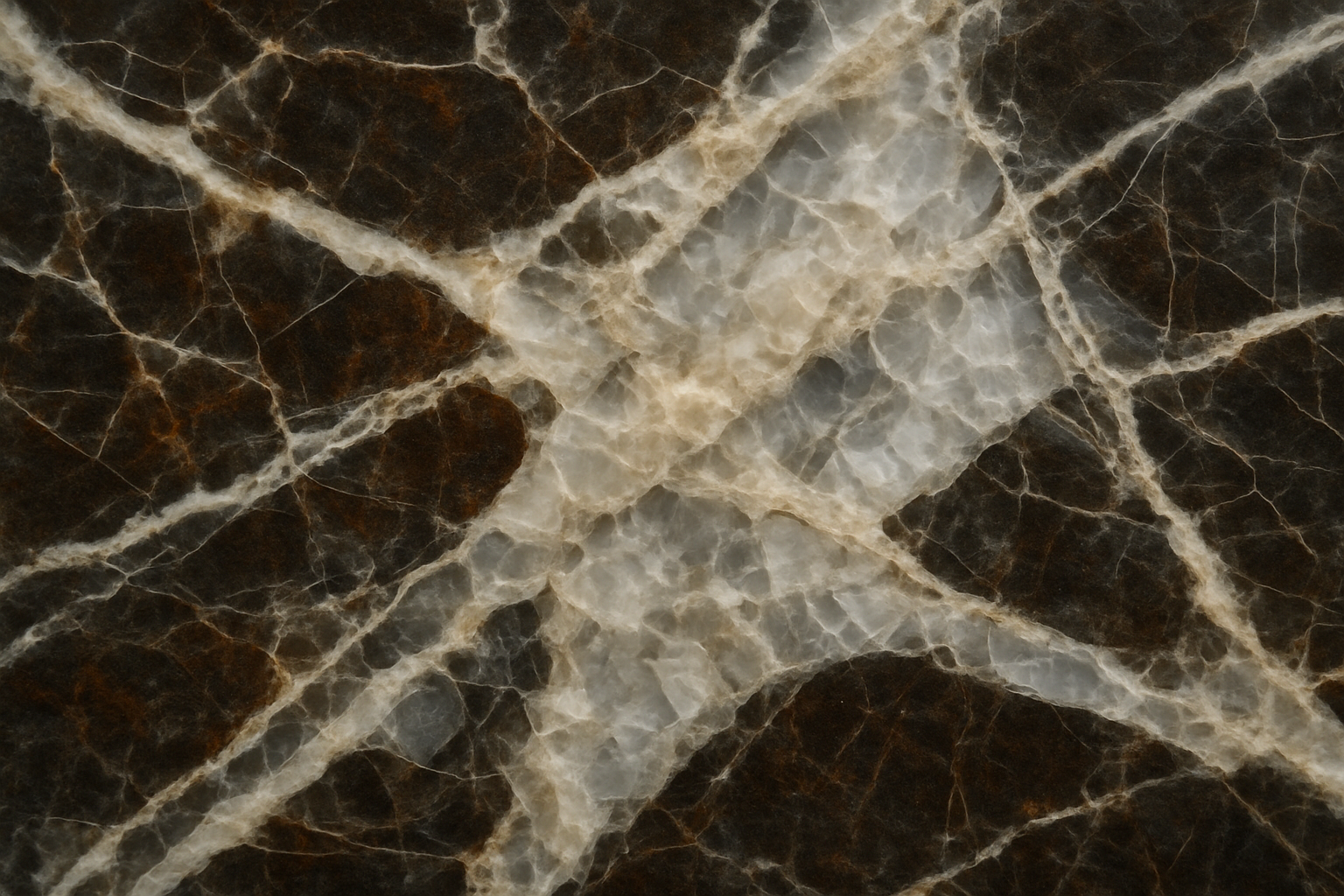
How Is Marble Formed? The Geology Behind the Material
Marble is not a random stone. It is the result of millions of years of pressure, heat and chemical change. Understanding how marble forms helps you understand how it behaves.
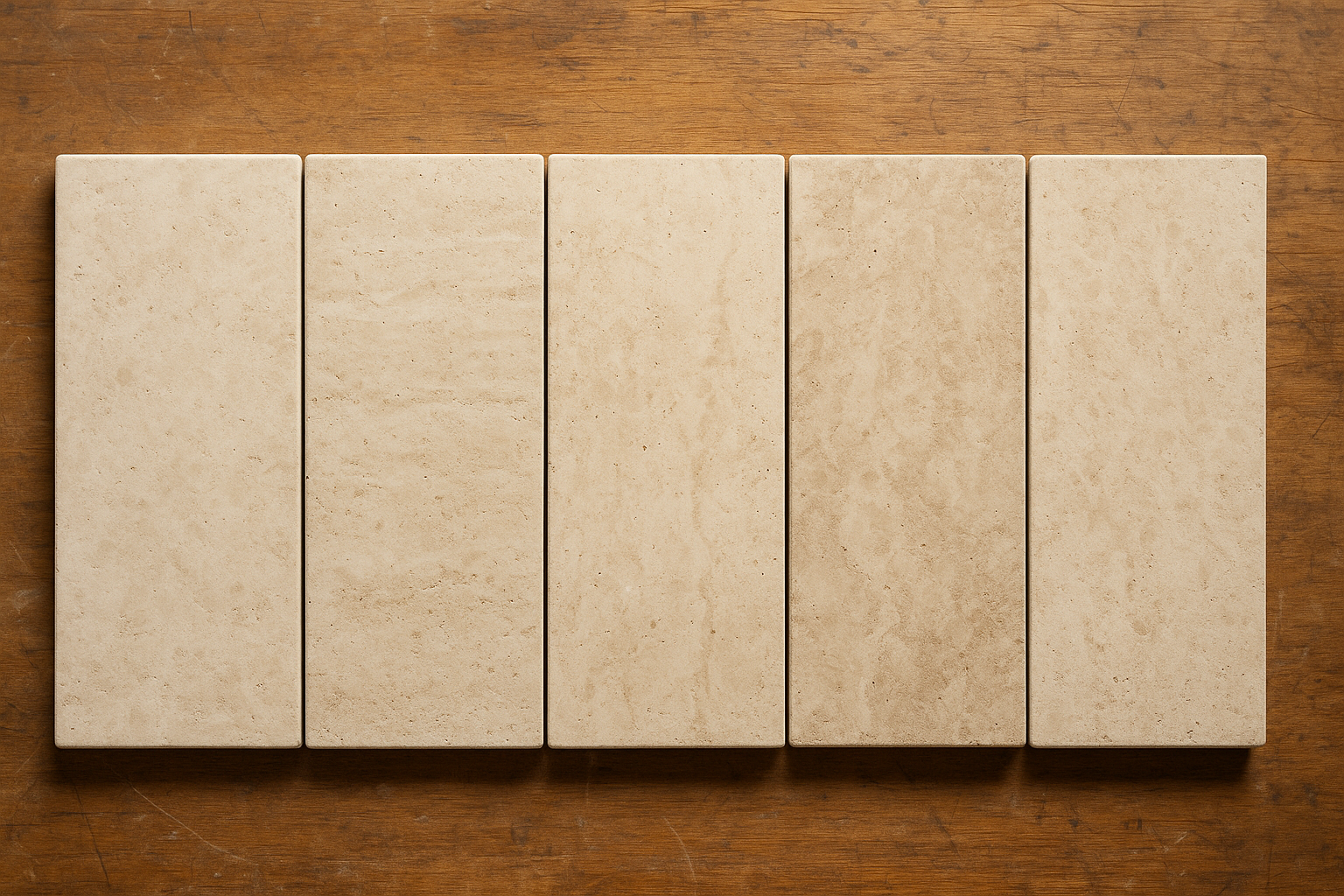
Colour Differences in Natural Stone: Normal Variation or a Defect?
Your new floor has colour differences between the tiles. Some are darker, others have more veining. When is that normal — and when is it a problem?