The Difference Between Grinding and Polishing Natural Stone
Grinding and polishing are often used interchangeably, but they are two very different processes with different goals and different results.
DecoStone Natuursteen
Natural stone specialist · Amsterdam
Table of contents
Two processes, two purposes
When people say “my floor needs grinding”, they often mean: I want it to look good again. But grinding and polishing are not synonyms. They are consecutive steps in a process, with very different results and applications.
Grinding removes. Polishing refines. Confusing the two risks a floor that looks different from what you expected — or worse, a floor that has been ground too thin and permanently damaged.
Grinding: removing material
Grinding is the mechanical removal of a thin layer from the stone surface using abrasive tools. Think of sanding wood, but for stone: diamond discs or grinding stones with a certain coarseness (grit) are moved over the surface and remove the top layer.
When is grinding necessary?
- Levelling height differences between tiles (lippage removal)
- Removing deep scratches or wear marks
- Removing etching in marble (after acid contact)
- Starting again with a worn or damaged surface
- Refreshing bluestone or granite after years of use
How does it work?
The process starts with a coarse grit (low number, high material removal) and then systematically moves to finer and finer grits. Each next step removes the scratches from the previous one. Only once the coarsest scratches have been removed can the finish begin.
What is the result after grinding?
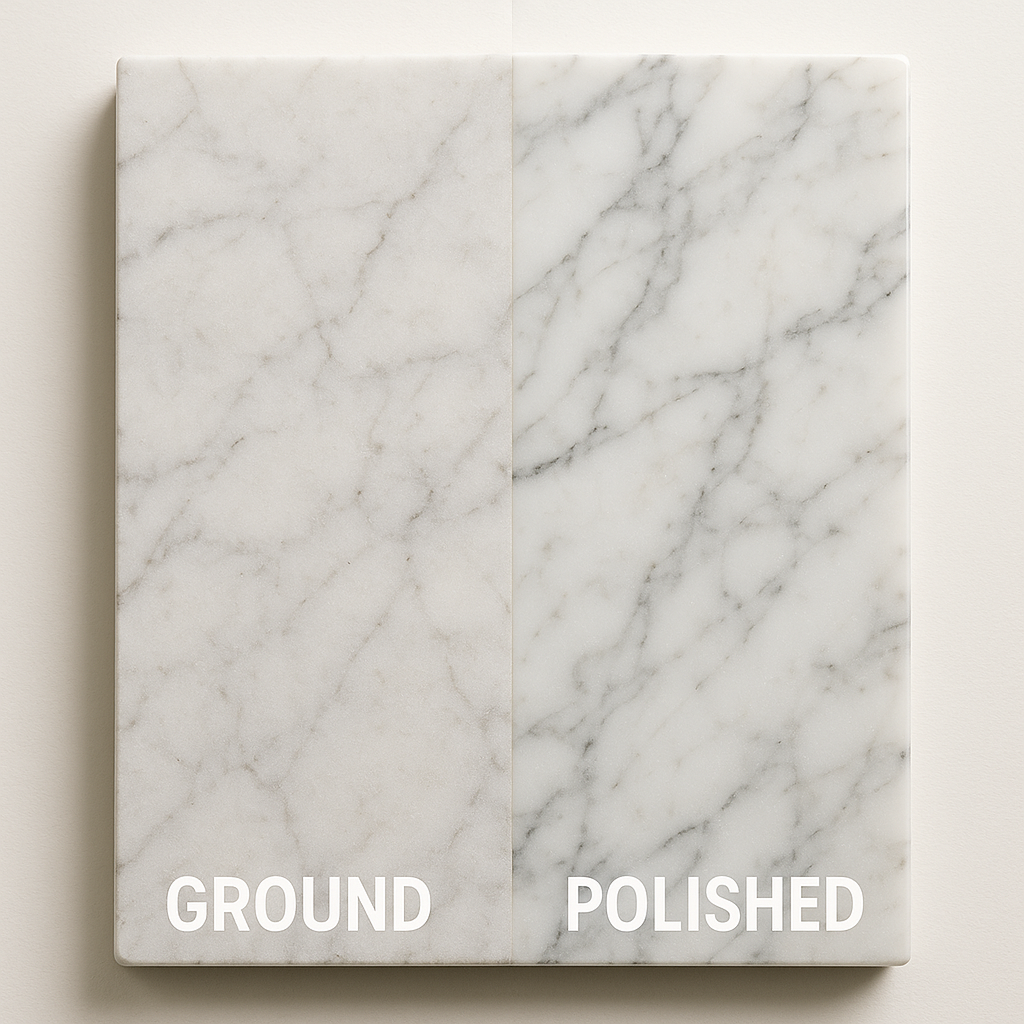
After grinding, the stone has an even, matt surface. There is no gloss. The stone looks clean and even, but not yet “finished”. Grinding alone is not a final treatment.
How much material is removed?
That depends on the starting condition and the depth of the damage. Levelling or removing deep scratches can remove 1 to 3 mm from the surface. With an average marble floor, that matters in the long term: stone can only be ground a limited number of times.
Polishing: refining the surface
Polishing is the continued refinement of the surface until gloss develops. It can directly follow grinding, but it can also be applied on its own to a floor that is still in reasonable condition.
There are several methods:
Mechanical polishing
Fine abrasives (high grit) or special polishing pads refine the surface further. This is the common method for granite, bluestone and composite stone. The result is a deep, mirror-like gloss.
Crystallisation (chemical-mechanical)
Specifically for marble. A chemical product reacts with the calcium carbonate in the stone and forms a new, harder and glossier surface. It is rubbed in at the same time with a steel wool pad.
Crystallisation gives an attractive gloss but has a downside: it changes the chemical composition of the surface and makes the stone more sensitive to acids. A marble floor that is crystallised regularly therefore wears faster in the long term.
Diamond polishing
A modern alternative to crystallisation. The stone is polished with successive fine diamond discs to a high polish. No chemistry, no change to the stone. This is the method we prefer for high-quality marble floors.
Honing: the matt variant
In the trade we also speak of “honing” — polishing stone to a matt or satin finish. This is not the same as a raw grinding result. Honing gives a warm, matt surface that shows stains less than high gloss and is popular in modern interiors.
Sandstone and certain limestones are usually finished honed because they do not polish well to a high gloss.
Which treatment do you need?
| Situation | Recommended |
|---|---|
| Deep scratches or etching | Grinding, then polishing |
| Height differences | Grinding |
| Dull floor without damage | Polishing (sometimes honing) |
| Floor that should never be glossy | Honing or matt finish |
| Refreshing bluestone steps | Grinding and honing |
| Repairing a granite worktop | Grinding + diamond polishing |
What should you expect from the result?
To be honest: even the best polishing treatment cannot always equal a new floor.
More about floor renovation costs step by step Stone with years of wear, multiple damages in the same area or deep etching can be improved significantly, but usually not returned fully to its original condition.
If you have light wear and a somewhat dull floor, the result can be surprisingly good. If the floor has heavy damage, rust marks or deeply ingrained dirt, the goal is the best possible result with realistic expectations.
We always explain beforehand what you can expect. No promises we cannot keep.
Want to know whether your floor needs grinding, polishing or both? Send a photo of the situation and we will give an honest assessment straight away.
Also read: when is polishing needed and what does it cost?
Need help?
Unsure about the right approach, or want to know what is possible? Send us a photo via WhatsApp and we will give you honest advice — without obligation.
Want to be sure which treatment is safe?
Send photos of the surface, room and problem. DecoStone assesses the material, damage pattern and risks before advising on a treatment or quotation.
Related articles
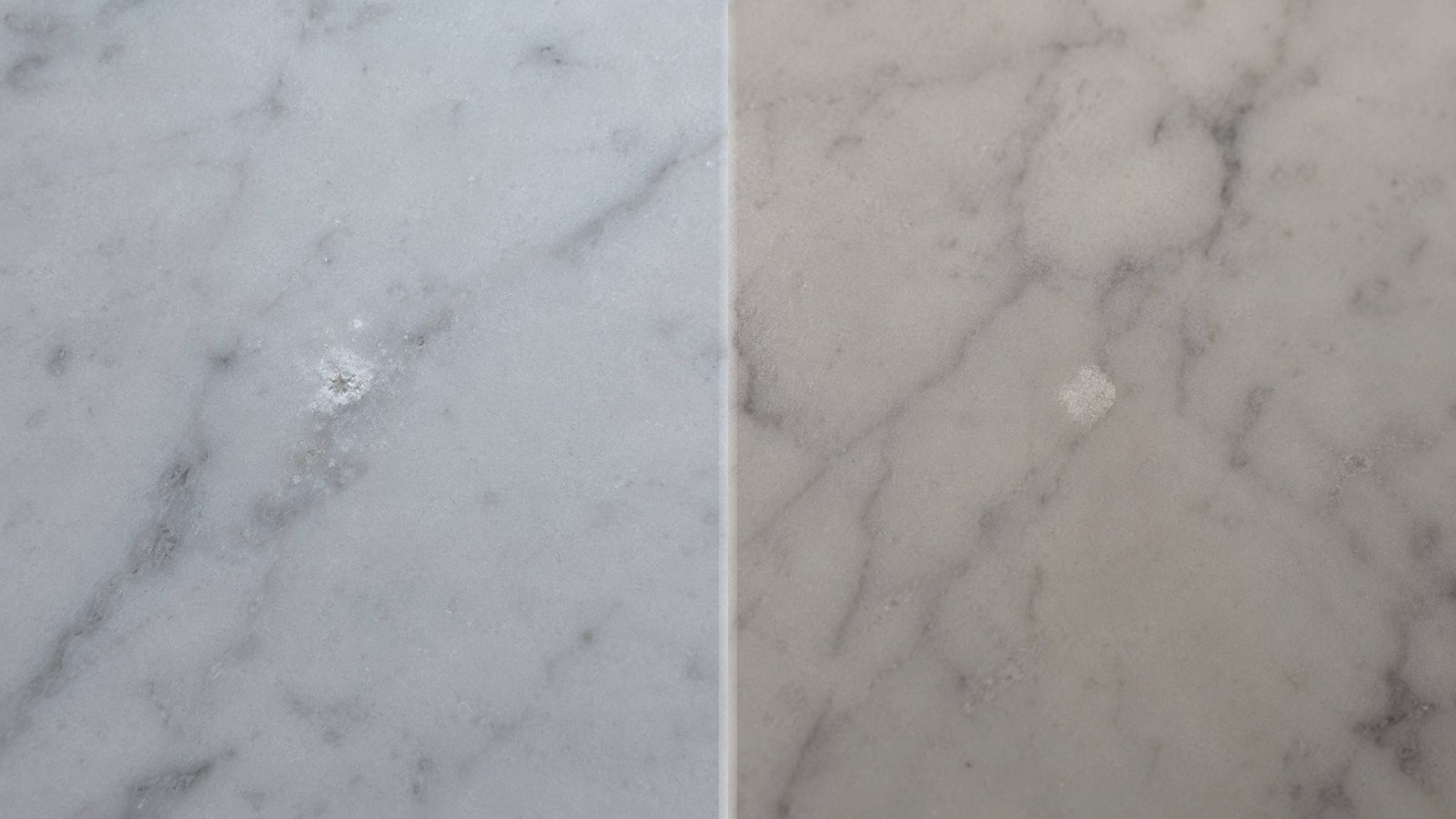
Impact Bruising in Marble: White Marks from Impact or Point Load
A light or white mark in marble after an impact is often not an ordinary stain, but impact bruising: broken crystals caused by impact or point load.

Polishing Natural Stone: When Is It Needed and What Does It Cost?
Polishing natural stone restores gloss and removes scratches and etch damage. Read when polishing makes sense, how the process works and what it costs.
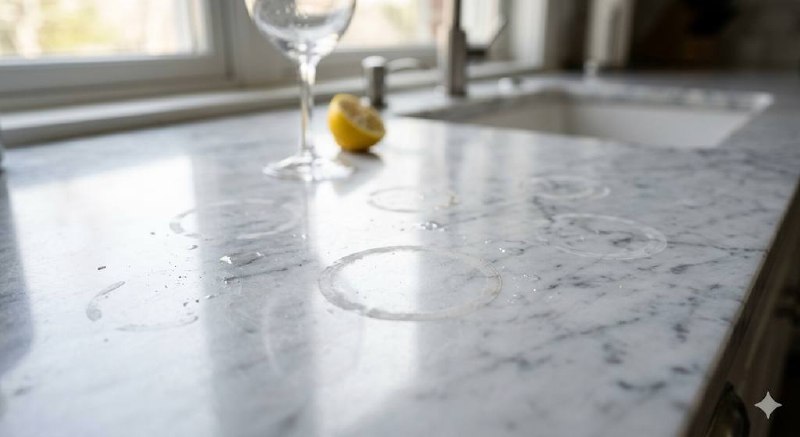
Etching on Marble: What It Is, How It Happens and How to Prevent It
Etching is the most common damage to marble floors and worktops. Learn what it is, what causes it, what you can do yourself and when to call a specialist.