Etching on Marble: What It Is, How It Happens and How to Prevent It
Etching is the most common damage to marble floors and worktops. Learn what it is, what causes it, what you can do yourself and when to call a specialist.
DecoStone Natuursteen
Natural stone specialist · Amsterdam
Table of contents
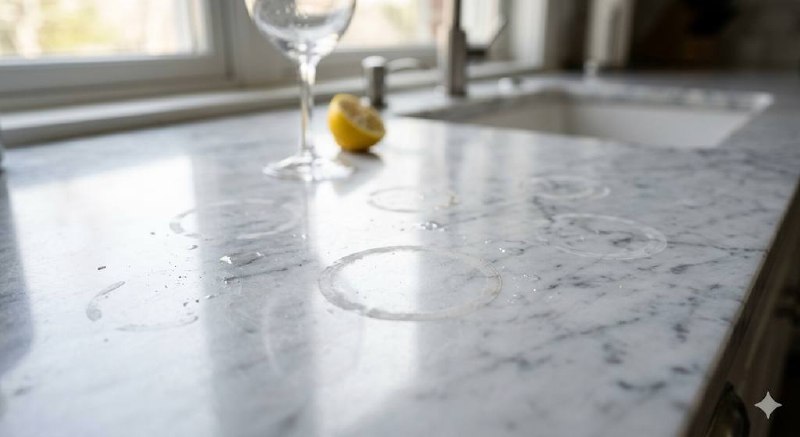
What exactly is etching?
Etching is one of the questions DecoStone receives most often. Owners of marble kitchens and bathrooms suddenly see matt, dull patches on otherwise glossy stone. They think it is a stain, but it is not a stain.
Etching is chemical attack on the stone surface itself. Acid reacts with the calcite in the marble and literally dissolves it. The remaining surface is microscopically rougher, reflects light differently and appears as a matt mark.
The difference from a stain: A stain sits in the pores of the stone and can sometimes be partly removed. Etching is damage to the surface itself. You cannot wipe it away, clean it off or treat it with a cleaner. It requires physical repair.
Which substances cause etching?
Marble consists of more than 90% calcium carbonate: calcite. This mineral reacts when it comes into contact with acids. Acids are everywhere in the home:
In the kitchen:
- Lemon juice and orange juice
- Vinegar, including dressings and many cleaning products
- Red and white wine
- Tomato juice and tomato sauce
- Cola and other soft drinks
- Yoghurt and buttermilk
- Coffee grounds left lying for too long
In the bathroom:
- Bath foam and shampoo with citric acid
- Toothpaste (slightly abrasive and often acidic)
- Some make-up products
- Bathroom cleaning sprays (almost all too acidic for marble)
Cleaning products that cause etching:
- All-purpose cleaner (pH 3–5)
- Bathroom spray
- Floor cleaner with vinegar or lemon
- Drain unblocker (alkaline and aggressive)
- Chlorine-based products
Rule of thumb: If a product name contains lemon, vinegar or “limescale remover”, never use it on natural stone.
How quickly does etching occur?
Faster than most people think. On polished marble:
- Undiluted lemon juice or vinegar: visible etching after 30–60 seconds at room temperature
- Wine or tomato sauce: a few minutes to fifteen minutes
- Bathroom cleaner: depending on the product, sometimes after one treatment
The speed depends on:
- The concentration of the acid
- The temperature (warmer = faster)
- The porosity of the stone (the more open, the more vulnerable)
- The finish (polished marble shows etching most clearly)
Recognising etching
Etching looks like this:
- Matt, dull patch on an otherwise glossy surface
- Sometimes slightly eaten away or rough to the touch
- Clearly visible in daylight or raking light (light from an angle)
- Usually follows the shape of the drop or object that lay on the surface
- Can look whitish or greyish on white marble
Severity of etching:
- Grade 1: barely visible, only in raking light
- Grade 2: clearly matt patch, felt by touch
- Grade 3: clearly eaten away, visible relief difference
- Grade 4: deeply etched, edge can be felt with a fingernail
What can you do yourself?
Grades 1–2: light etching
For very light etching (barely felt, only visible in raking light), you can try:
- Marble wax (e.g. Lithofin Marbec or similar): apply, let it absorb briefly and buff with a soft cloth. This temporarily fills microscopic roughness and restores some shine.
- Fine polishing powder for marble (loose powder, not a polishing disc): rub in with a soft cloth using circular movements. It requires patience and has limited effect.
Be honest about the result: DIY polishing with the wrong products can make the situation worse. If in doubt, it is wiser to wait for a professional.
Grades 3–4: serious etching
Do not do this yourself. You need a polishing machine with diamond discs and knowledge of which grit to use without damaging the surrounding gloss. Incorrect use of a polishing machine makes the damage larger.
How do you prevent etching?
In the kitchen
- Always use chopping boards, including for citrus fruits and tomatoes
- Wipe immediately: anything acidic should be removed at once with a damp cloth. Do not wait.
- Use coasters for glasses: also for water, wine bottles and yoghurt cups
- Use neutral cleaners: only products that are pH-neutral and suitable for stone
- Good extractor hood: prevents condensation of acidic vapours on the worktop
In the bathroom
- Avoid bathroom cleaners: use only stone cleaner or clean water
- Place shampoo and soap holders on a saucer or hang them
- Rinse immediately after shower use
- Ventilate: moisture accelerates reactions
General
- Impregnation slows the absorption of liquids, but does not protect against acid. It does give you more time to wipe spills away before damage occurs.
- Consider a matt finish (brushed or honed marble): etching is much less visible on matt finishes than on polished marble.
When is specialist polishing needed?
Contact DecoStone if:
- You have several etched spots or a large matt area
- The damage can be felt with your finger
- The etched area is on a visible worktop or bathroom floor
- You have already tried DIY polishing and are not satisfied with the result
A professional DecoStone polish restores the surface to its original gloss, followed by treatment with BioShield impregnator to protect the worktop as well as possible.
Frequently asked questions
Can etching return after polishing? Yes, if the cause is not addressed. Polishing restores the surface, but if you then use vinegar or lemon cleaner again, etching will quickly return.
Is etching the same as a scratch? No. A scratch is mechanical damage (wear). Etching is chemical damage. They can look similar but need a different approach.
Can I see etching when I buy stone? Not beforehand; it occurs during use. You can, however, choose marble finishes that make etching less visible: brushed or honed marble is much more forgiving than mirror gloss.
Do you have etching on your marble floor or worktop? Send DecoStone a photo via WhatsApp or contact us for a no-obligation assessment. We will tell you honestly what the best approach is.
Need help? Contact DecoStone →
Need help?
Unsure about the right approach, or want to know what is possible? Send us a photo via WhatsApp and we will give you honest advice — without obligation.
Want to be sure which treatment is safe?
Send photos of the surface, room and problem. DecoStone assesses the material, damage pattern and risks before advising on a treatment or quotation.
Related articles
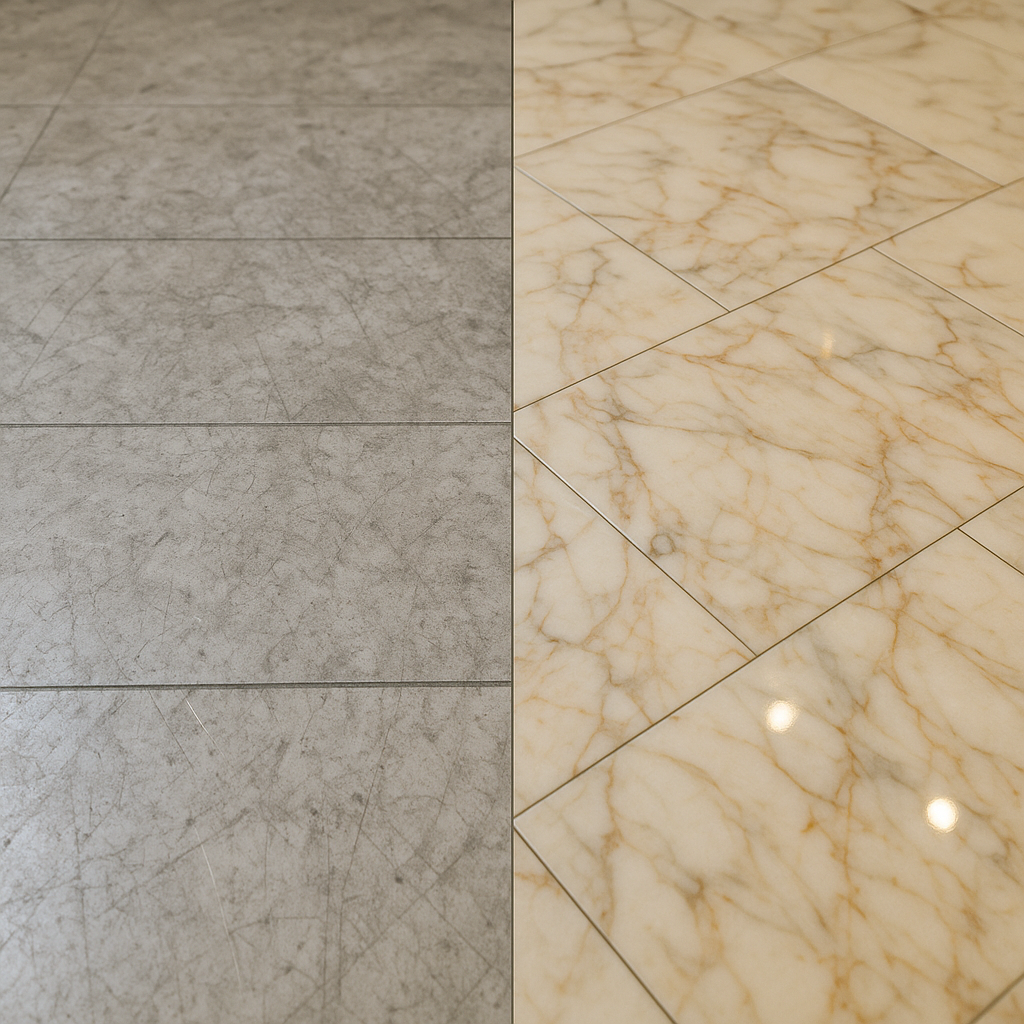
Restoring an Old Marble Floor to Its Former Glory
A marble floor that has been overlooked for years does not have to be lost. What is possible, what is not, and what does the process look like?
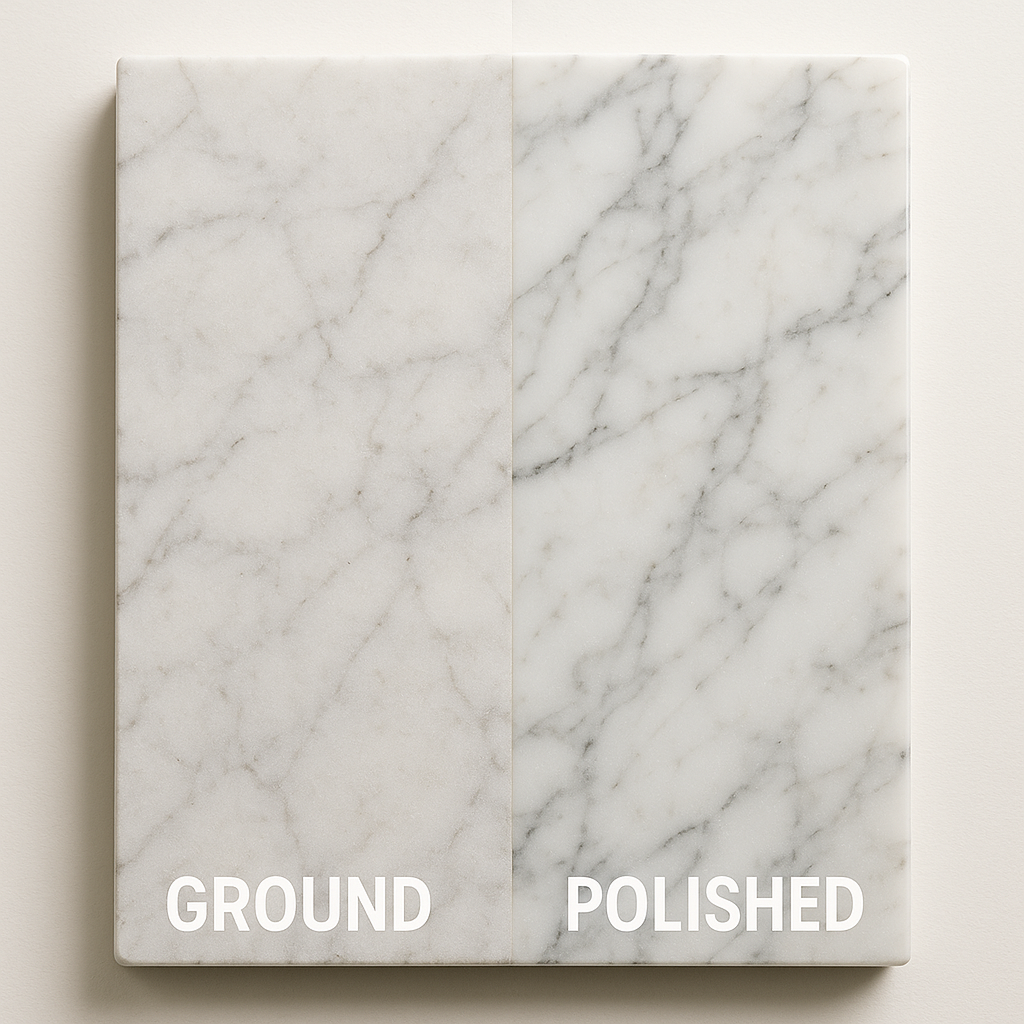
The Difference Between Grinding and Polishing Natural Stone
Grinding and polishing are often used interchangeably, but they are two very different processes with different goals and different results.
Polishing Natural Stone: When Is It Needed and What Does It Cost?
Polishing natural stone restores gloss and removes scratches and etch damage. Read when polishing makes sense, how the process works and what it costs.