How Is Marble Formed? The Geology Behind the Material
Marble is not a random stone. It is the result of millions of years of pressure, heat and chemical change. Understanding how marble forms helps you understand how it behaves.
DecoStone Natural Stone
Natural stone specialist · Amsterdam
Table of contents
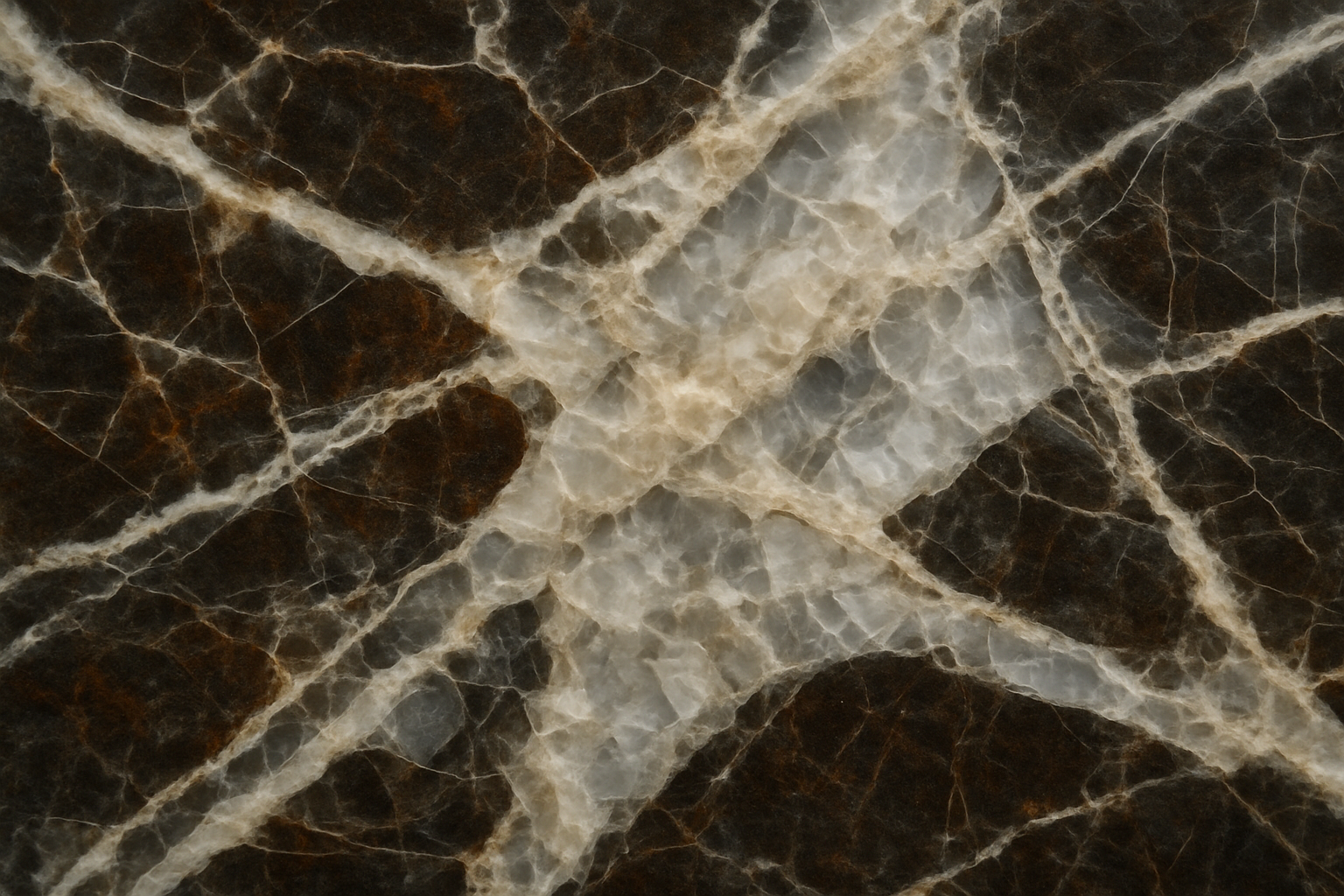
It began as a seabed
Marble begins its life as limestone — and limestone begins as a seabed. In shallow tropical seas hundreds of millions of years ago, the skeletons of shellfish, corals and microscopic organisms accumulated. Layer after layer, century after century. Those lime-rich sediments were compressed by the weight of new layers into limestone.
So far, fairly unexciting. The impressive part comes later.
Metamorphosis: heat and pressure
When tectonic plates collide or a mountain range rises, deep limestone layers are exposed to intense pressure and heat — not enough to melt them, but enough to rewrite their mineral structure. This process is called metamorphism, hence the scientific term: metamorphic rock.
For limestone, metamorphism means:
- The small calcite crystals in the limestone grow into larger, interlocking crystals
- The original structure (fossil remains, sediment layers) largely disappears
- The result is a dense, crystalline rock that can transmit light: marble
The pressure and temperature at which this happens are roughly between 200 and 700 degrees Celsius at depths of several kilometres. The process takes millions of years.
Why does marble have veins?
The characteristic veining in marble is the trace of impurities that were present in the original limestone, or minerals that entered through cracks during metamorphism.
Grey or black veins: graphite or clay-like minerals Green colours: silicate minerals such as tremolite or serpentine Pink, red or orange tones: iron oxides (hematite) Yellow or brown tones: iron hydroxides (limonite) Blue or green tones: copper- or chlorine-bearing minerals
Pure marble — without any impurities — is snow white. Carrara marble is almost pure, with only light grey graphite veining. The more colourful and varied the veining, the more impurities were present. "Impurity" may sound negative; in the case of marble, those very "impurities" are precisely what make the material so attractive.
Well-known marbles and their origins
Carrara (Italy): White with subtle grey veining. Formed from a very pure limestone from the Jurassic or Cretaceous period. The quarries near Carrara have been used since Roman antiquity.
Statuario (Italy): A rarer variant from the same region as Carrara, but even whiter and with less pronounced veining. Michelangelo used it for his best-known works.
Calacatta (Italy): White with gold-beige or grey veining. Quarries are near Carrara, but the geological composition is slightly different.
Nero Marquina (Spain): Almost black marble with white veining. High concentration of graphite and nitrogen compounds.
Emperador (Spain): Dark brown with beige veining — iron oxides and clay-like inclusions give it its warm colour.
Verde Guatemala (Guatemala): Green marble, rich in serpentine minerals.
Marble vs. limestone: what is the difference?
Both marble and limestone consist mainly of calcite (CaCO₃). The difference lies in the crystal structure:
- Limestone: fine-grained, sedimentary, sometimes still contains fossil remains
- Marble: coarse-grained, crystalline; fossil remains have disappeared during metamorphism
In practical terms, this means marble is harder than limestone (Mohs 3–4 vs. 2–3), less porous and develops a deeper gloss when polished.
Bluestone (Belgian bluestone / petit granit) is in fact also a type of limestone — but with high density and small fossils that give the stone its characteristic grey colour.
Why this matters for maintenance
Knowing that marble is calcite-based immediately explains why it is sensitive to acids. Calcite reacts with every acid — citric acid, vinegar, hydrochloric acid, even carbonic acid in sparkling water. That reaction is called etching: the calcite dissolves slightly, and the surface becomes matte and rough.
This is not a construction fault or an inferior material — it is chemistry. Marble was never meant to live next to lemons and vinegar. Anyone who understands that treats the material differently.
A material with a patient history
There is something special about realising that a marble floor or worktop is the result of processes that began hundreds of millions of years ago. The shells, the seabed, the tectonic movement, the heat deep in the earth's crust — and finally the hands of stonemasons who took it from the mountain.
That perspective helps us handle it as it deserves: with care, and with appreciation for what it is.
Need help?
Not sure about the right approach, or would you like to know what is possible? Send us a photo via WhatsApp and we will give you honest advice — without obligation.
Want to be sure which treatment is safe?
Send photos of the surface, room and problem. DecoStone assesses the material, damage pattern and risks before advising on a treatment or quotation.
Related articles
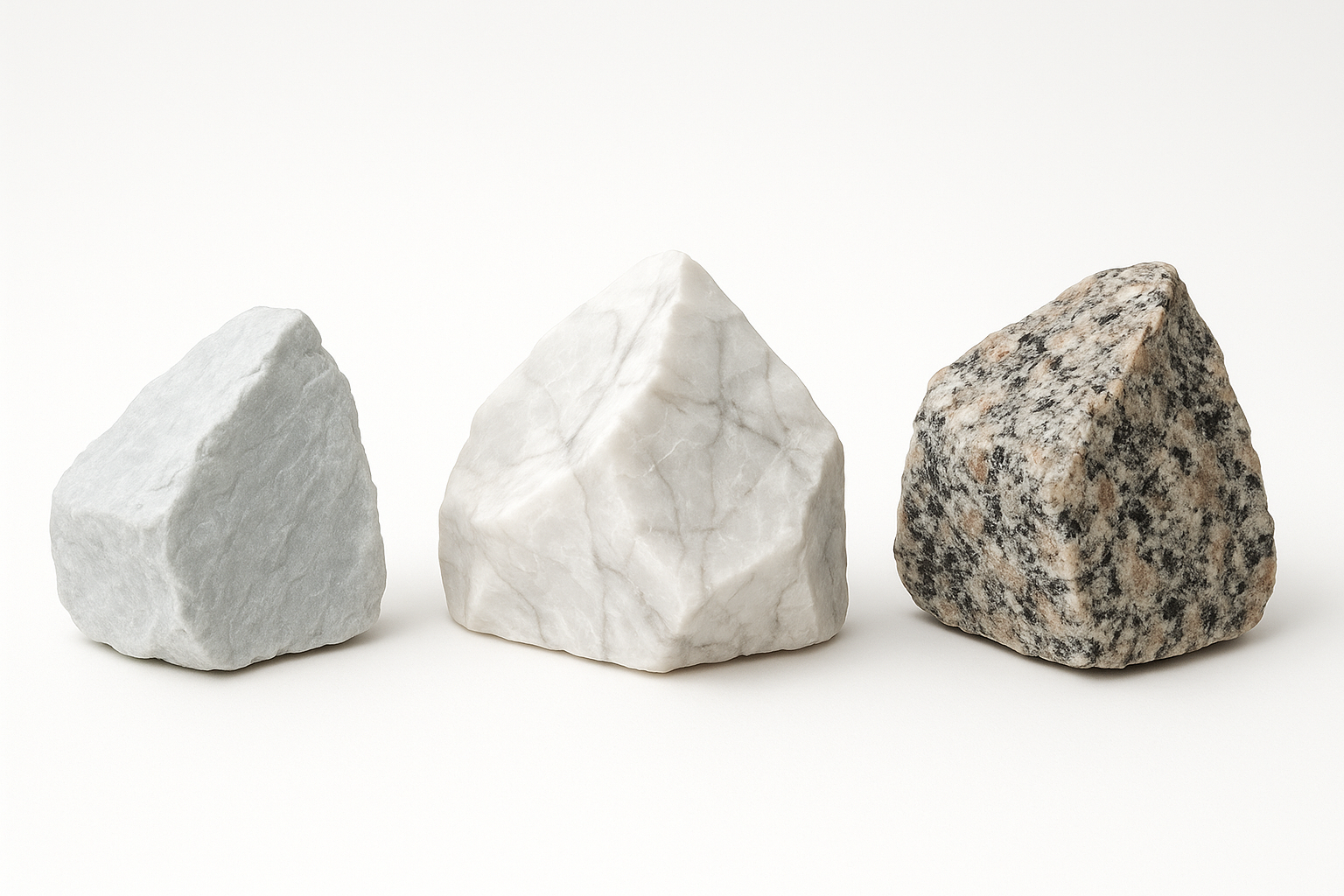
Mohs Hardness of Natural Stone: What Does It Mean in Practice?
The Mohs scale tells you how scratch-resistant a stone is. But what do those numbers really mean? And why is Mohs hardness not the same as durability?
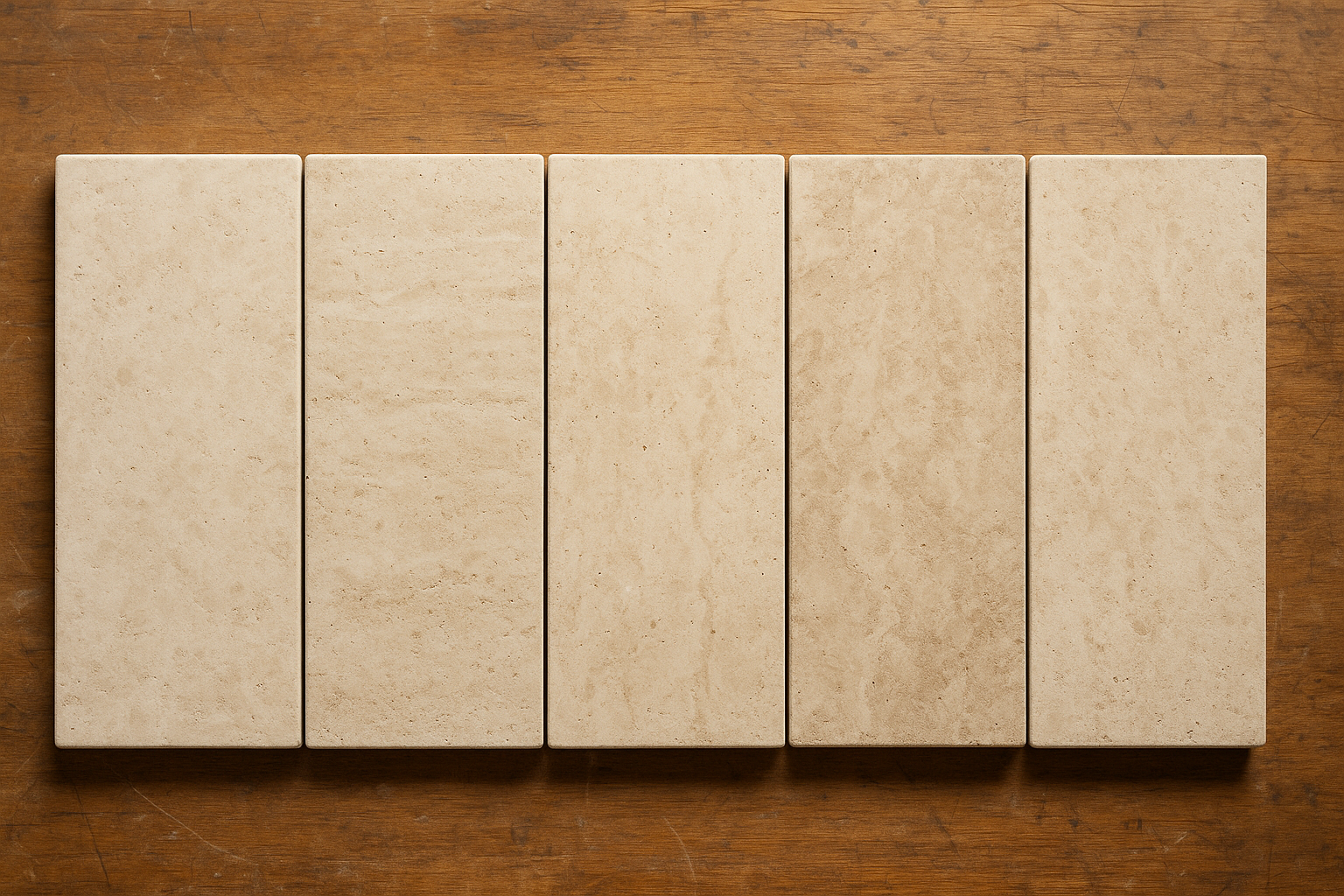
Colour Differences in Natural Stone: Normal Variation or a Defect?
Your new floor has colour differences between the tiles. Some are darker, others have more veining. When is that normal — and when is it a problem?
Coloured Natural Stone: Why Deep Colour Is Not Always Natural
Some natural stones are treated with dyes, oil or colour enhancers. That can look attractive, but sanding, polishing or degreasing can reveal colour differences more quickly.