Replacing Joints in Natural-Stone Floors: When and How
Cracked, crumbly or discoloured joints in a natural-stone floor are more than an aesthetic problem. Read when joint replacement is necessary and how it is done.
DecoStone Natural Stone
Natural stone specialist · Amsterdam
Table of contents
When are joints actually worn out?
Joints are the overlooked part of the floor. Nobody looks at them until something goes wrong. Yet the joints are an essential part of the system: they absorb small movements between tiles, keep out water and dirt, and prevent tiles from rubbing against each other.
You can recognise worn joints by:
- Crumbly or powdery jointwork that comes loose when touched
- Cracks running through the joint, sometimes continuing into the tile
- Dark, stubborn discolouration that remains even after cleaning
- Raised tile edges (a tile clicks or taps when walked on)
- Visible voids or missing pieces of joint mortar
If one or more of these situations are recognisable, it is time to address the joints.
Replacing joints does not remove the cause
This needs to be said before we discuss the method.
Worn jointwork? Replacement is useful and necessary. But if the joints have cracked because of movement in the substrate — settlement, thermal stress or an unstable screed — the new joints will look exactly the same again within a few years.
Joints that repeatedly return with the same crack patterns are not a joint problem. They are a substrate problem.
We always look at the cause first. Is the floor stable? Are the expansion joints intact? Is moisture involved? Only after those questions have been answered does it make sense to replace the joints. Otherwise, you solve something today that returns tomorrow.
Types of joint mortar for natural stone
Not every joint mortar is suitable for natural stone. This misunderstanding regularly leads to damage.
Cement-based joint mortar
The classic choice for most stone types and joint widths. Available in many colours, durable and easy to clean. Suitable for marble, bluestone, granite and most limestone types.
Please note: coarse joint mortars with sand are unsuitable for narrow joints of 1–2 mm. They look restless and are also harder to keep clean.
Epoxy joint mortar
Very hard, chemically resistant and almost impossible to discolour. Ideal for kitchens, industrial environments and pool edges. The disadvantage: it is rigid. On floors with some movement, epoxy jointwork can actually push tiles towards cracking.
Epoxy joint mortar is also more sensitive to application errors. Working too warm, too cold or too slowly can quickly lead to an uneven result.
Special joint mortars for sensitive stone
Light stone types such as white Carrara or Crema Marfil are sensitive to discolouration from cement. For these stones, white joint mortars based on synthetic resin or special lime-containing mixtures are used.
Limestone and travertine in historic interiors sometimes require traditional lime mortar, especially in listed buildings.
The process: how joint replacement is carried out
Step 1: Routing out the old joints
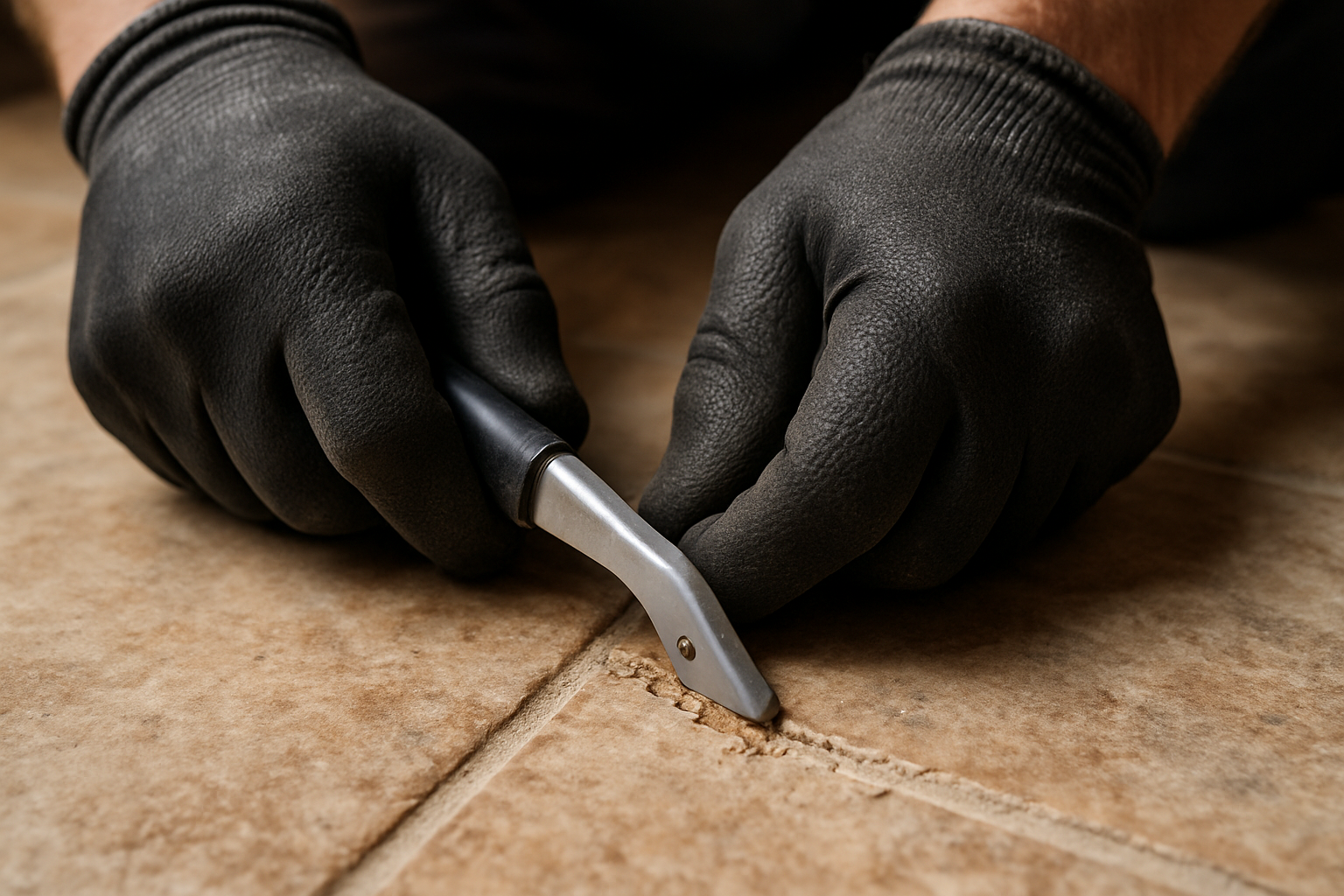
The existing joint mortar is mechanically removed with a joint router or oscillating tool. This is the most labour-intensive part of the work. Superficial scraping is not enough: at least two-thirds of the joint depth must be cleared for proper adhesion.
Step 2: Cleaning and dust removal
After routing, the floor is thoroughly vacuumed. Dust and loose material in the joint prevent the new mortar from bonding.
Step 3: Filling the joints
The new joint mortar is mixed and worked in with a grout sponge or rubber float. For fine joints, a grout gun is sometimes used. The mortar is pressed in so that no voids remain.
Step 4: Cleaning the surface
Joint mortar that dries on the stone is difficult to remove and can stain sensitive stone types. Timely and careful cleaning with a damp sponge is essential.
Step 5: Curing and after-treatment
Cement-based joints need 24–48 hours to harden sufficiently. Epoxy jointwork cures faster but must not be loaded during that period.
After curing, the floor can be impregnated or oiled if desired. An impregnator also protects the joints and reduces absorption of moisture and dirt.
Choosing a colour: matching or contrast?
Joint colour has more influence on the appearance of a floor than most people expect.
Tone-matched joint (the joint colour matches the stone): the floor looks calmer and the stone comes into its own. A popular choice with light marbles and travertine.
Contrasting joint (a dark joint with light stone or the reverse): the structure and layout of the floor are emphasised. This can work in certain modern interiors, but it does not forgive irregularities in tile dimensions.
Dirty-looking joint (a colour that is too light for the setting): dirt becomes visible very quickly. This is a common trap with white joints in busy kitchens and entrances.
Costs and time investment
The cost of replacing joints depends on:
- The type of joint mortar (epoxy is more expensive than cement)
- The joint width and depth
- The accessibility of the room
- The total surface area
As a rule of thumb: expect more labour time than you think. A 30 m² floor with narrow joints is a full day's work for an experienced professional. Rush it, and you will see it.
Not sure whether your joints need replacement, or wondering whether the cause may be deeper? Send a photo — we are happy to take a look.
Need help?
Not sure about the right approach, or would you like to know what is possible? Send us a photo via WhatsApp and we will give you honest advice — without obligation.
Want to be sure which treatment is safe?
Send photos of the surface, room and problem. DecoStone assesses the material, damage pattern and risks before advising on a treatment or quotation.
Related articles
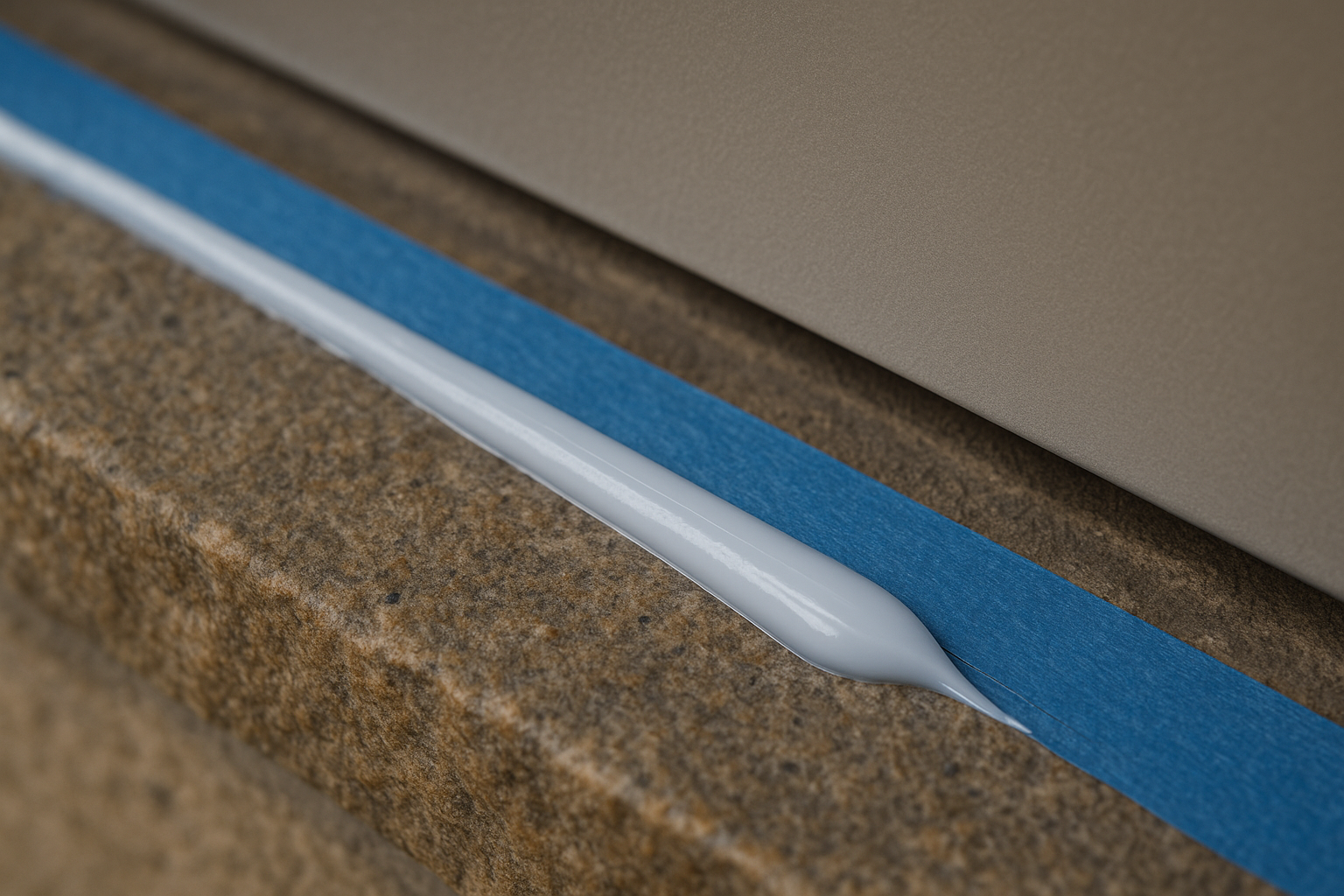
Sealant Joints in Natural Stone: When to Replace Them and What to Use
Sealant joints in natural stone do not last forever. When is replacement needed, which sealant should you use and why does new sealant not always solve the underlying problem?
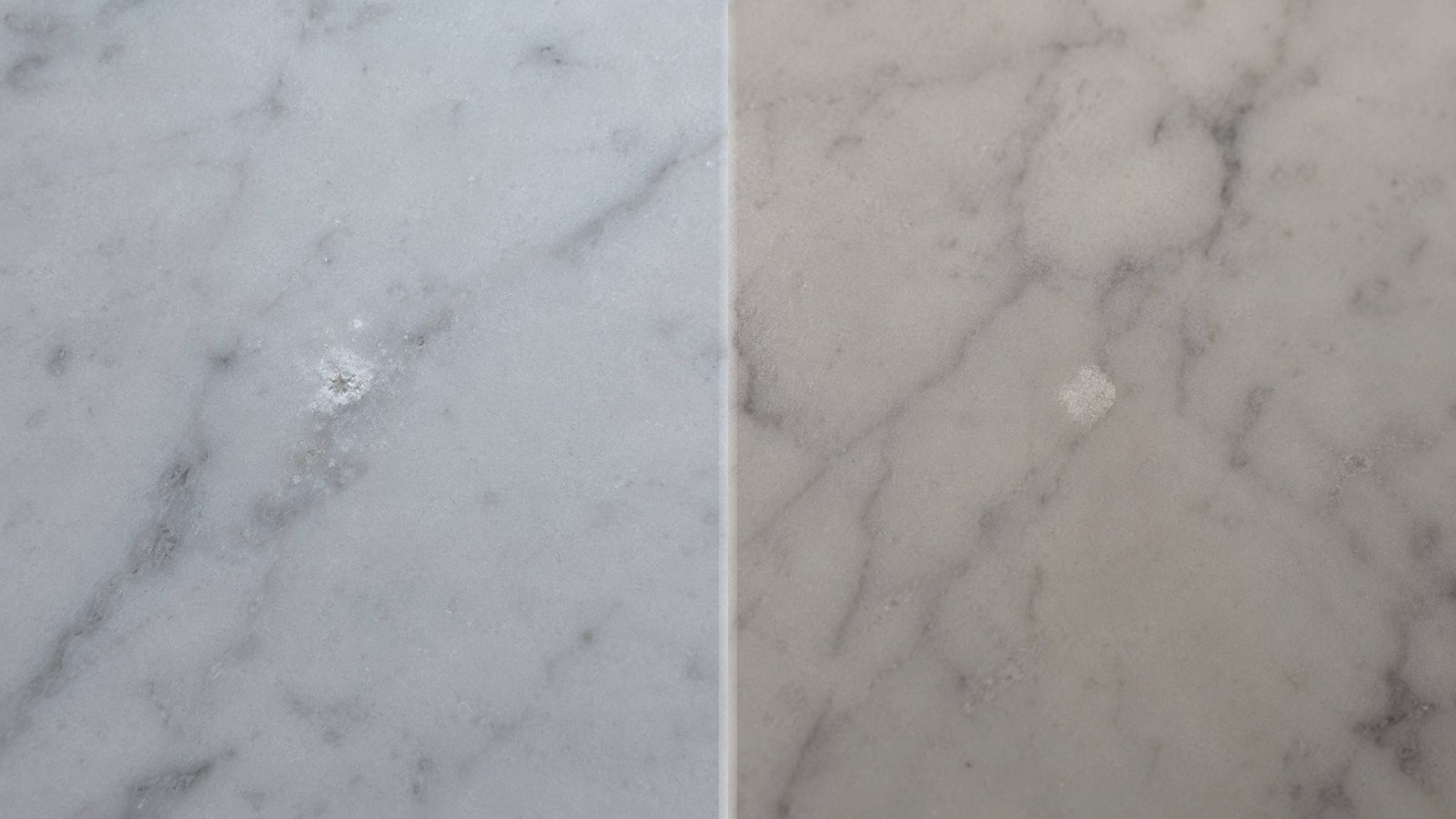
Impact Bruising in Marble: White Marks from Impact or Point Load
A light or white mark in marble after an impact is often not an ordinary stain, but impact bruising: broken crystals caused by impact or point load.
Marks and Polishing Bands in Taj Mahal Quartzite: What Repair Is Realistic?
Taj Mahal quartzite is hard, light-coloured and valuable. Marks or polishing bands after installation are difficult to correct. Read what makes repair realistic and when inspection should come first.