Composite or Natural Stone: An Honest Comparison for the Kitchen
Quartz composite or a granite or marble worktop? Both materials have real advantages and disadvantages. An honest overview without bias.
DecoStone Natural Stone
Natural stone specialist · Amsterdam
Table of contents
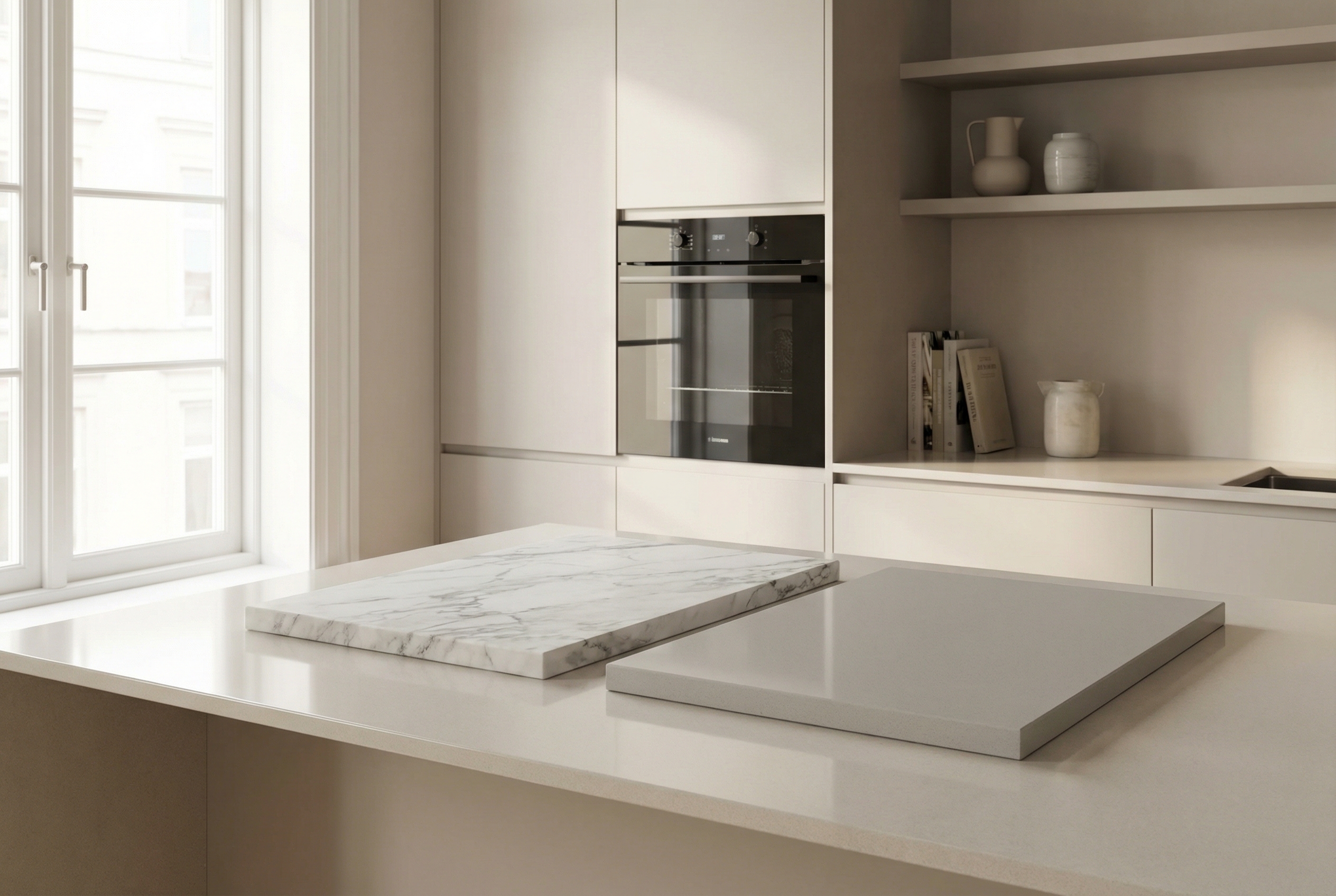
The question every kitchen buyer asks
Every new kitchen reaches the same moment: the worktop. And almost always, the question comes up: composite or natural stone?
Both are popular, both look high-quality, and both last a long time. Yet they are fundamentally different materials with different properties, maintenance needs and price levels.
We sell only natural stone. That means you may read this article with some reservation, but we try to give as honest a comparison as possible. Because the best choice is the one that suits your use, not our turnover.
What is quartz composite?
Quartz composite is a manufactured material. It consists of roughly 90 to 95 percent quartz grains, supplemented with resin, pigments and sometimes glass particles or mirror fragments. It is pressed and cured into standard-size slabs.
Well-known brands include Silestone, Caesarstone, Dekton (technically a different category) and various private-label products from kitchen suppliers.
Quartz composite is therefore not stone in the geological sense. It is a composite material in which quartz is the main component.
What is natural stone?
Natural stone is quarried directly from the earth. Granite, marble, quartzite, slate, bluestone — each has its own mineralogical composition, structure and properties. No two slabs are identical.
For kitchen worktops, the most commonly used are:
- Granite: hard, scratch-resistant, not very acid-sensitive
- Marble: soft, warm, highly acid-sensitive
- Quartzite: hard, durable, less well known but excellent
Comparison on the main points
Appearance and uniqueness
Composite: Each model looks the same. You order a colour and get exactly that. Predictable, consistent, without surprises. For some people, that is an advantage.
Natural stone: Every slab is unique. Movement in the pattern, colour variations, veins — you see these for the first time in their real appearance on delivery. That makes it special, but also less predictable.
If consistency and colour reliability are more important to you than uniqueness, composite scores better here.
Hardness and scratch resistance
Composite: Quartz scores 7 on the Mohs scale. Composite is therefore more scratch-resistant than granite (6 to 7) and much harder than marble (3 to 4). Knives leave no mark.
Granite: Comparable with composite in scratch resistance. In practical terms, there is hardly any difference.
Marble: Significantly softer. Knives scratch it; hard ceramics can too. Marble belongs in kitchens where people consciously accept the way it wears.
Acid sensitivity
This is the biggest practical difference.
Composite: Quartz crystals are acid-neutral. The resin is too. Lemon juice, vinegar, wine — composite does not react to them. No etching.
Granite: Virtually not acid-sensitive. Granite contains little calcite.
Marble: Highly acid-sensitive. Every contact with acid leaves a matte mark. In an active kitchen, this is a constant concern.
If you cook a lot with acids and do not want to think much about stains and damage: composite or granite.
Heat resistance
Composite: This is the weak point. The resin in composite is sensitive to heat. A hot pan (above 150 to 200 °C) can locally damage the resin: discolouration, deformation or cracking. Always use a trivet.
Granite and marble: Tolerate heat well. A hot pan does not cause damage. Thermal shock (from freezer to glowing hot) can theoretically be a problem, but in the kitchen that scenario is rare.
This is a real disadvantage of composite compared with granite.
Maintenance
Composite: Simple. pH-neutral cleaner, dry cloth, done. Impregnation is not needed. The resin itself forms a dense sealing layer. Stains do not penetrate.
Granite: Almost as simple. Annual impregnation, daily wiping. Robust under normal use.
Marble: The most demanding. Impregnation is necessary, acid contact must be avoided, stains must be wiped up immediately. If you look after it properly, it gives years of pleasure; if you do not, you may regret it quickly.
Repair options
Composite: A chip, crack or heat damage in composite is difficult to repair invisibly. The material is homogeneous, but the resin behaves differently during processing than the quartz crystals. Professional repair is possible but expensive and not always perfect.
Natural stone: Small chips and cracks in most stone types can be repaired with stone adhesive in the right tone. Surface damage — scratches, dullness — can be polished. Natural stone has a repair advantage over composite.
Price
Composite starts cheaper than premium natural stone, but the price ranges overlap strongly.
| Material | Average price range (per m²) |
|---|---|
| Standard composite | €200–€400 |
| Premium composite | €400–€700 |
| Granite | €250–€600 |
| Marble | €300–€800 |
| Quartzite | €400–€900 |
These are broad ranges; prices vary significantly by supplier, origin and degree of processing.
When should you choose composite?
- You want consistent colour and pattern without surprises
- You cook a lot with acids and do not want to worry about etching
- You want minimal maintenance without periodic impregnation
- You have a sleek, modern kitchen design where the "living" pattern of stone does not fit
When should you choose natural stone?
- You want a unique, unrepeatable worktop
- You appreciate the warmer, more organic character of stone
- You are willing to look after the material (more with marble than with granite)
- You want a material that can be repaired and lasts for generations
- Heat is a practical point for you: you use a trivet for hot pans
Conclusion
There is no objectively better choice. Composite wins on consistency, acid resistance and ease of maintenance. Natural stone wins on character, heat resistance and repairability.
The choice depends on how you cook, how you live and what you want from a worktop.
Considering a granite or marble worktop? DecoStone guides you from stone selection to installation and gives honest advice about what suits your kitchen.
Also read: quartzite vs. quartz composite — what is the difference?
Need help?
Not sure about the right approach, or would you like to know what is possible? Send us a photo via WhatsApp and we will give you honest advice — without obligation.
Want to be sure which treatment is safe?
Send photos of the surface, room and problem. DecoStone assesses the material, damage pattern and risks before advising on a treatment or quotation.
Related articles
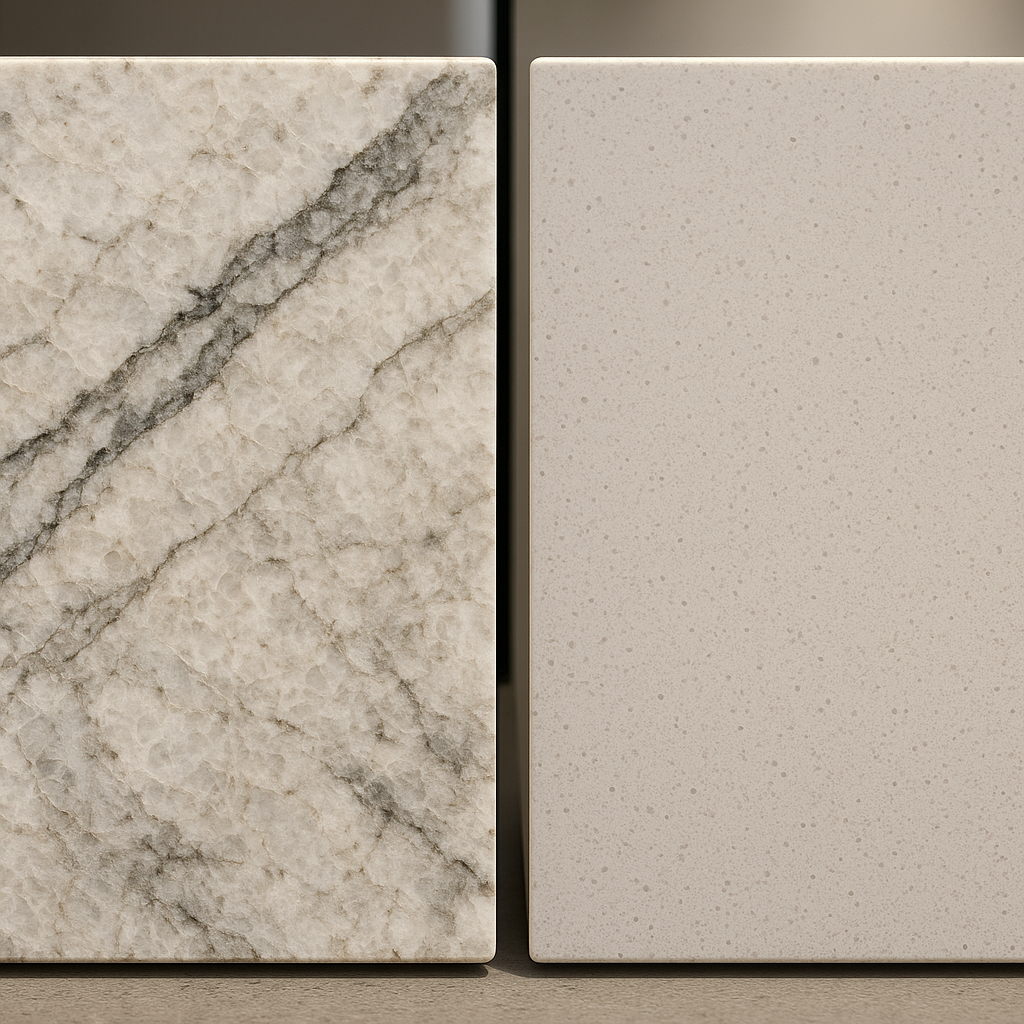
Quartzite vs. Quartz Composite: What Is the Difference?
Quartzite is a natural stone; quartz composite is an engineered product. Both have serious advantages and disadvantages. This article compares them.
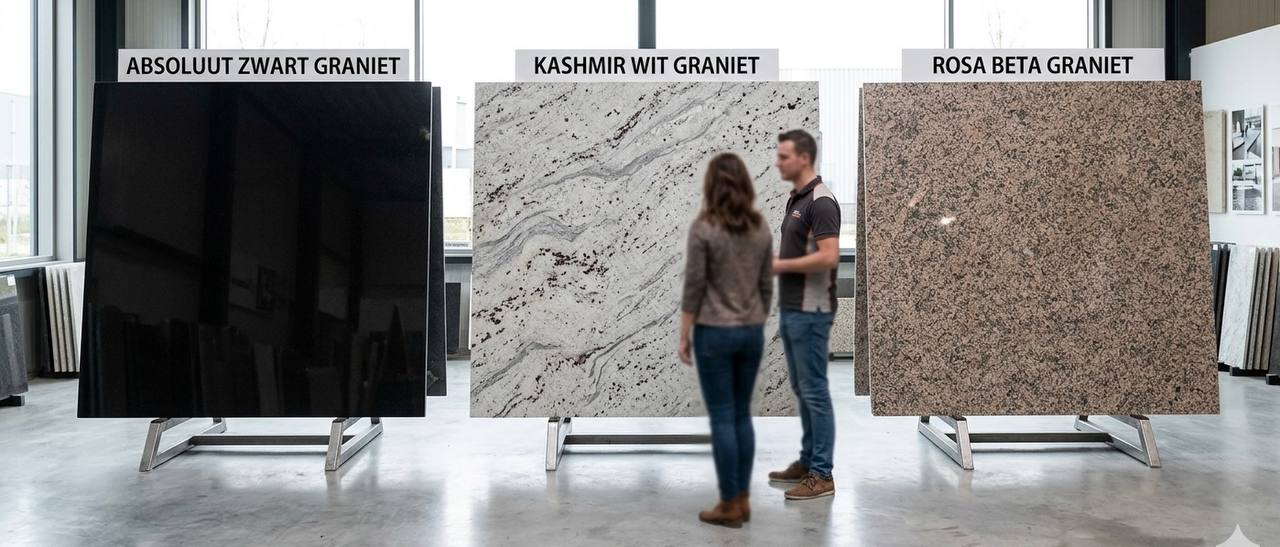
Granite: The Hardest Stone Explained
Granite is one of the best-known and most widely used natural stones in the world. This article explains what it is, where it comes from and how to maintain it.
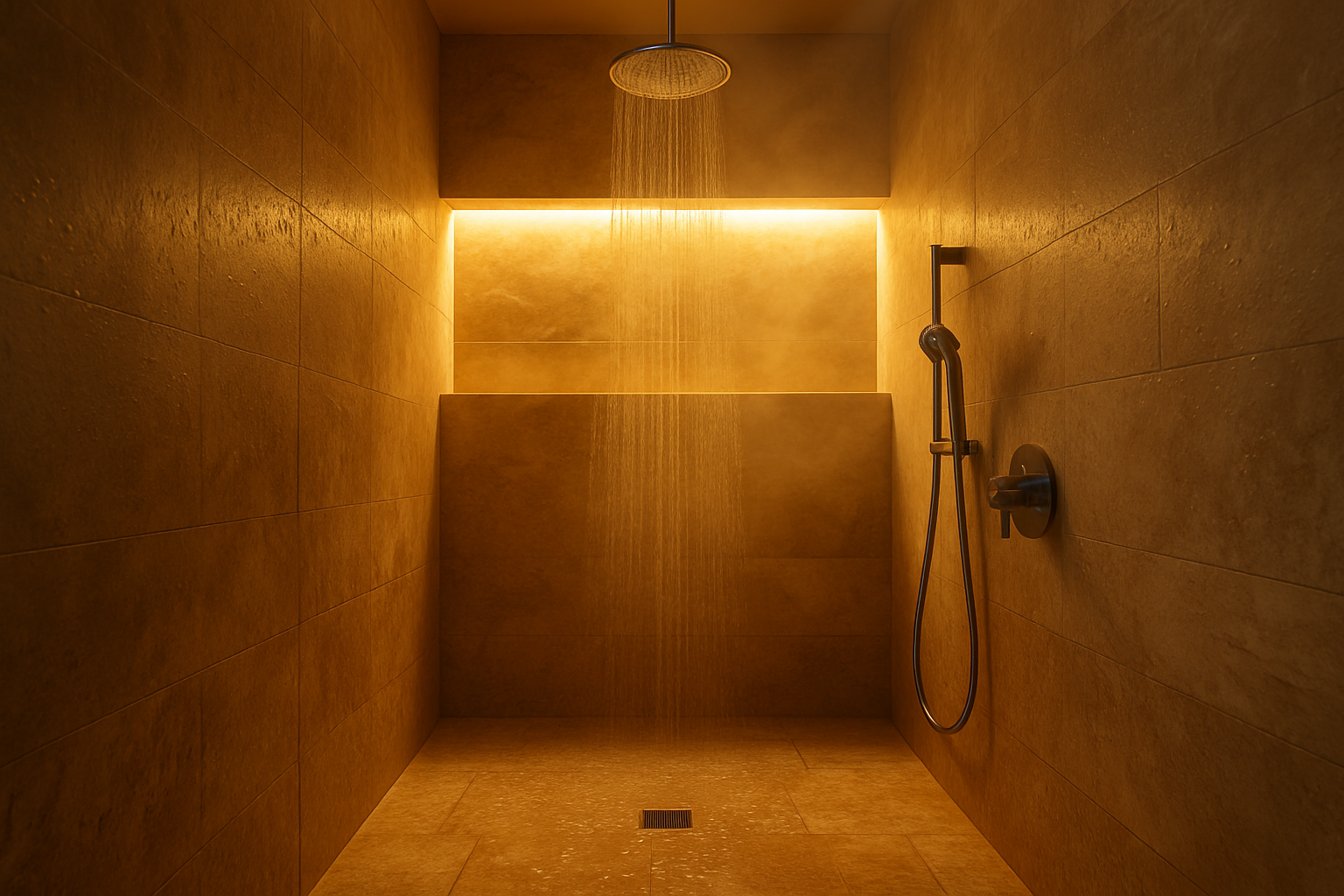
Natural Stone in the Shower: Which Type Works Where?
Not every natural stone is suitable for a wet shower. Marble, slate, granite and travertine all behave differently under constant moisture exposure.