Natural Stone in the Shower: Which Type Works Where?
Not every natural stone is suitable for a wet shower. Marble, slate, granite and travertine all behave differently under constant moisture exposure.
DecoStone Natuursteen
Natural stone specialist · Amsterdam
Table of contents
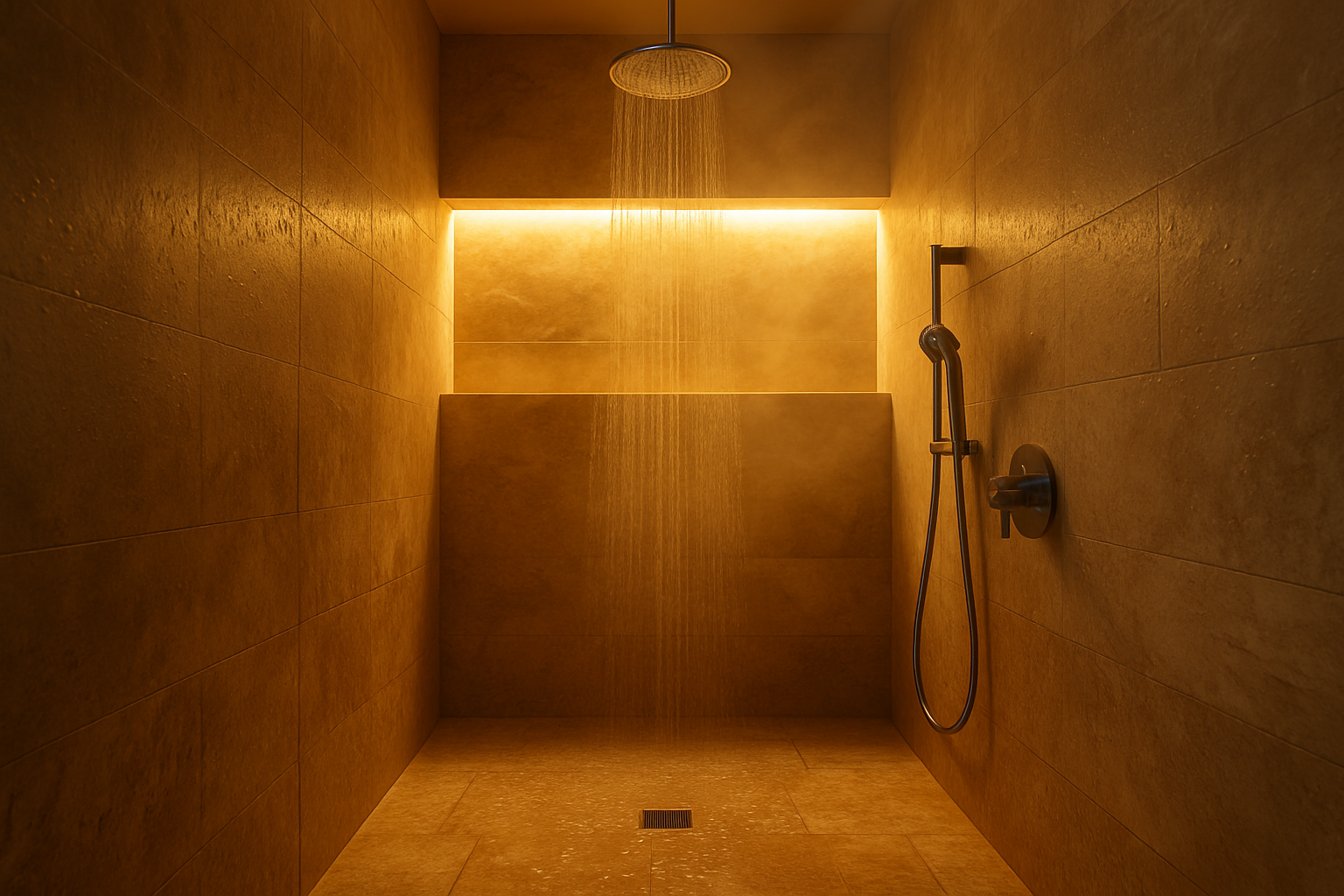
A shower demands more than a floor
A living-room floor carries mechanical loads: footsteps, furniture and the occasional dropped object. A shower does too — but adds constant moisture exposure, soap residue and temperature changes. Every day, several times.
Not every natural stone survives that without damage. Marble that looks wonderful in a dry hotel lobby can, in a private wet shower without adequate care, show limescale, etching and dull spots within a year. That is not a quality problem — it is the wrong stone in the wrong place.
The four most-used stones in showers
Granite
Granite is the most practical choice for a wet shower.
- Porosity: low — granite absorbs little water
- Hardness: 6 to 7 on the Mohs scale — resistant to daily use
- Maintenance: annual impregnation is sufficient for most bathrooms
- Sensitivity: granite hardly reacts to soap, shampoo or bathroom cleaners
- Drawback: more limited colour and pattern range than marble; can feel cold
Granite forgives mistakes. A weekend without drying, a cleaning product that is slightly too acidic — granite usually tolerates it. That makes it the sensible choice for anyone who wants low maintenance.
Marble
Marble in the shower can be stunning — but it requires discipline.
- Porosity: medium, depending on the type; Carrara is more porous than Nero Marquina
- Hardness: 3 to 4 on the Mohs scale — relatively soft
- Maintenance: regular impregnation (every 6 to 12 months), drying immediately after use
- Sensitivity: marble is calcite-based and reacts to acids — shampoo and soap are a risk with prolonged contact; bathroom cleaners with citric acid are frankly dangerous
If you squeegee the shower walls daily and refresh the impregnation regularly, marble works well and stays beautiful. If you leave it wet and use random cleaning products, you may lose the gloss within two years.
Travertine
Travertine is popular, but it has a characteristic that can be problematic in a shower: the voids.
Travertine naturally contains small voids (pores and holes) that are filled or left open during processing. In flooring or wall cladding, that can be decorative. In a wet shower, those voids are places where soap residue, limescale and dirt collect and where mould can grow.
- Filled travertine: better suited, but the filler can leach out or fall out over time
- Open travertine: only suitable if you maintain it intensively
- Overall: a moderate choice for a heavily used shower; fine for a bathroom with limited moisture exposure
Slate
Slate in the shower gives a unique, organic effect — but its layered structure needs extra attention.
- Porosity: varies strongly by origin; Chinese slate is more porous than Spanish or Welsh slate
- Hardness: 3 to 4 on the Mohs scale
- Maintenance: oil or impregnate before use; repeat periodically
- Risk: with layered slate, long-term moisture can cause the layers to separate — a process called delamination
Slate works well in a shower if you choose the right type — dense and homogeneous — and keep up the maintenance.
The shower floor: extra attention required
The shower floor is the most heavily loaded area. People stand on wet material every day, and water remains there the longest.
Points to watch for the shower floor:
- An anti-slip finish is not a luxury but a requirement — a polished marble floor is dangerously slippery when wet
- Brushed, sawn or bush-hammered finishes provide grip without losing the look
- Smaller formats or mosaic tiles have more joints — more maintenance, but also more grip
- The fall (slope to the drain) must be correct — standing water is the enemy of every stone
Joints and silicone: the weakest link
The stone itself is often less of a problem than the joints and silicone connections. In wet rooms:
- Always use grout intended for wet rooms and resistant to water load
- Do not make joints too narrow — very narrow joints are more prone to mould and cracking
- Replace silicone joints (corners, connections at the drain) as soon as you see discolouration or loosening — mould in silicone is almost impossible to remove and creeps under the stone
Practical recommendations
| Priority | Recommended stone | Not recommended |
|---|---|---|
| Minimal maintenance | Granite, dense gneiss | Open travertine, untreated slate |
| Maximum appearance | Marble (with discipline) | — |
| Rustic effect | Dense slate, dark granite | Porous slate |
| Budget | Granite | Onyx, rare marbles |
The best shower is not the most beautiful on paper, but the most beautiful one you are willing to maintain in practice. Keep that in mind when choosing.
Also read about marble in the bathroom: common mistakes
Need help?
Unsure about the right approach, or want to know what is possible? Send us a photo via WhatsApp and we will give you honest advice — without obligation.
Want to be sure which treatment is safe?
Send photos of the surface, room and problem. DecoStone assesses the material, damage pattern and risks before advising on a treatment or quotation.
Related articles
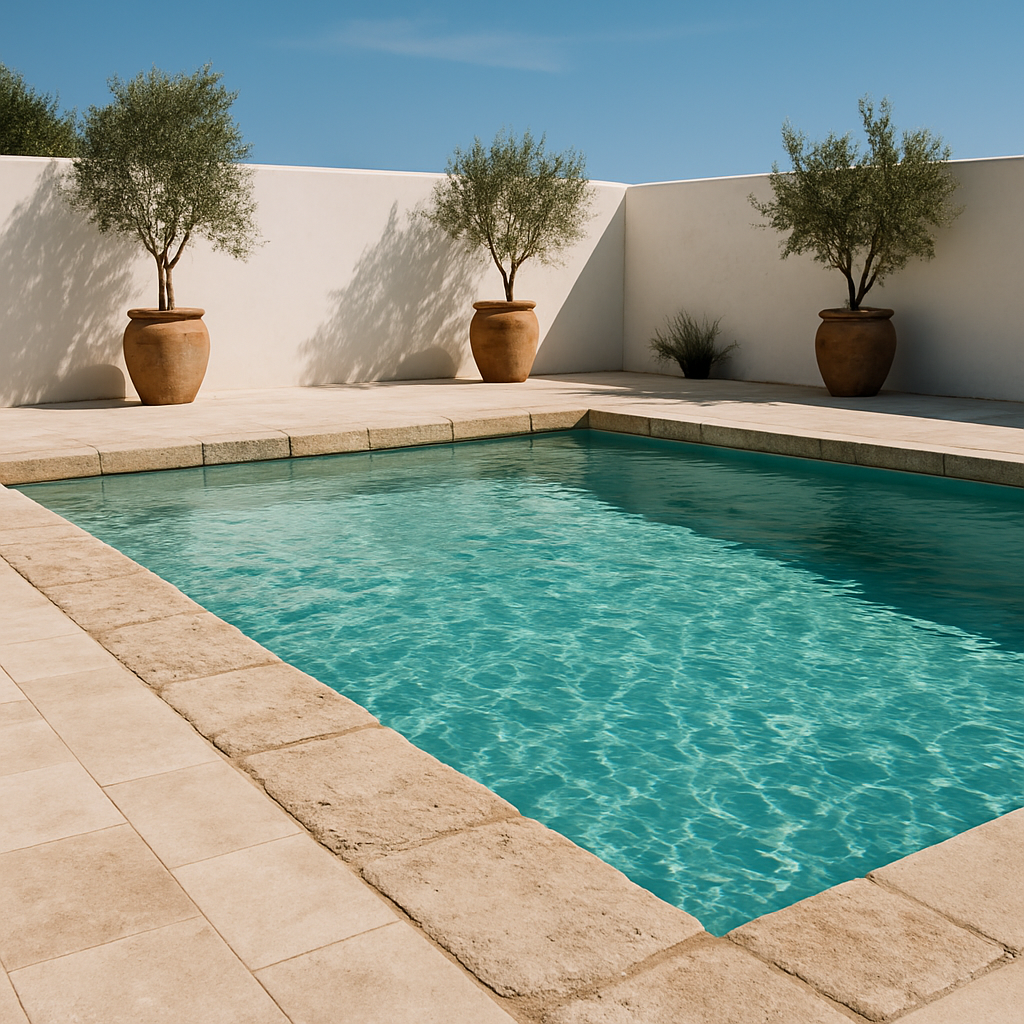
Natural Stone around a Swimming Pool: What Is Chlorine-Resistant?
Chlorine, UV radiation, wet feet and temperature changes — a pool edge places extreme demands on stone. Not every natural stone survives it.
Importing Natural Stone? Check Quality Control Before Handover
Importing natural stone yourself, or having it supplied through several parties, can work well, but it requires proper quality control. Especially with quartzite such as Taj Mahal, repair costs after installation can rise sharply.
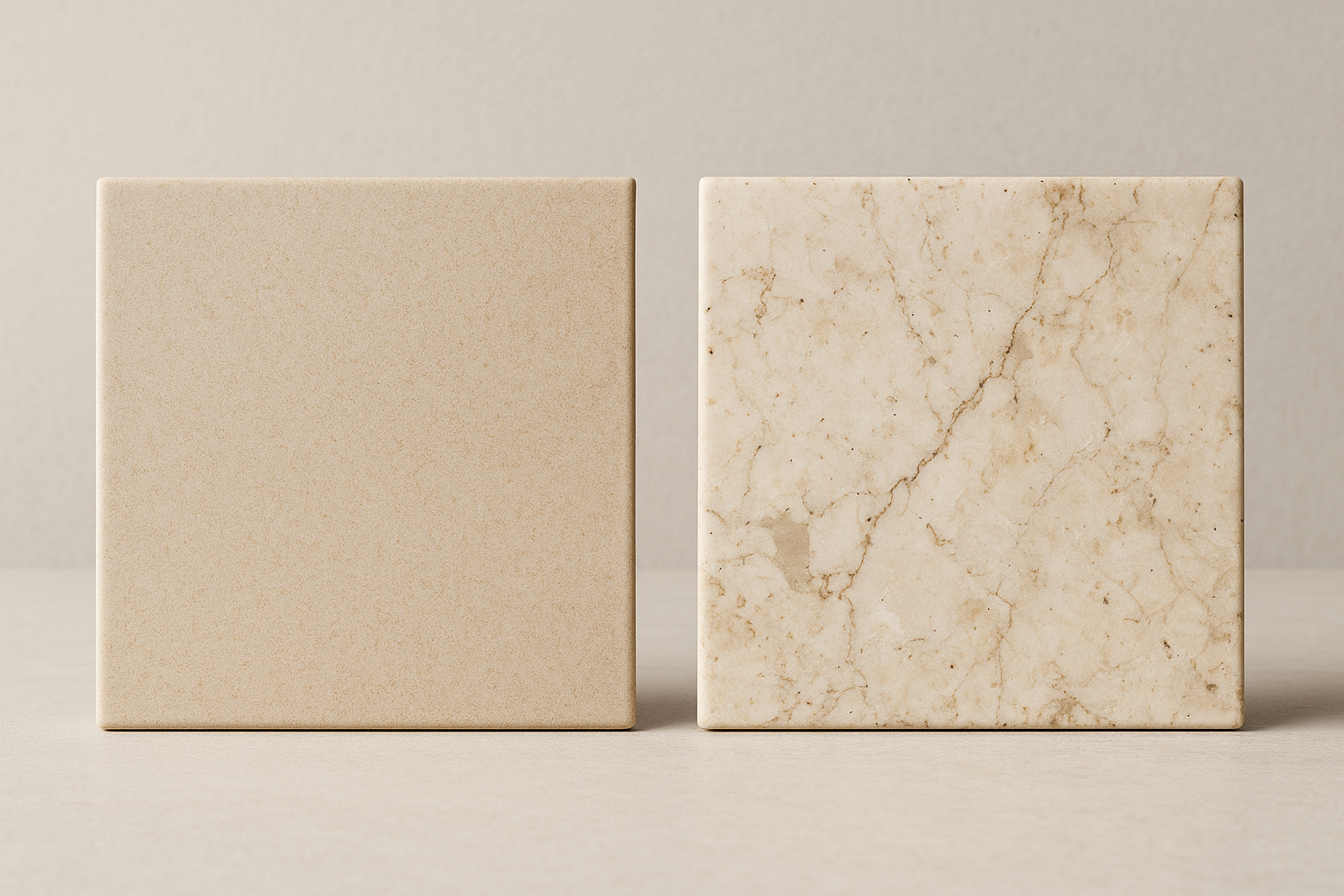
Ceramic vs. Real Natural Stone: An Honest Comparison
Ceramic tiles imitate stone better and better. But there are essential differences that only become visible after years — or sooner than expected. What should you consider?