Ceramic vs. Real Natural Stone: An Honest Comparison
Ceramic tiles imitate stone better and better. But there are essential differences that only become visible after years — or sooner than expected. What should you consider?
DecoStone Natural Stone
Natural stone specialist · Amsterdam
Table of contents
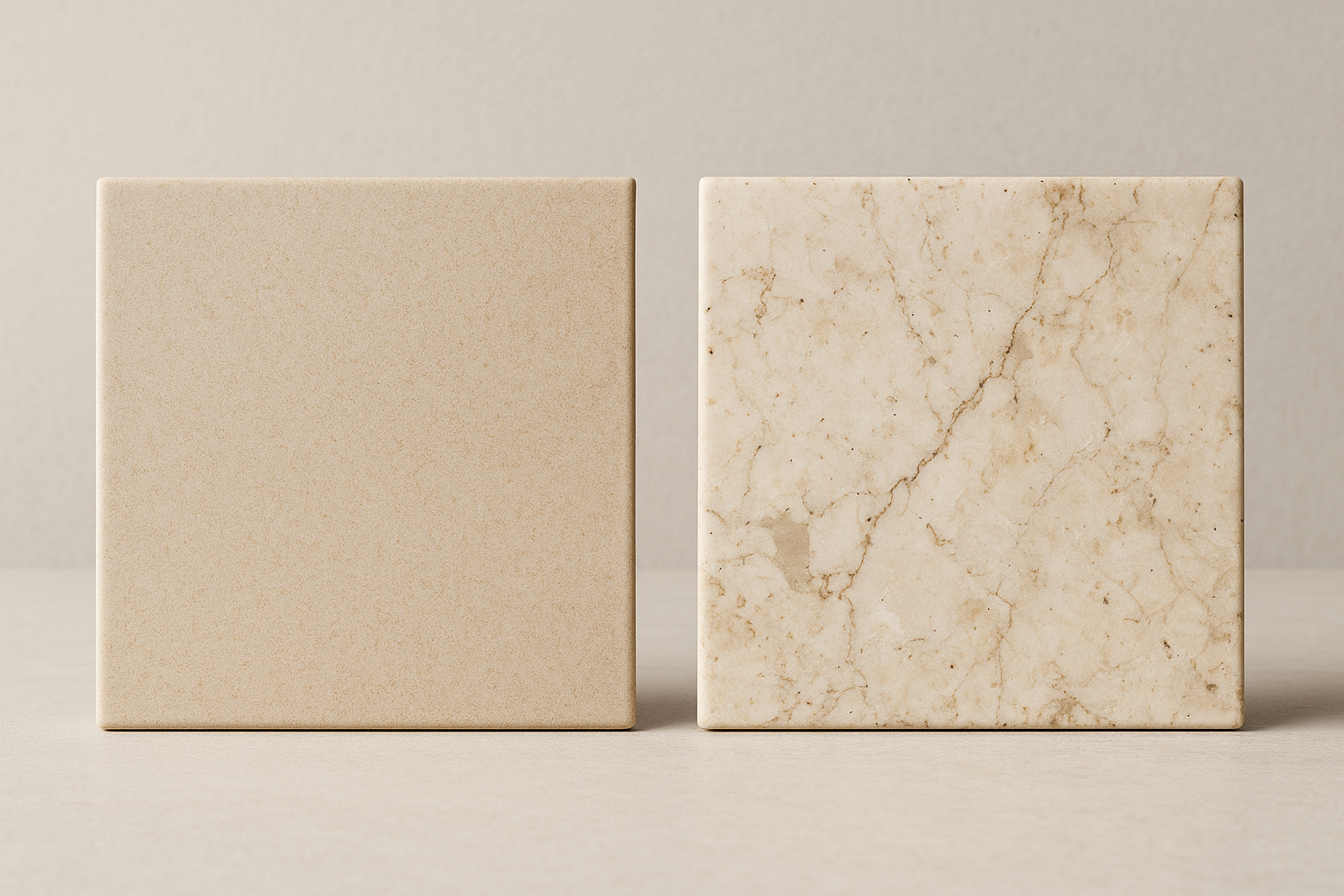
The imitation has become increasingly convincing
Ten years ago, an experienced stone restorer could tell from five metres away whether a floor was ceramic or real natural stone. Today, that difference is sometimes barely visible to the naked eye — especially with large-format ceramic tiles that have a digitally printed marble pattern.
That is a compliment to the ceramic industry. But similar is not the same. Beneath the surface, there are fundamental differences that should guide your choice.
What ceramic does well
Ceramic and porcelain are fired clay products. Because they are fired at high temperatures, the material is extremely dense and hardly porous.
Strengths of ceramic:
-
No impregnation needed — the dense structure does not absorb liquids
-
Stain-resistant: wine, coffee, oil — nothing soaks in
-
Not sensitive to acids: lemon juice, vinegar, bathroom cleaners — all are generally fine
-
UV-resistant: the colour does not change in sunlight
-
Cheaper to buy than real stone, especially for larger areas
-
Uniform colour and pattern — no surprises on delivery
For anyone who wants low maintenance and a modern look, ceramic is a rational choice.
What ceramic cannot do
It repeats. Digital prints repeat. Across a large surface, you will eventually see the same “unique” veining return. In real stone, every piece is different — it never repeats.
It feels different. Ceramic feels cold and hard underfoot. Some people are fine with that; others start to notice it after years of use.
It is not repairable. A chip or scratch in ceramic is permanent — the white body or base layer remains visible. In real stone, a chip can often be repaired.
It needs more joints in large formats. Large ceramic tiles require perfectly flat substrates and are more vulnerable to small imperfections — they can crack at points where there is slight movement.
Imitation remains imitation. Over the years, once the first impression has faded, people notice the difference in a room. That is subjective, but it matters if you are choosing stone deliberately.
What real natural stone offers
Character that develops. Real stone has a living surface. Marble that is used for years develops a patina. Well-maintained bluestone gains a richness that ceramic never reaches.
Uniqueness. Two stones from the same quarry are never identical. A floor made of real stone is literally a unique composition.
Repairability. Dull marble can be polished. Scratches in bluestone can be sanded out. A tile repaired in time and to a good standard can last for generations.
Value. You can feel it in a room with real stone. Estate agents and buyers recognise the difference.
What real natural stone requires
Maintenance. Impregnation, pH-neutral cleaning and attention to stains. If you do not want to do that, ceramic is the better purchase.
Acceptance of variation. Every stone is different — colour variation, veining and small inclusions. If you want perfect uniformity, ceramic is the better fit.
A higher purchase price. Especially for marble and exotic stone types.
Professional installers. Real stone requires knowledge when laying it: correct trowelling, the right adhesive and proper falls in wet areas. A ceramic tile is more forgiving.
When ceramic is the sensible choice
- A kitchen with intensive use and little appetite for maintenance
- A bathroom where quick cleaning is the priority
- A business owner fitting out a hospitality location: wear resistance and stain resistance are decisive here
- A budget where good real stone is out of reach — ceramic is better than poor stone
When real stone is the better choice
- A living room or bedroom where appearance matters greatly
- A bathroom you want to experience as a space, not only as a function
- An outdoor terrace where real stone ages better
- When long-term repairability is financially more favourable
- When you are furnishing a home that should still feel special after ten years
The honest summary
Ceramic wins on ease of maintenance, consistency and price. Real stone wins on character, uniqueness, repairability and experience.
There is no absolute winner. The question is what you are looking for — and how honest you are with yourself about how much maintenance you are willing to do.
Read also: composite or natural stone — an honest comparison for the kitchen
What can you do yourself with natural stone, and what is better left alone?
Anyone who says, “I want the look of marble but no maintenance” has to choose: either accept the look and the maintenance, or choose ceramic and accept the imitation. You cannot have both.
Need help?
Are you unsure about the right approach, or would you like to know what is possible? Send a photo via WhatsApp and we will give you honest, no-obligation advice.
Want to be sure which treatment is safe?
Send photos of the surface, room and problem. DecoStone assesses the material, damage pattern and risks before advising on a treatment or quotation.
Related articles
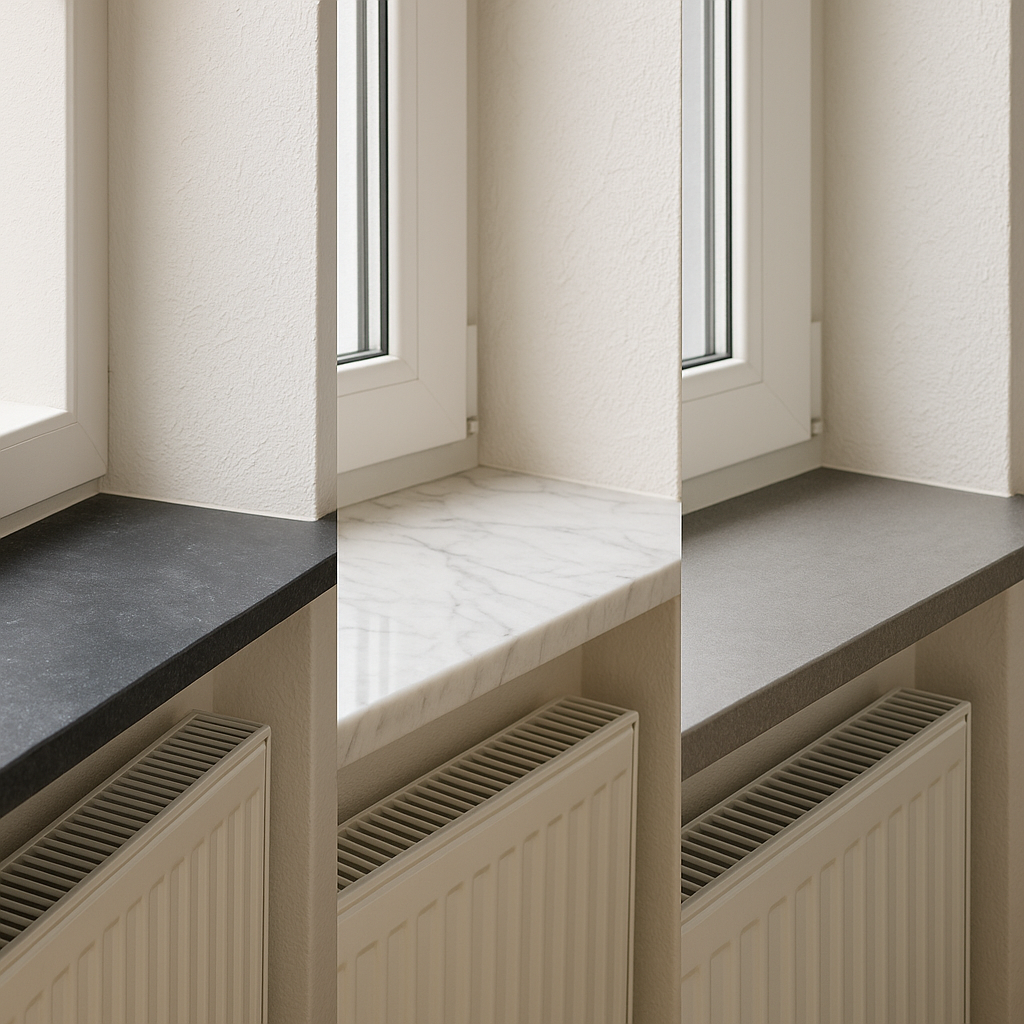
Window Sills in Bluestone, Marble or Composite: Which Should You Choose?
A window sill seems like a small decision, but it has major consequences for maintenance, durability and appearance. Bluestone, marble and composite behave very differently.
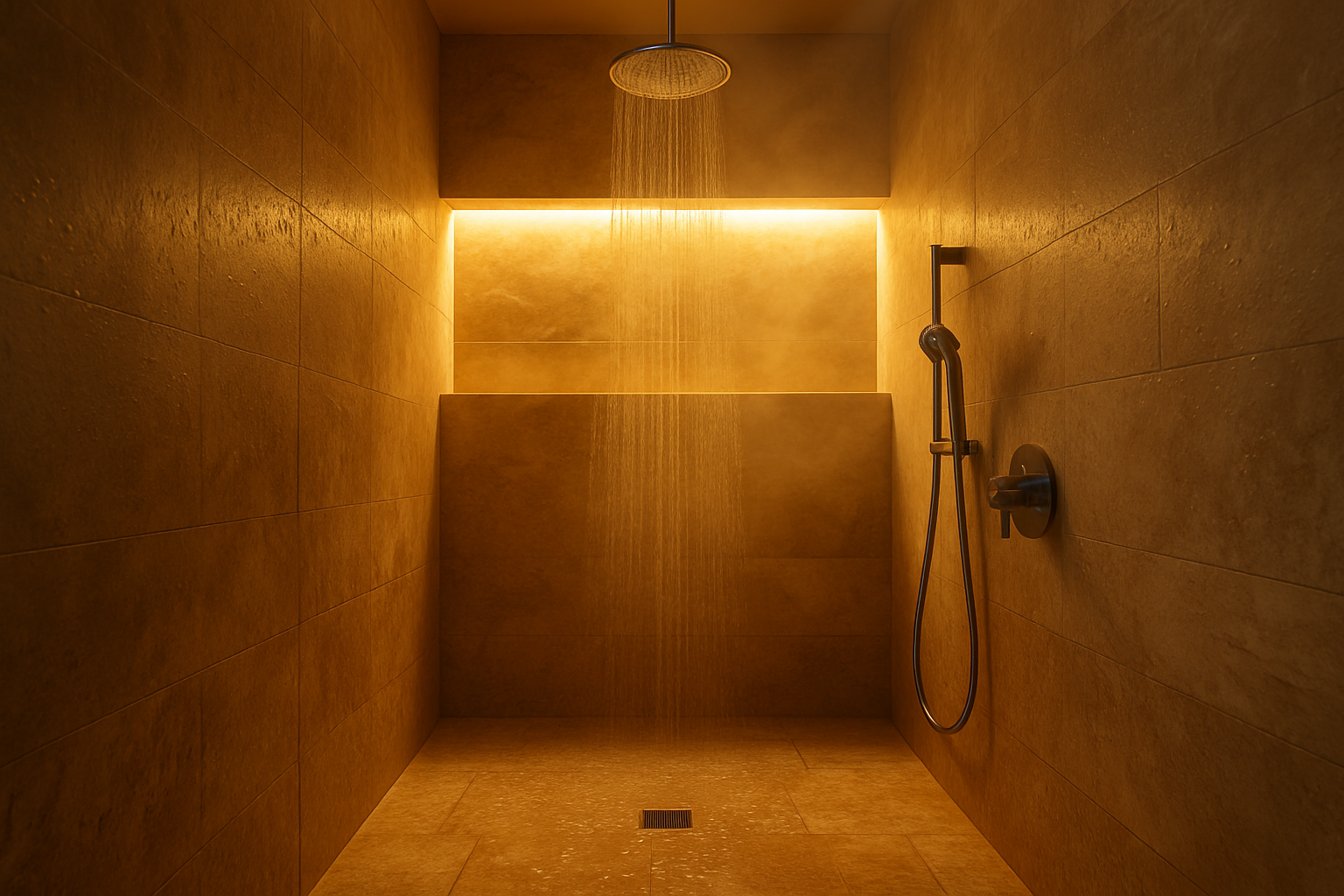
Natural Stone in the Shower: Which Type Works Where?
Not every natural stone is suitable for a wet shower. Marble, slate, granite and travertine all behave differently under constant moisture exposure.
What Can You Do Yourself with Natural Stone, and What Is Better Left Alone?
Not every natural-stone task is best done yourself. Read when you can get started on your own and when it is better to call in a specialist.