Window Sills in Bluestone, Marble or Composite: Which Should You Choose?
A window sill seems like a small decision, but it has major consequences for maintenance, durability and appearance. Bluestone, marble and composite behave very differently.
DecoStone Natuursteen
Natural stone specialist · Amsterdam
Table of contents
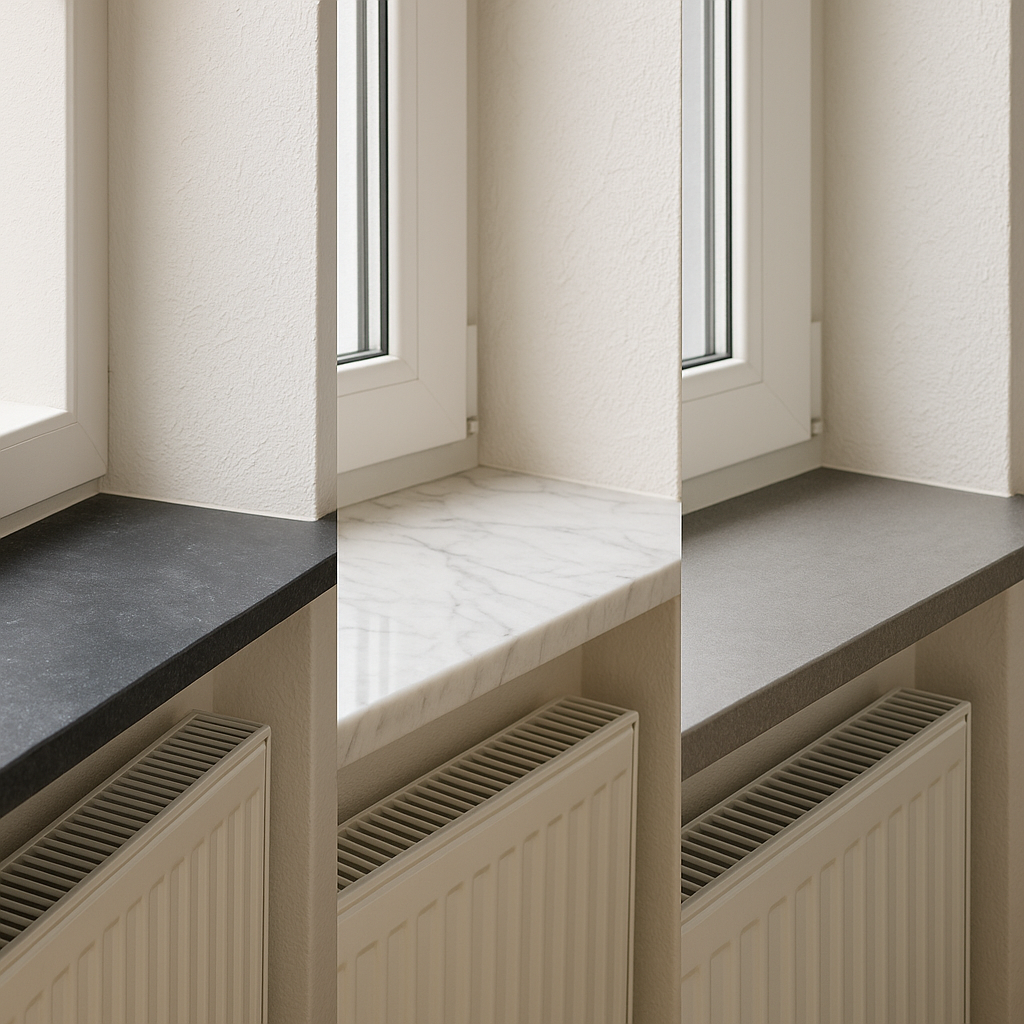
More than decoration
A window sill is exposed to sun, temperature changes, condensation and everything people place on it: plant pots, coffee cups, post, the cat. It is a small worktop — and the material choice determines how much work it will give you.
Three materials dominate the market for interior window sills: Belgian bluestone, marble and composite (also called engineered stone or agglomerate). They may look similar, but in use they are completely different.
Belgian bluestone
Belgian bluestone — also known as petit granit — is a limestone with a dense structure and dark-grey appearance. It has been the standard for window sills in the Benelux for centuries, and for good reason.
Advantages:
- Very durable when used correctly — a bluestone window sill can literally last for generations
- Timeless appearance that suits both traditional and modern architecture
- Feels cooler in summer, which limits condensation
- Can be re-honed or polished if the surface becomes matt
Disadvantages:
- Sensitive to acids — lemon juice, vinegar-based cleaners and acidic potting soil cause etching (dull marks)
- Condensation from plant pots leaves lime rings if pots stand directly on the stone
- Relatively heavy — a point to consider with narrow frames or weak substrates
Maintenance: Dust regularly, clean with pH-neutral cleaner and impregnate every 2 to 3 years. Always put plant pots on saucers. No vinegar, no lemon-based products.
Marble
Marble window sills are in a class of their own visually — but they ask more than bluestone.
More about Bianco Carrara in the kitchen: maintenance and protection
Advantages:
- Exceptionally beautiful, with rich pattern variation
- Available in white, cream, pink, green, black and many other colours
- Gives a room a luxurious appearance
- Like bluestone, it can be restored by polishing or honing
Disadvantages:
- More sensitive to etching than bluestone — marble reacts faster to acids
- A glass of wine or a lemon left briefly on the sill can leave a visible matt mark
- White marbles such as Carrara and Thassos show dirt and condensation rings more quickly
- Heavier and more expensive than bluestone to buy
Maintenance: More intensive than bluestone. Impregnate every 6 to 12 months depending on use. Dry immediately after moisture contact. Always use coasters or saucers.
Composite (engineered stone / agglomerate)
Composite is not natural stone, but a mixture of natural stone granules (quartz, marble, granite) and a binder, usually polyester or epoxy resin. Brands such as Silestone, Caesarstone and Compac fall into this category.
Advantages:
- Hardly any maintenance — no impregnation, no special cleaners
- Strong resistance to stains and scratches, depending on brand
- Uniform appearance — no colour variation or veining unless deliberately designed
- Lighter in weight than solid stone
Disadvantages:
- Not repairable like real stone — a deep scratch or chip cannot be ground out without a mismatch in surface texture
- UV-sensitive: some composites discolour under prolonged direct sunlight, which is a specific risk for window sills
- Not a living material — some people find it feels “dead” compared with real stone
- High heat (pans, candles) can cause damage or discolouration
Maintenance: Minimal. Wipe daily with a damp cloth; use a neutral cleaner for caked-on marks.
Which should you choose?
| Criterion | Bluestone | Marble | Composite |
|---|---|---|---|
| Durability | Excellent | Good (with care) | Good |
| Easy maintenance | Moderate | Low | High |
| Appearance | Timeless, restrained | Luxurious, lively | Uniform, modern |
| Repairable | Yes | Yes | No |
| UV-resistant | Yes | Yes | Not always |
| Price | Average | Average–high | Average |
Choose bluestone if: you want a timeless, reasonably low-maintenance sill that lasts for generations and can be restored.
Choose marble if: appearance and character matter more than ease of maintenance, and you are prepared to treat the stone as the fine material it is.
Choose composite if: you want virtually no maintenance, UV resistance is less of an issue (little direct sun), and a uniform modern look suits your interior.
A common mistake
People choose based on a showroom photo and only later discover what the material requires in daily use. A white marble window sill in a family home with children and plants is wonderful if you know and accept what it needs. If you did not know, it can become frustrating after a year.
Make the decision based on use, not aesthetics alone.
Read the honest comparison: composite or natural stone?
Need help?
Unsure about the right approach, or want to know what is possible? Send us a photo via WhatsApp and we will give you honest advice — without obligation.
Want to be sure which treatment is safe?
Send photos of the surface, room and problem. DecoStone assesses the material, damage pattern and risks before advising on a treatment or quotation.
Related articles
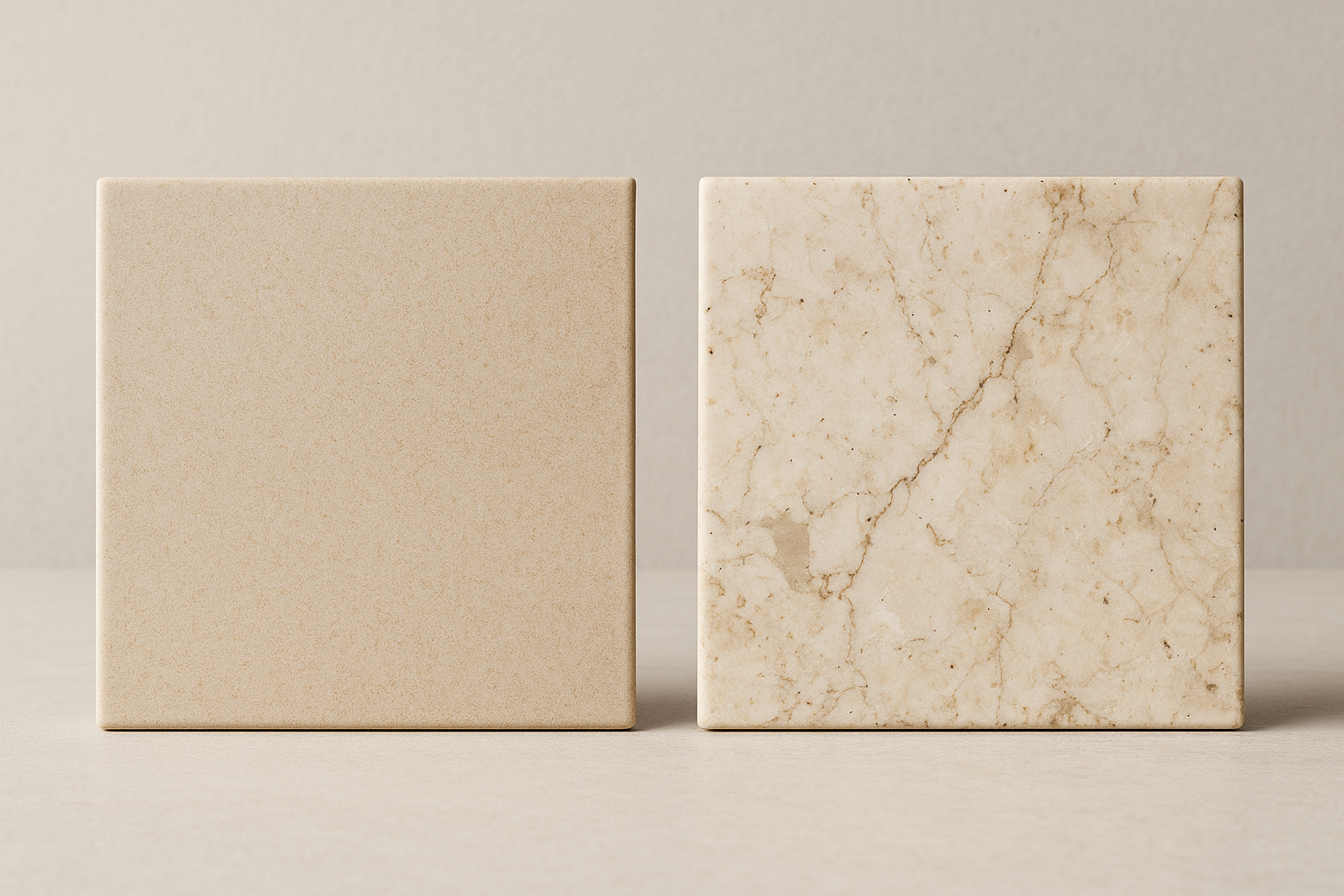
Ceramic vs. Real Natural Stone: An Honest Comparison
Ceramic tiles imitate stone better and better. But there are essential differences that only become visible after years — or sooner than expected. What should you consider?

Natural-Stone Stairs: Slip Resistance, Wear and Maintenance
A natural-stone staircase is beautiful, but it has specific points of attention around safety, wear on the nosing and preserving the surface texture.
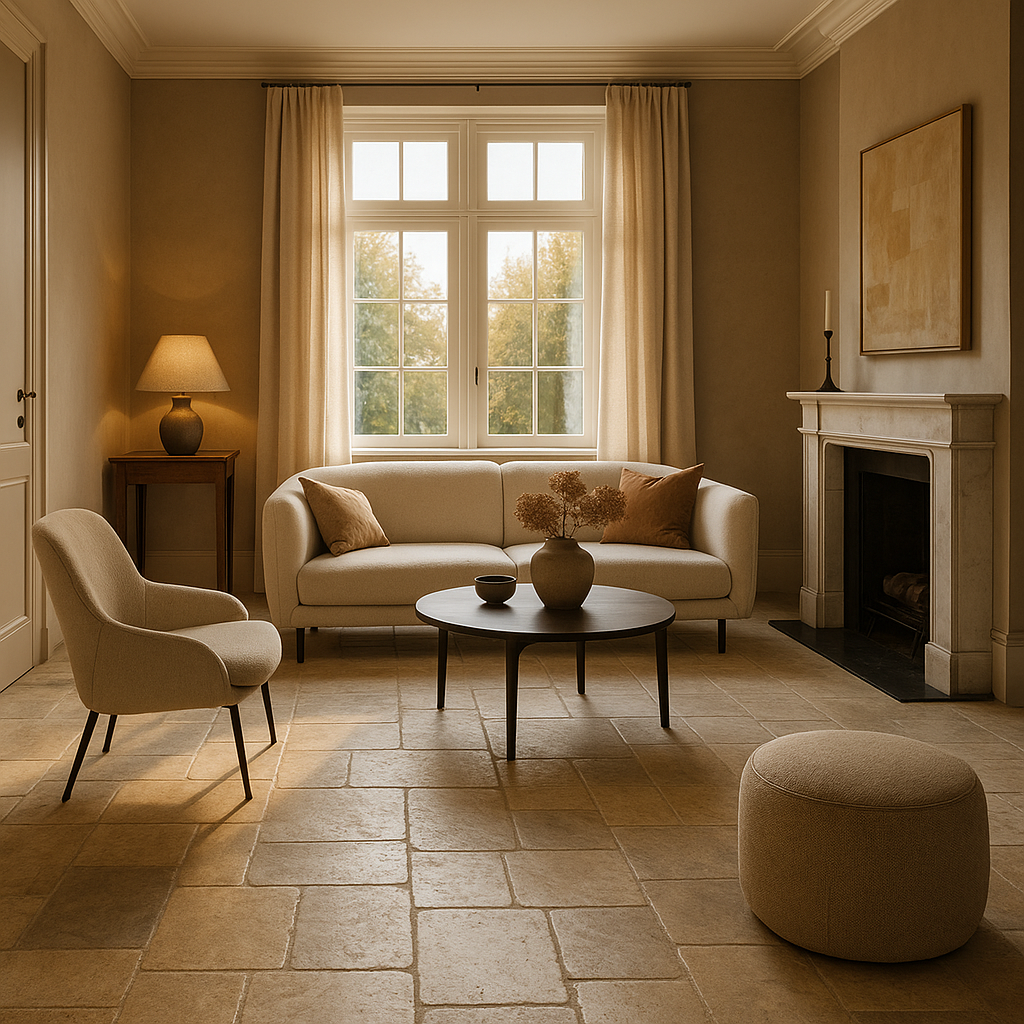
What Does a Natural Stone Floor Cost? An Honest Overview
The price of a natural stone floor varies enormously. Material costs, installation, treatment and maintenance — here is what is realistic and where the differences lie.