Natural-Stone Stairs: Slip Resistance, Wear and Maintenance
A natural-stone staircase is beautiful, but it has specific points of attention around safety, wear on the nosing and preserving the surface texture.
DecoStone Natural Stone
Natural stone specialist · Amsterdam
Table of contents

The weakest point of a stone staircase
A staircase sees more use than almost any other place in the home. Every step lands on the front part of the tread — the nosing — and that accumulation of load shows after years as a hollow or worn zone exactly where every foot lands.
On marble and bluestone, this is most quickly visible with polished finishes: the gloss gradually disappears from the most heavily loaded zone. On matte or brushed surfaces it happens more slowly, but the wear pattern is the same.
This is normal and unavoidable. But the speed at which it happens can largely be influenced.
Slip resistance: not an option, but a requirement
A polished marble or bluestone stair tread is dangerously slippery when wet — while mopping, or when rainwater is carried in on shoes. This is not exaggerated caution; falls on slippery stone stairs are a relatively common cause of serious injury.
How do you make a stone staircase slip-resistant?
There are three methods, each with advantages and disadvantages:
1. Anti-slip strip or insert A stainless steel or aluminium anti-slip strip recessed into the tread or glued on. Effective, visible and suitable for existing stairs. Disadvantage: it changes the appearance and, if worn or loose, can become a new danger zone.
2. Bush-hammered or brushed nosing During installation, the nosing of the tread is deliberately finished more roughly than the rest: bush-hammered, brushed or flamed. This provides grip without a visible addition. It is the ideal solution for new builds or renovations where the staircase is being reworked.
3. Anti-slip coating A transparent coating applied to the surface that reduces gloss while adding microtexture to the surface. It works, but has a limited lifespan (1 to 3 years depending on use) and must be renewed periodically.
Advice: with a new staircase, always include option 2 in the design. For an existing polished staircase, option 1 or 3 is the most practical approach.
Repairing wear on the nosing
After years of use, the nosings of a marble or bluestone staircase can look tired: matte, slightly hollowed, sometimes with small scratches that have built up.
Restoration is usually very possible:
- The worn zone is reground, honed and polished — the stone effectively goes back a layer and starts fresh
- With marble, the result is usually excellent: the gloss returns fully, and the hollow disappears or is greatly reduced
- With Belgian bluestone (honed/weathered): a comparable result — the nosing becomes even and matte again
The investment is worthwhile: a restored staircase looks ten years younger.
What cannot be restored:
- A nosing that has crumbled so far that substantial material is missing — then the entire tread needs to be replaced
- Cracks that go through the stone — repair is possible, but the crack will remain slightly visible on close inspection
Which stone type for which staircase?
| Stone type | Wear resistance | Slip-resistant options | Repairable |
|---|---|---|---|
| Belgian bluestone | Good | Excellent (bush-hammered, brushed) | Yes |
| Granite | Excellent | Good | Yes |
| Marble | Moderate (when polished) | Moderate (anti-slip coating or strip) | Yes |
| Slate | Moderate | Already reasonably rough naturally | Limited |
| Travertine | Moderate | Strip or coating | Yes, but joints are vulnerable |
For a busy outdoor staircase, granite or Belgian bluestone is the standard choice. For an elegant indoor staircase in a quiet space, marble and slate are also good options — provided a slip-resistance measure is included.
Daily maintenance of a stone staircase
A few habits make the difference:
- Doormat at the entrance: sand and grit are the main cause of micro-scratches on treads. Less grit from outside = slower wear
- Do not scrub; do sweep: use a soft broom or microfibre cloth for daily dust — a vacuum cleaner with a hard nozzle causes scratches on nosings (see also: vacuum-cleaner scratches on bluestone)
- Clean pH-neutrally: never use vinegar or all-purpose cleaner — especially not on marble or bluestone, which are calcite-based
- Wipe up stains immediately: a spilled liquid on a stair tread penetrates faster than on a floor because the walking zone is often less well impregnated
Impregnation: do not forget the nosing
When impregnating a staircase, people regularly forget the vertical risers and the underside of the nosing. These zones in particular are exposed to splashing moisture, cleaning products and condensation. Treat the entire tread — including the edges.
When should you impregnate your natural stone? The complete guide
A well-impregnated staircase absorbs stains more slowly and is easier to keep clean. Repeat the treatment annually with intensive use.
Need help?
Not sure about the right approach, or would you like to know what is possible? Send us a photo via WhatsApp and we will give you honest advice — without obligation.
Want to be sure which treatment is safe?
Send photos of the surface, room and problem. DecoStone assesses the material, damage pattern and risks before advising on a treatment or quotation.
Related articles
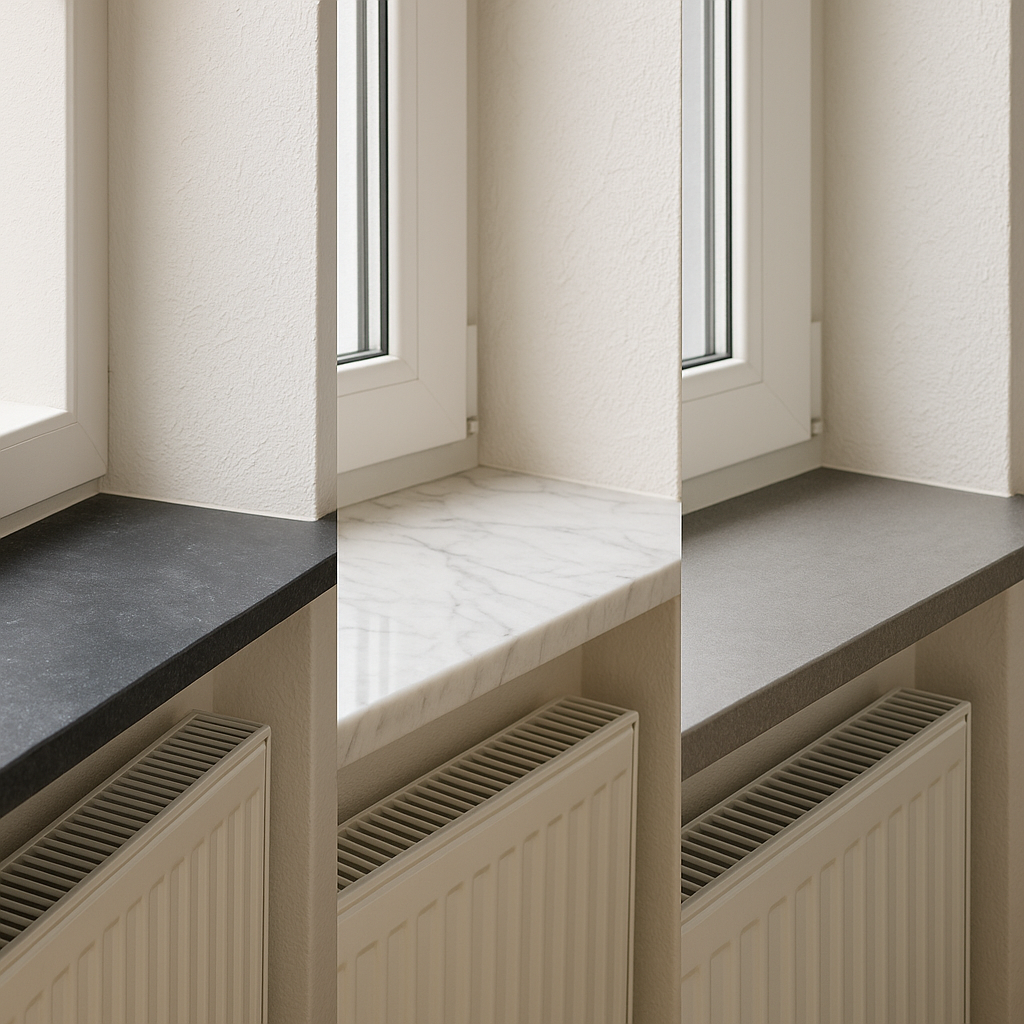
Window Sills in Bluestone, Marble or Composite: Which Should You Choose?
A window sill seems like a small decision, but it has major consequences for maintenance, durability and appearance. Bluestone, marble and composite behave very differently.
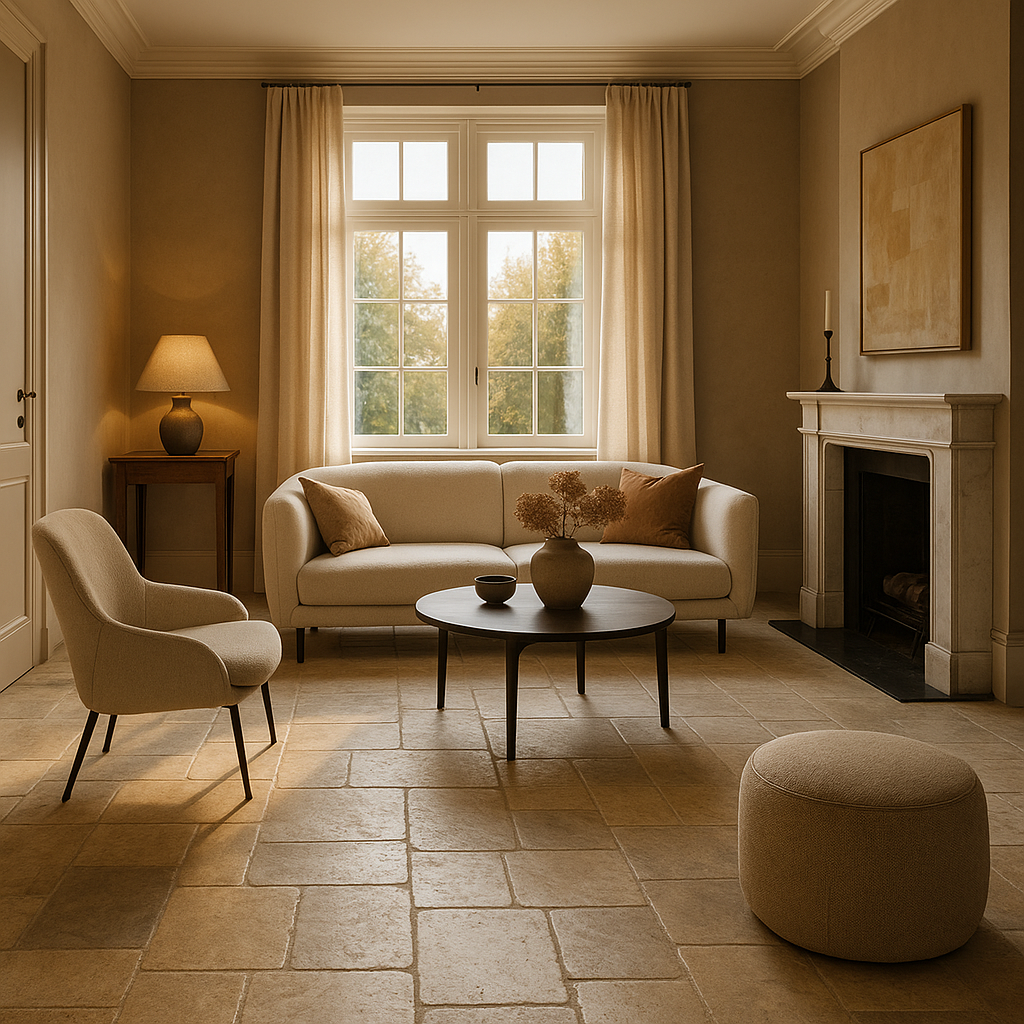
What Does a Natural Stone Floor Cost? An Honest Overview
The price of a natural stone floor varies enormously. Material costs, installation, treatment and maintenance — here is what is realistic and where the differences lie.
Importing Natural Stone? Check Quality Control Before Handover
Importing natural stone yourself, or having it supplied through several parties, can work well, but it requires proper quality control. Especially with quartzite such as Taj Mahal, repair costs after installation can rise sharply.