What Does a Natural Stone Floor Cost? An Honest Overview
The price of a natural stone floor varies enormously. Material costs, installation, treatment and maintenance — here is what is realistic and where the differences lie.
DecoStone Natuursteen
Natural stone specialist · Amsterdam
Table of contents
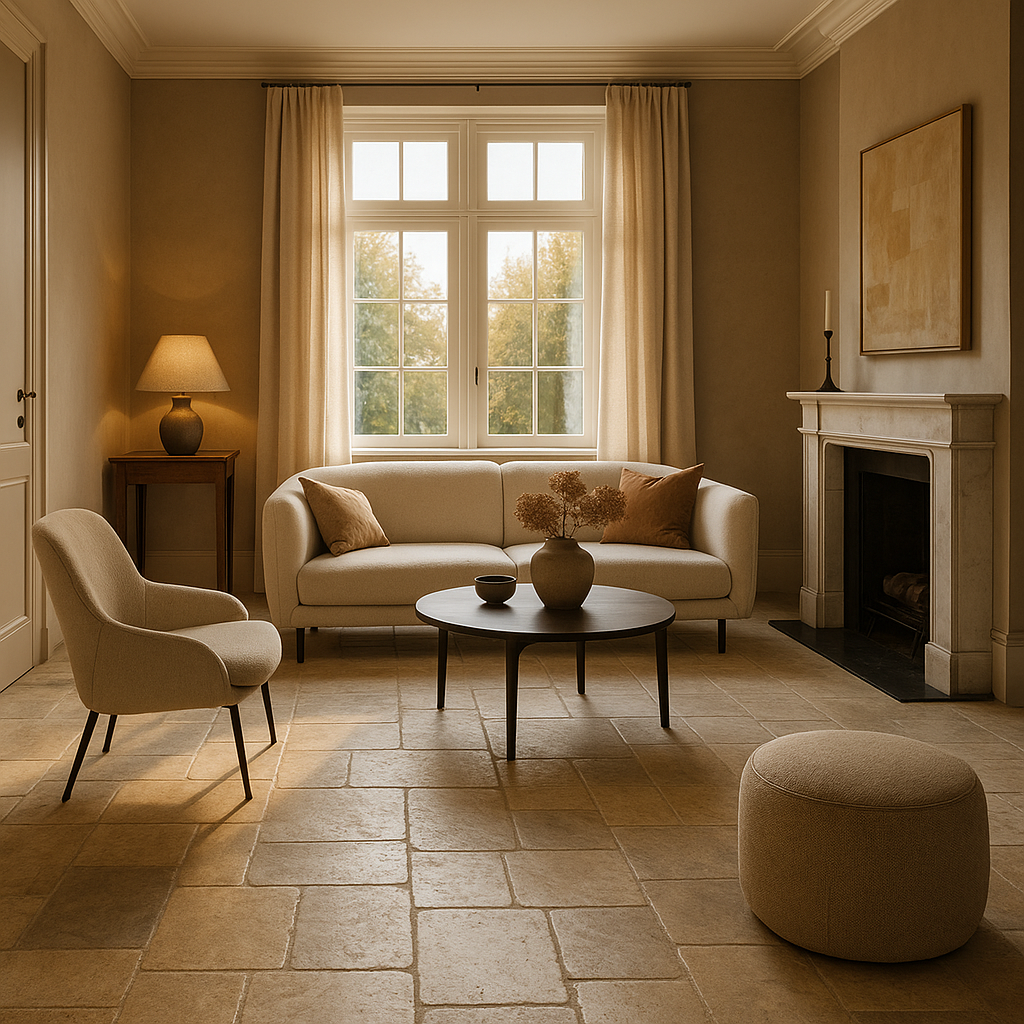
Prices that seem to make no sense
“Granite €20 per m².” “Complete marble floor from €60.” “Belgian bluestone €150 per m².” Natural stone prices range from ridiculously cheap to astronomical, and comparing them without context is pointless.
Here is an honest overview of what you are paying for, which price ranges are realistic, and how to compare like with like.
The cost items at a glance
A complete project consists of five parts:
- Material costs (stone): the m² price of the tiles or slabs themselves
- Installation costs: labour for removing the old floor, laying the new one and grouting
- Subfloor preparation: levelling, primer and possibly insulation
- Finishing: impregnation, polishing or honing after installation
- Maintenance over the years
Anyone who compares only the material price sees only a fraction of the total picture.
Material costs by stone type
These are broad market prices. Large variations are possible depending on format, finish, origin and supplier.
| Stone type | Material price per m² (approx.) |
|---|---|
| Belgian bluestone | €35–€90 |
| Granite (standard) | €25–€60 |
| Granite (special) | €60–€150 |
| Marble (standard, Carrara etc.) | €40–€90 |
| Marble (special, Calacatta etc.) | €100–€300+ |
| Slate | €25–€60 |
| Travertine | €30–€60 |
| Onyx | €150–€500+ |
Please note: large formats (60×60 cm and larger) are more expensive per m² than smaller formats because of the higher waste percentage and more complex production.
Installation costs
Installation costs in the Netherlands and Belgium are roughly €40 to €80 per m², depending on:
- The complexity of the pattern (straight laying is cheaper than herringbone or diagonal)
- Tile size (large tiles require more work)
- Subfloor preparation
- Height differences or difficult junctions
- Regional market prices
Never treat installation costs as incidental — in a 50 m² project, they can be as high as the material costs.
What you pay for a complete project
A realistic total picture for common applications:
| Situation | Total price including material and installation |
|---|---|
| Granite floor, 30 m², standard | €2,100–€4,200 |
| Bluestone floor, 30 m² | €3,000–€5,500 |
| Carrara marble, 20 m², living room | €2,500–€5,000 |
| Special marble type, 20 m² | €5,000–€15,000+ |
| Slate terrace, 40 m² | €2,800–€5,000 |
These are indications — not quotations. Every situation is different.
Where is the quality difference?
Two quotes for “Carrara marble” can differ by €30 per m². What explains that?
Origin and quarry: Genuine Carrara marble from Italy is different from Carrara-look marble sold under the same trade name but quarried in China. They can look very similar; structure, density and vulnerability are different.
Thickness: 2 cm thick tiles cost more than 1.2 cm, but are much more robust, especially in larger formats.
Finish: Hand-cut or sawn edges are labour-intensive and more expensive than machine finishing.
Quality grade: Stones are categorised into grades (A, B, C or Supra, Prima, Seconda). Supra is free from visible defects; Seconda has more variation and small imperfections. Price differences can be 30 to 50 percent.
Truly cheap stone does not exist
Stone for €15 per m² exists — but what you get is a product with unclear origin, a low quality grade or minimal finishing. There are durable solutions in a lower segment (granite at €30–€40 per m² can be perfectly good), but a “deal” on marble at €18 per m² is something I would always investigate further.
Buying cheaply and paying a lot to install is not an advantage either — it is the opposite: invest in the material, because installation costs are the same regardless of which material is laid.
Include maintenance in the total calculation
One aspect people forget: maintenance has a price.
- Impregnation (professional): €4–€8 per m², every 2 to 5 years depending on use
- Polishing or honing (professional): €8–€20 per m² for local work; more for a full floor
- Annual DIY maintenance: pH-neutral cleaner, microfibre cloths — relatively limited costs
Over 20 years, the maintenance costs of a well-treated marble floor are a significant item. Include them in the decision.
Summary
The cheapest option over 20 years is not the lowest purchase price, but the stone with the best value for your use, properly laid and properly treated. A granite floor at €35 per m² that is well installed and impregnated annually will outlast a marble floor at €80 per m² that is poorly installed and never treated.
Also read: lay natural stone yourself or hire a professional?
Invest in the quality of the installer and treatment — that is at least as important as the stone itself.
What to look for when buying natural stone: a practical checklist
Need help?
Unsure about the right approach, or want to know what is possible? Send us a photo via WhatsApp and we will give you honest advice — without obligation.
Want to be sure which treatment is safe?
Send photos of the surface, room and problem. DecoStone assesses the material, damage pattern and risks before advising on a treatment or quotation.
Related articles
Natural-Stone Stairs: Slip Resistance, Wear and Maintenance
A natural-stone staircase is beautiful, but it has specific points of attention around safety, wear on the nosing and preserving the surface texture.
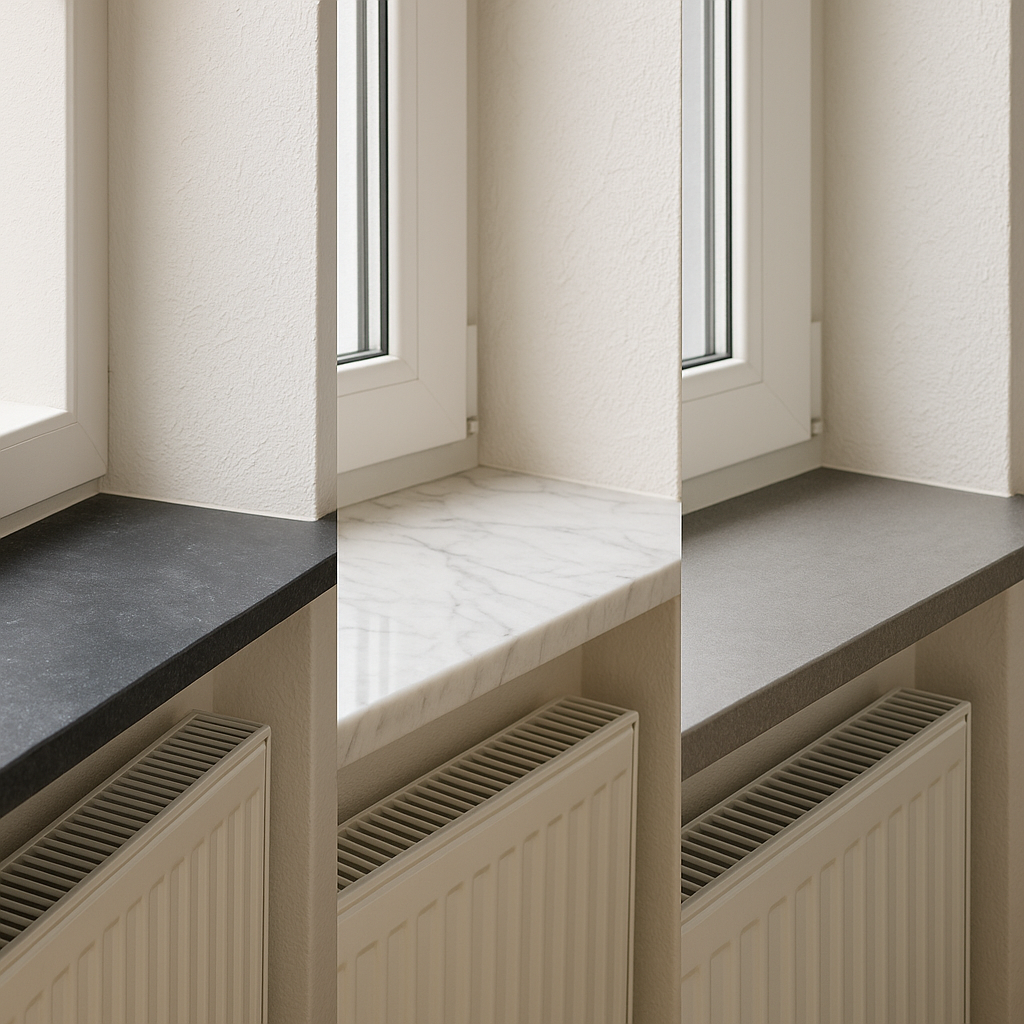
Window Sills in Bluestone, Marble or Composite: Which Should You Choose?
A window sill seems like a small decision, but it has major consequences for maintenance, durability and appearance. Bluestone, marble and composite behave very differently.
Importing Natural Stone? Check Quality Control Before Handover
Importing natural stone yourself, or having it supplied through several parties, can work well, but it requires proper quality control. Especially with quartzite such as Taj Mahal, repair costs after installation can rise sharply.