Laying Natural Stone Yourself or Hiring a Professional?
Laying stone yourself saves labour costs, but the risks can undo the saving. When is DIY realistic — and when is a professional the better choice?
DecoStone Natural Stone
Natural stone specialist · Amsterdam
Table of contents
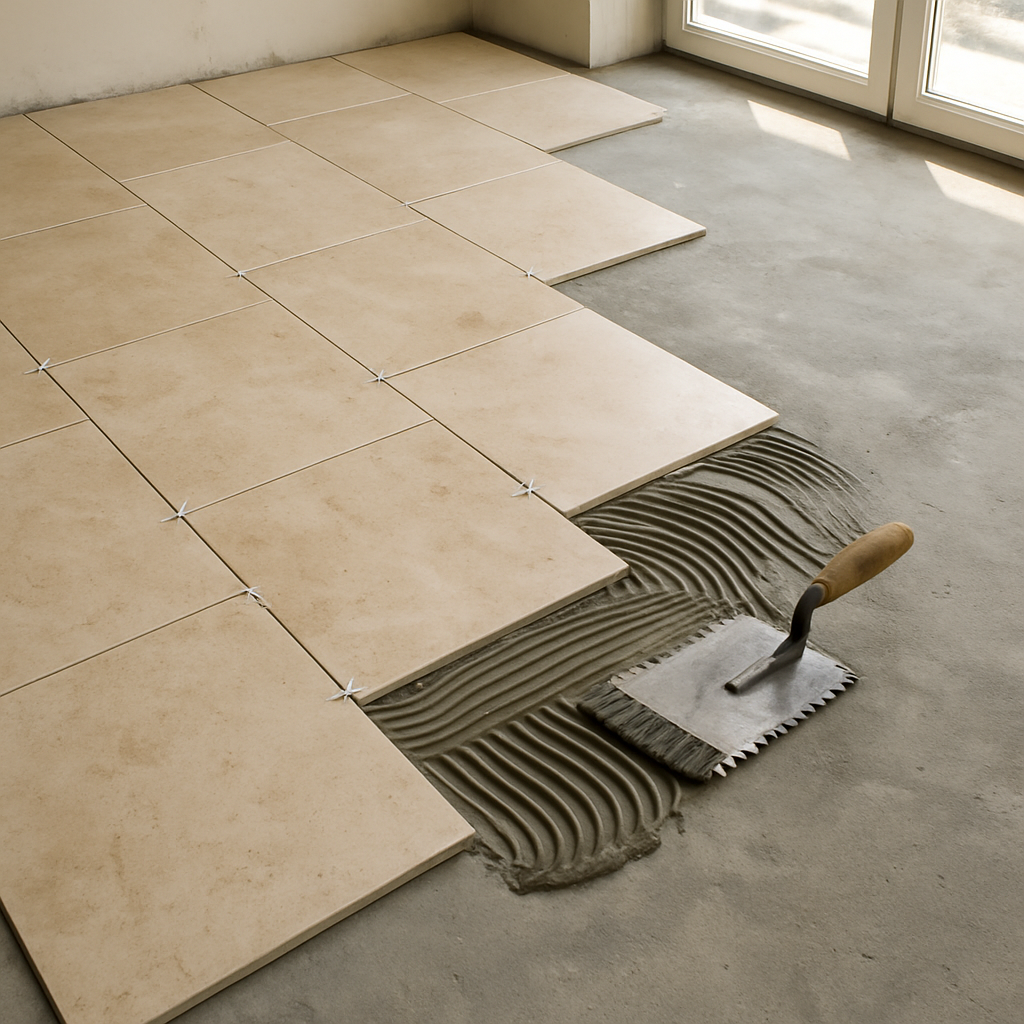
The appeal of doing it yourself
For a 30 m² project with installation costs of €50 per m², you are talking about €1,500 that stays in your pocket if you lay the floor yourself. That is an attractive figure. It explains why many people ask the question: can I do this myself?
The answer is: sometimes yes, but more often than expected, no — and the boundary is not where people intuitively place it.
What you can do yourself
Small areas with a simple pattern
Laying a 6 m² bathroom with 30×30 cm tiles in a straight pattern is achievable for someone with a feel for tools and patience. The margin for error is limited, but not zero.
Outdoor applications on sand or semi-paved foundations
Terrace tiles on a sand bed or open foundation are less technically demanding than a fully bonded indoor floor. Mistakes are easier to correct.
Refixing loose tiles
A tile that has become hollow-sounding and loose can be refixed by a capable DIYer if the cause (failed joints, moisture damage) has been resolved.
What is better not to do yourself
Large formats (60×60 cm and larger)
Large tiles are less forgiving. The floor must be perfectly flat — every height difference is visible. A spirit level is not enough; you need long reference straightedges and the experience to know how to apply adhesive mortar correctly to prevent hollow spots.
Marble and other vulnerable stone types
Marble is hard to cut without chips. The cut edge must be perfect. A poorly started cut or a skewed cutting plane cannot be corrected. Marble is also heavy and can break under point load if there is even a moment without even support.
Patterns and diagonal laying
Herringbone, diagonal layouts or more complex patterns require accurate alignment from start to finish. A small mistake at the beginning results in a large deviation at the end of the room.
Wet rooms (showers, pools)
In wet rooms, the fall (the slope towards the drain) is critical. Incorrect fall leads to standing water, moisture problems and mould. This is specialist work.
Historic or antique floors
Antique floors with trapezoid tiles, irregular formats or a pattern that needs restoration require a professional who knows this type of work. Trying it yourself almost always produces a result that does not do justice to the original.
The hidden costs of mistakes
This is the part that is missing from many DIY calculations:
Material waste: if you break tiles, cut them crooked or install them incorrectly, those tiles are lost. With special marble, one broken tile can quickly cost €40 to €100.
Correction work: hiring a professional installer to repair a self-laid floor costs more than having it installed professionally from the start. Breaking up the tile, removing adhesive residue and laying it again is expensive work.
Warranty: a professional installer stands behind the work. If tiles come loose or the joints crack after six months, you have recourse. If you installed it yourself, you do not.
Treatment: if impregnation or after-treatment is not done correctly, you are back to square one at your own expense.
Tools you really need
If you do decide to lay it yourself, do it properly. At minimum, you need:
- Diamond blade for stone — not for tiles in general, but specifically for the stone type you are cutting
- Tile suction lifters or carrying handles for large formats — without these, large tiles can break during handling
- Long spirit level (at least 150 cm) and reference straightedges
- Flexible tile adhesive suitable for the stone type — ask the supplier
- Spacers for even joints
- Sponges and a bucket — plenty of them; you will use more than you think
- Knee protectors — do not underestimate this
When is a professional genuinely the better choice?
- Indoor surface area larger than 15 m²
- Expensive or special stone type
- Wet room
- Complex pattern
- New-build project where floor precision affects follow-on work
- If the stone is part of a wider renovation involving other contractors
The honest conclusion
Laying natural stone yourself is not a question of “whether it will work” but “what it costs if it goes wrong.” With inexpensive material and a small room, that risk is limited. With expensive material and a complex situation, the risk is large enough that a professional installer may be the more economical option.
Always request several quotations. A good installer is transparent about what it costs and why. An installer who will not explain how they work is a risk.
What does a natural-stone floor cost? An honest overview
Read what you can do yourself with natural stone — and what is better left alone
Need help?
Not sure about the right approach, or would you like to know what is possible? Send us a photo via WhatsApp and we will give you honest advice — without obligation.
Want to be sure which treatment is safe?
Send photos of the surface, room and problem. DecoStone assesses the material, damage pattern and risks before advising on a treatment or quotation.
Related articles
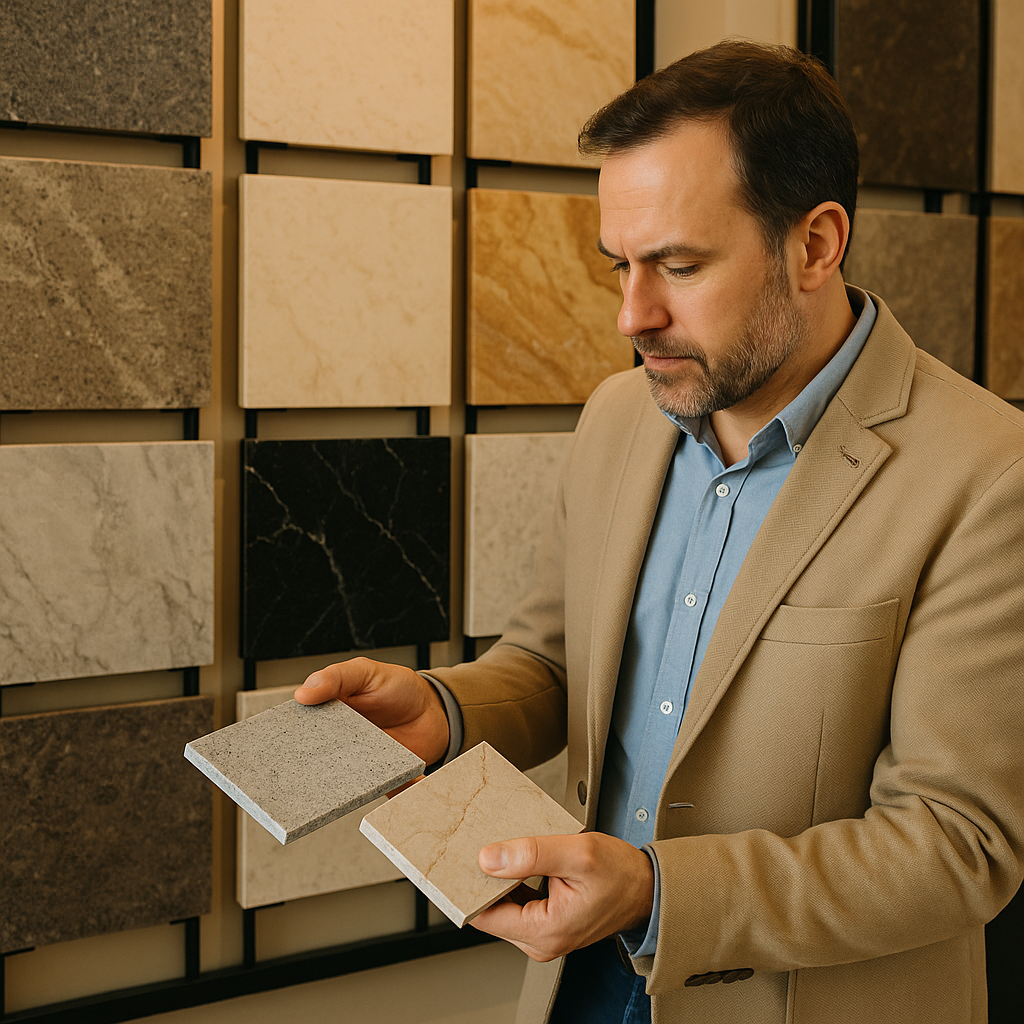
What to Look for When Buying Natural Stone: A Practical Checklist
Between the showroom and the finished floor are many decisions that are hard to correct later. These are the questions to ask — and the answers to expect.
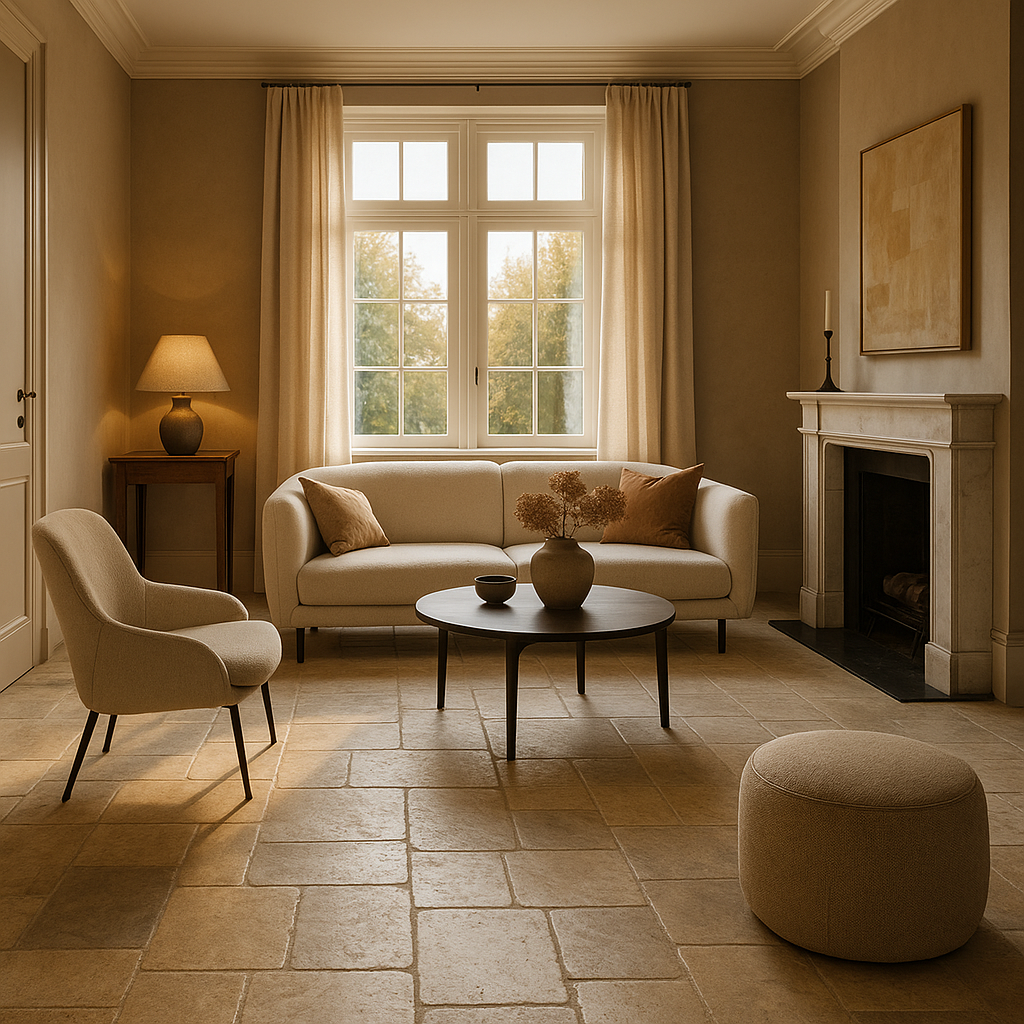
What Does a Natural Stone Floor Cost? An Honest Overview
The price of a natural stone floor varies enormously. Material costs, installation, treatment and maintenance — here is what is realistic and where the differences lie.
Importing Natural Stone? Check Quality Control Before Handover
Importing natural stone yourself, or having it supplied through several parties, can work well, but it requires proper quality control. Especially with quartzite such as Taj Mahal, repair costs after installation can rise sharply.