What to Look for When Buying Natural Stone: A Practical Checklist
Between the showroom and the finished floor are many decisions that are hard to correct later. These are the questions to ask — and the answers to expect.
DecoStone Natuursteen
Natural stone specialist · Amsterdam
Table of contents
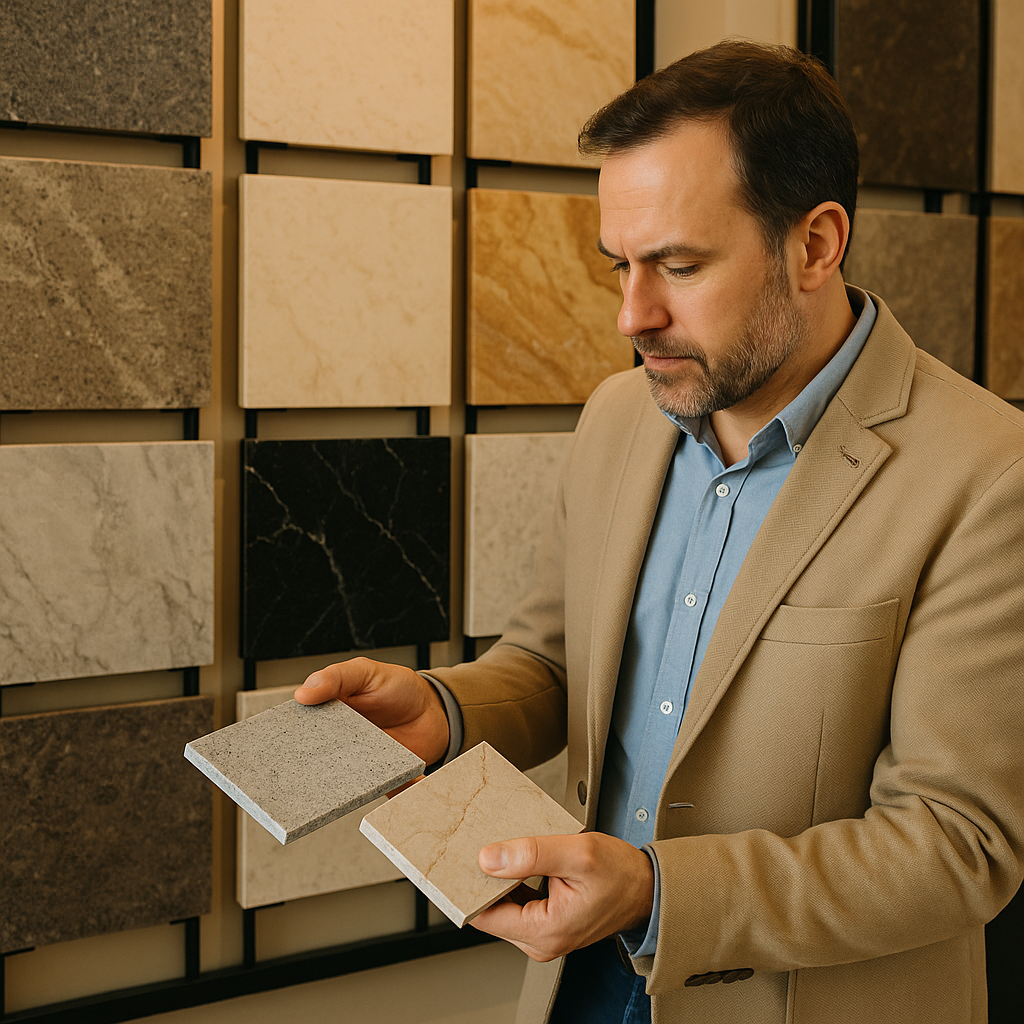
Buying stone is not an impulse decision
A marble floor, a bluestone terrace, a granite worktop — these are purchases that last for decades. Too often the decision is based on one Pinterest photo and a 20-minute showroom visit. Only at home — or after installation — do people discover that important questions were never asked.
This is the checklist to take with you.
Questions about the material itself
What quality grade is this?
Stone is divided into grades: usually Supra/Prima/Seconda, or A/B/C. Supra is free from visible defects. Seconda has more variation, small voids, discolouration or irregularities. Ask explicitly — a lower grade is not necessarily worse, but you should know what you are buying.
Which quarry or region does it come from?
“Carrara marble” can come from several quarries in the Carrara region — but also from quarries elsewhere selling products under the same trade name. Genuine Carrara from Italy and Carrara-look marble from China are not the same product.
What is the porosity or water absorption?
Ask for the technical data sheet. A supplier who cannot provide one often does not know the answer themselves — and that says something. The water absorption coefficient, expressed as a percentage or by mass, gives you an idea of how porous the stone is and how intensively it needs impregnation.
Read more about colour differences in natural stone: normal variation or a defect?
What finish is recommended for my application?
A polished bathroom floor with children is a poorer choice than a brushed version of the same stone. A good supplier asks this question themselves. If they do not, ask it yourself.
Questions about delivery
Are all tiles from the same batch?
This is crucial. Tiles from different production runs of the same stone can show colour differences that only become visible when laid next to each other. Ask for the same batch number for the entire order.
Is extra material ordered for cuts and waste?
If you need 30 m², the standard is to order 10 to 15 percent extra for cutting waste and breakage. If the supplier does not advise this, take the initiative yourself. A later top-up order — especially with special materials — is often no longer available from the same batch.
How is it packed and transported?
Large, heavy stones can break during transport. Ask how they are packed and whether damage on arrival is covered. Check the delivery immediately when it arrives.
Questions about maintenance
What do I need to maintain this stone?
An honest supplier gives a concrete answer: which impregnator, how often, which cleaner, what to avoid. If the answer is vague (“just keep it clean”), that is a sign of limited knowledge.
Should the stone be treated before installation?
For some porous stones, it is wise to apply the first impregnation layer before installation. This prevents adhesive residue from being absorbed into the stone. Ask whether this applies to your stone type.
How repairable is damage?
Can a scratch be ground out? Can etching be polished? Can a broken tile be replaced — and will the same batch still be available? These are questions to ask before buying, not when it is too late.
Also read: importing natural stone and quality control before handover
Questions about the supplier
Does the supplier have references or a portfolio?
Reliable suppliers in this sector have proven projects. Ask for them. A showroom full of beautiful stone says nothing about aftercare.
What is the returns policy?
If tiles turn out to be damaged after delivery, or the colour differs significantly from the sample, what are your rights? Put this in writing.
Do you also supply the impregnator and cleaning product?
A supplier who also supplies the treatment products matched to the stone takes some of the thinking work away. Be wary of a supplier who sends you to a DIY store for “just an impregnator” — that is not how this works.
In the showroom: what to do
Test the stone with water: Put a few drops of water on the tile. Does it soak in immediately? Then the stone is porous and needs intensive impregnation. Does it bead? Then the stone is denser.
View the stone in different light: Take the tile to a window or doorway. Showroom lighting flatters — daylight reveals more.
Open several boxes: Ask for a tile from another box. Are there visible colour differences? This gives you an idea of the variation within the batch.
Ask to take a test sample home: A good supplier allows this. Test the stone at home in your actual lighting conditions.
Red flags
- The supplier cannot provide the batch number
- No technical data sheet is available
- “Maintenance? Just clean it normally”
- No return or damage policy for delivery problems
- A price significantly below the market without explanation
A well-bought stone is already half the job — the rest is installation and treatment.
Need help?
Unsure about the right approach, or want to know what is possible? Send us a photo via WhatsApp and we will give you honest advice — without obligation.
Want to be sure which treatment is safe?
Send photos of the surface, room and problem. DecoStone assesses the material, damage pattern and risks before advising on a treatment or quotation.
Related articles
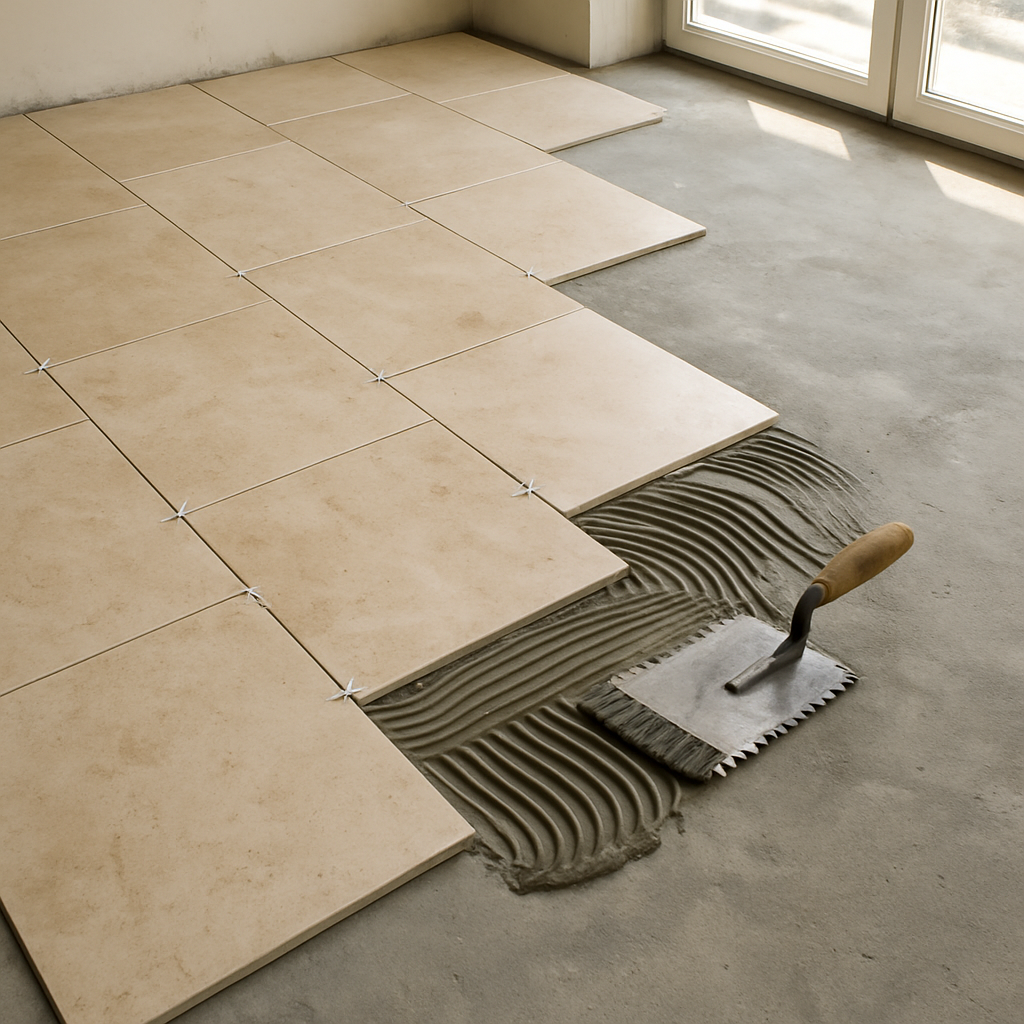
Laying Natural Stone Yourself or Hiring a Professional?
Laying stone yourself saves labour costs, but the risks can undo the saving. When is DIY realistic — and when is a professional the better choice?
Importing Natural Stone? Check Quality Control Before Handover
Importing natural stone yourself, or having it supplied through several parties, can work well, but it requires proper quality control. Especially with quartzite such as Taj Mahal, repair costs after installation can rise sharply.
Preparing for the Workday: How to Be Ready for DecoStone
DecoStone will soon visit for maintenance, repair, polishing or impregnation of natural stone. With this preparation, the workday can run calmly, neatly and efficiently.