Preparing for the Workday: How to Be Ready for DecoStone
DecoStone will soon visit for maintenance, repair, polishing or impregnation of natural stone. With this preparation, the workday can run calmly, neatly and efficiently.
Jeroen Rutgers
Natural stone restoration specialist · DecoStone
Table of contents
We will soon visit to clean, repair, sand, polish or impregnate your natural stone. With a few simple preparations, we can work faster, more safely and more neatly.
In this article, you can read what you can do beforehand, how the workday usually proceeds and what to keep in mind afterwards.
In this article
- What does the workday look like?
- What can you prepare in advance?
- What should you take into account afterwards?
- Frequently asked questions
What does the workday look like?
On the agreed day, we first assess the situation on site. We look at the type of natural stone, the condition of the surface, stains, scratches, damage, old layers and the accessibility of the work area.
We then briefly discuss what we are going to do. Depending on the assignment, the treatment may consist of:
- cleaning or degreasing the surface;
- local repair of damage;
- sanding, honing or polishing;
- impregnating or protecting the stone;
- explaining use and maintenance afterwards.
With natural stone, the final assessment always depends on what we find on site. Some stains, scratches or damage sit deeper in the material. We always do our best to achieve the best possible result, but completely new or 100% invisible is not always realistic.
Preparing for the workday: what can you do?
1. Clear the work area as much as possible
Make sure the floor, worktop, stairs or room is easily accessible.
Check in advance that:
- loose furniture has been removed;
- small items, plants and decoration have been removed;
- the substrate or worktop is easy to reach;
- there is enough space around the work area.
For floors, it is helpful if the room is as empty as possible. For kitchen worktops, washbasins or tables, it helps if the surface is completely clear.
2. Provide access to water and electricity
For many jobs, we use machines, water and professional products.
Check in advance that:
- there is a working socket nearby;
- there is access to water;
- the fuse box is accessible if needed;
- cables and hoses can be laid safely.
If there are any special circumstances, such as limited power supply, a narrow staircase or a closed parking garage, it is helpful if we know in advance.
3. Think about parking and loading/unloading
We bring machines, pads, products and protective materials with us. A parking space close to the home or entrance helps us start faster.
Useful to arrange in advance:
- a parking space or loading/unloading area nearby;
- access through the front door, garage, lift or rear entrance;
- for apartments: access to the lift, stairwell and any intercom.
4. Keep children and pets out of the work area
During the work, we use machines and professional products. For safety and peace of mind, it is better if children and pets do not enter the work area.
5. For outdoor work: take the weather into account
For outdoor floors, terraces, façades or steps, dry weather is important. The stone must be sufficiently dry, especially for impregnation.
If the weather is not suitable, we will agree together whether the appointment can go ahead. Carrying out a treatment on a substrate that is too wet does not give a reliable result.
After the treatment
Afterwards, we explain what has been done and what you need to take into account.
Depending on the treatment, it may be important that:
- the floor is not made wet temporarily;
- the surface can dry calmly;
- the impregnator still needs to off-gas or cure;
- furniture is put back later;
- aggressive cleaning agents are avoided.
After impregnation, some areas may temporarily look darker or light streaks may be visible. This usually disappears during drying and curing. If anything remains visible after the agreed drying time, we will of course take a look with you.
Frequently asked questions
Does the room have to be completely empty?
The emptier the room, the better we can work. Large furniture can sometimes stay in place if we can work around it properly, but with floors, a clear room usually gives the most attractive and even result.
Can every stain be fully removed?
Not always. Natural stone is porous and some stains penetrate deep into the material. We can improve a great deal, but complete removal depends on the type of stone, the depth of the stain and what has previously happened to the surface.
Will a repair be completely invisible?
Sometimes a repair becomes very neat, but we cannot always guarantee that it will be completely invisible. In certain light or from close up, differences in colour, structure or gloss may remain visible.
When can the floor be used again?
That depends on the treatment. After cleaning or polishing, a floor can often be used sooner than after impregnation. We will clearly explain this afterwards.
Which cleaning products can I use?
For natural stone, it is better not to use aggressive products such as anti-limescale cleaners, vinegar, chlorine or abrasive products. These can damage marble, limestone, travertine and terrazzo. Preferably use a pH-neutral maintenance product suitable for natural stone.
Do I need to arrange protective film or masking myself?
No, normally we bring protective material for the areas where we work. If fragile furniture, walls or objects are nearby, it is wise to remove them in advance or discuss them with us.
Need help before the appointment?
Are you unsure whether the room has been prepared well enough, or would you like to show us something beforehand? Feel free to send photos via WhatsApp. We will take a look and give practical advice before we visit.
About the author
Jeroen Rutgers
Jeroen Rutgers specialises in restoring, cleaning, sanding, polishing and protecting natural stone. Through DecoStone Natuursteen he works on marble, travertine, terrazzo, Belgian bluestone, granite and other natural stones in homes, shops, listed buildings and hotels.
Want to be sure which treatment is safe?
Send photos of the surface, room and problem. DecoStone assesses the material, damage pattern and risks before advising on a treatment or quotation.
Related articles
Moisture Penetration in Natural Stone: Causes and What You Can Do
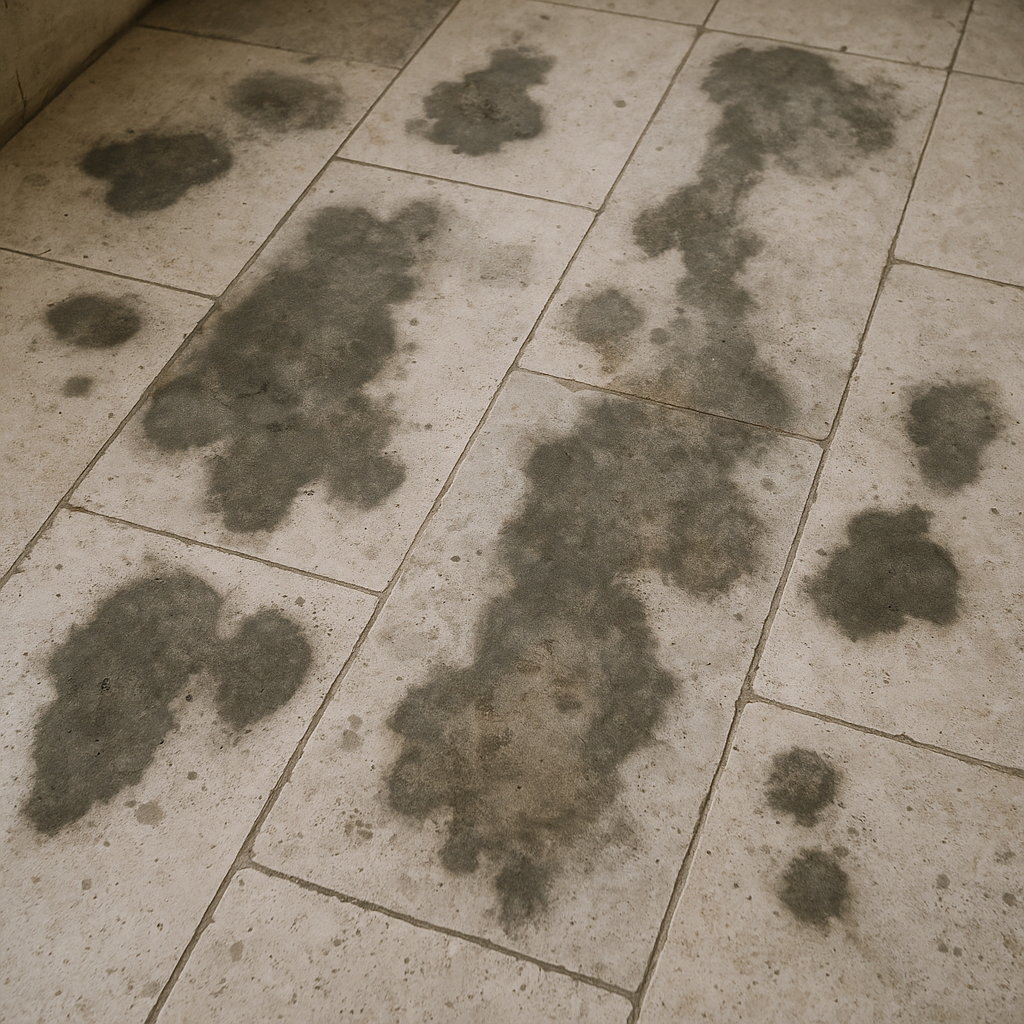
Dark stains, efflorescence or a haze that does not disappear — moisture penetration in natural stone has several causes. Some are easy to solve.

What Can You Do Yourself with Natural Stone, and What Is Better Left Alone?
Not every natural-stone task is best done yourself. Read when you can get started on your own and when it is better to call in a specialist.
Importing Natural Stone? Check Quality Control Before Handover
Importing natural stone yourself, or having it supplied through several parties, can work well, but it requires proper quality control. Especially with quartzite such as Taj Mahal, repair costs after installation can rise sharply.