Moisture Penetration in Natural Stone: Causes and What You Can Do
Dark stains, efflorescence or a haze that does not disappear — moisture penetration in natural stone has several causes. Some are easy to solve.
DecoStone Natural Stone
Natural stone specialist · Amsterdam
Table of contents
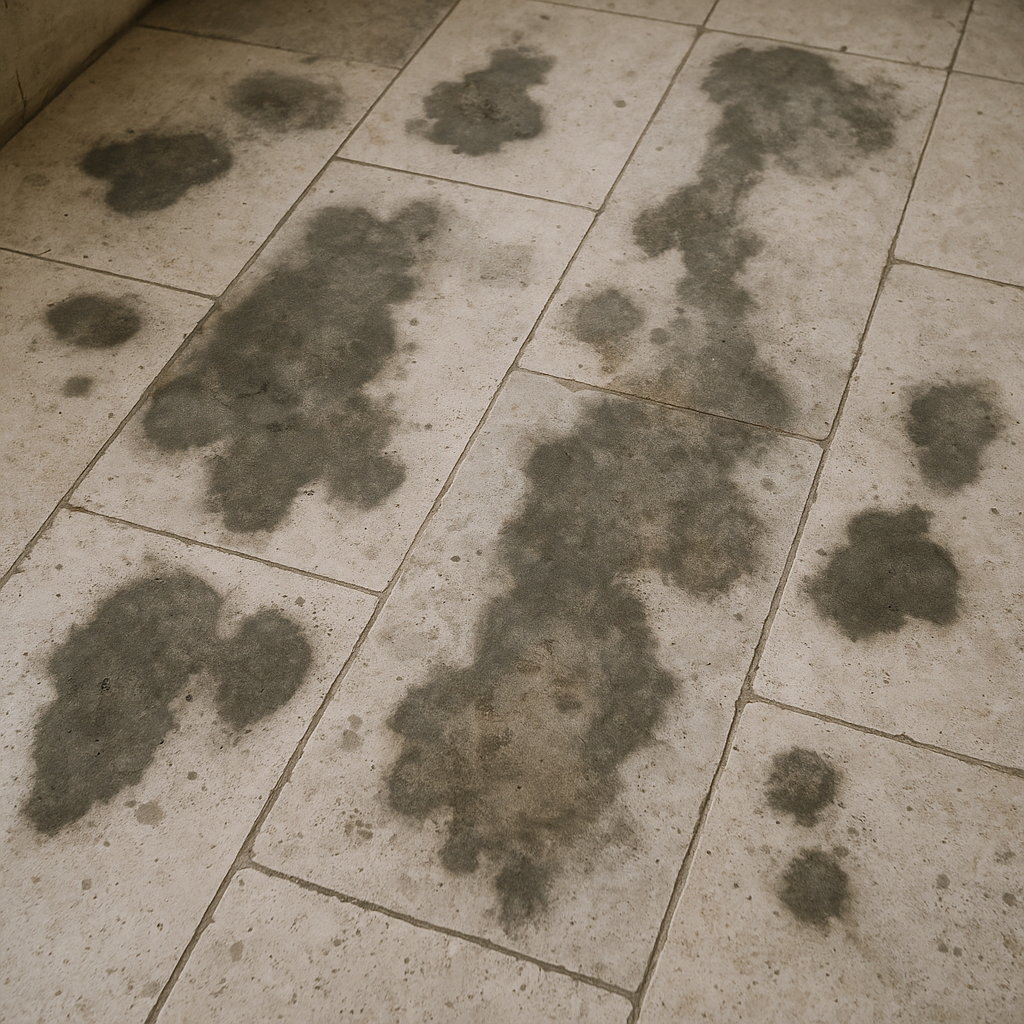
Not all dark spots are moisture damage
Before you panic about moisture penetration: a dark spot in a marble countertop is not always structural moisture damage. Sometimes it is simply water that has been absorbed and still needs to evaporate. Does the spot dry within an hour or two? Then there is probably nothing wrong.
Moisture penetration is when the spot remains, returns, or is accompanied by other symptoms such as white deposits, salt, or a mould-like smell.
Cause 1: Rising damp
The classic moisture problem in stone floors and walls on the ground floor or in cellars. Ground moisture rises by capillary action through the stones, the mortar layer and the natural-stone tiles.
How to recognise it:
- Dark lower edge of the tile or wall, which feels damp
- White lime efflorescence (see also: cause 3) along the lower area
- Problem is worst in winter or during prolonged rain
Cause:
- Missing or defective horizontal moisture barrier in the floor or foundation
- No sand-cement layer, or too thin a layer, between floor and stone
- Poor ventilation in combination with a crawl space
Solution: Impregnating the stone slows moisture absorption but does not solve the underlying problem. Structurally, the source must be addressed: a damp-proof system in the foundation, drainage, or a ventilated space under the floor. This is a building issue, not stone restoration.
Cause 2: Condensation
Condensation occurs when warm, moist air comes into contact with a cold stone surface. The air cools down and can no longer hold the moisture — it settles on the stone.
How to recognise it:
- Dark stains on window sills or floor tiles next to exterior walls
- Problem is worse in winter with poor insulation
- Stone feels cold at the problem area
Also read about white deposits on natural stone: cause and solution
Cause:
- Insufficient insulation of the wall or floor
- Plant pots or water containers standing directly on the stone
- Insufficient ventilation in bathrooms or cellars
Solution: Improve insulation. Place plant pots on saucers. Improve ventilation. A hydrophobic treatment can reduce water absorption from surface condensation, but it is not the solution for structural cold bridges.
Cause 3: Lime efflorescence
A white haze or white crystalline deposit on stone is a different phenomenon from dark moisture stains. It is the result of salts dissolved in moisture being left behind on the surface as that moisture evaporates.
How to recognise it:
- White, powdery or crystalline layer on the surface
- Temporarily disappears when wet but returns when dry
- Often present on new or recently laid floors
Cause:
- Salts in the mortar layer carried along by moisture movement
- Salts in groundwater moving upward by capillary action
- Drying too quickly at high temperatures immediately after installation
Solution: Lime efflorescence on new stone is often temporary — it stops once the mortar layer has cured and the salts have finished migrating out. Remove faster with special efflorescence cleaners (not vinegar — that etches the stone). After full curing, impregnate to help prevent new efflorescence.
Cause 4: Worn or missing impregnation
An untreated or no-longer-working impregnation layer allows surface water to penetrate directly into the stone. With rain, spills or intensive use, the stone turns dark and dries slowly.
How to recognise it:
- Drop test: water soaks in within 30 seconds without beading
- Stone becomes visibly darker after contact with water
- After drying, a light lime ring or moisture ring may be visible
Solution: Clean the stone thoroughly, let it dry completely (at least 48 hours), and impregnate it again. This is the simplest and most direct solution.
Cause 5: Damaged or missing joints
Broken or open joints allow water under the tiles. That water has no way out and remains between the tiles and the subfloor. The stones absorb the moisture from below.
How to recognise it:
- Moisture stains where joints are damaged
- Tiles that sound hollow (tap with a coin)
- In severe cases: tiles coming loose
Solution: Replace the joints. Tiles that have loosened must be fully re-bonded after the underlying layer has dried. Make sure the new joint is watertight for the application.
When should you call in a professional?
You can do a lot yourself, but the following situations require a specialist:
- Moisture penetration from the foundation or ground
- Tiles coming loose on a large scale due to moisture
- Moisture damage accompanied by mould growth in the structure
- Stones cracking internally from frost damage after long-term moisture exposure
Moisture problems in stone are rarely only a surface issue. The stone is the symptom — the cause lies elsewhere.
Need help?
Not sure about the right approach, or would you like to know what is possible? Send us a photo via WhatsApp and we will give you honest advice — without obligation.
Want to be sure which treatment is safe?
Send photos of the surface, room and problem. DecoStone assesses the material, damage pattern and risks before advising on a treatment or quotation.
Related articles
Preparing for the Workday: How to Be Ready for DecoStone
DecoStone will soon visit for maintenance, repair, polishing or impregnation of natural stone. With this preparation, the workday can run calmly, neatly and efficiently.
Importing Natural Stone? Check Quality Control Before Handover
Importing natural stone yourself, or having it supplied through several parties, can work well, but it requires proper quality control. Especially with quartzite such as Taj Mahal, repair costs after installation can rise sharply.
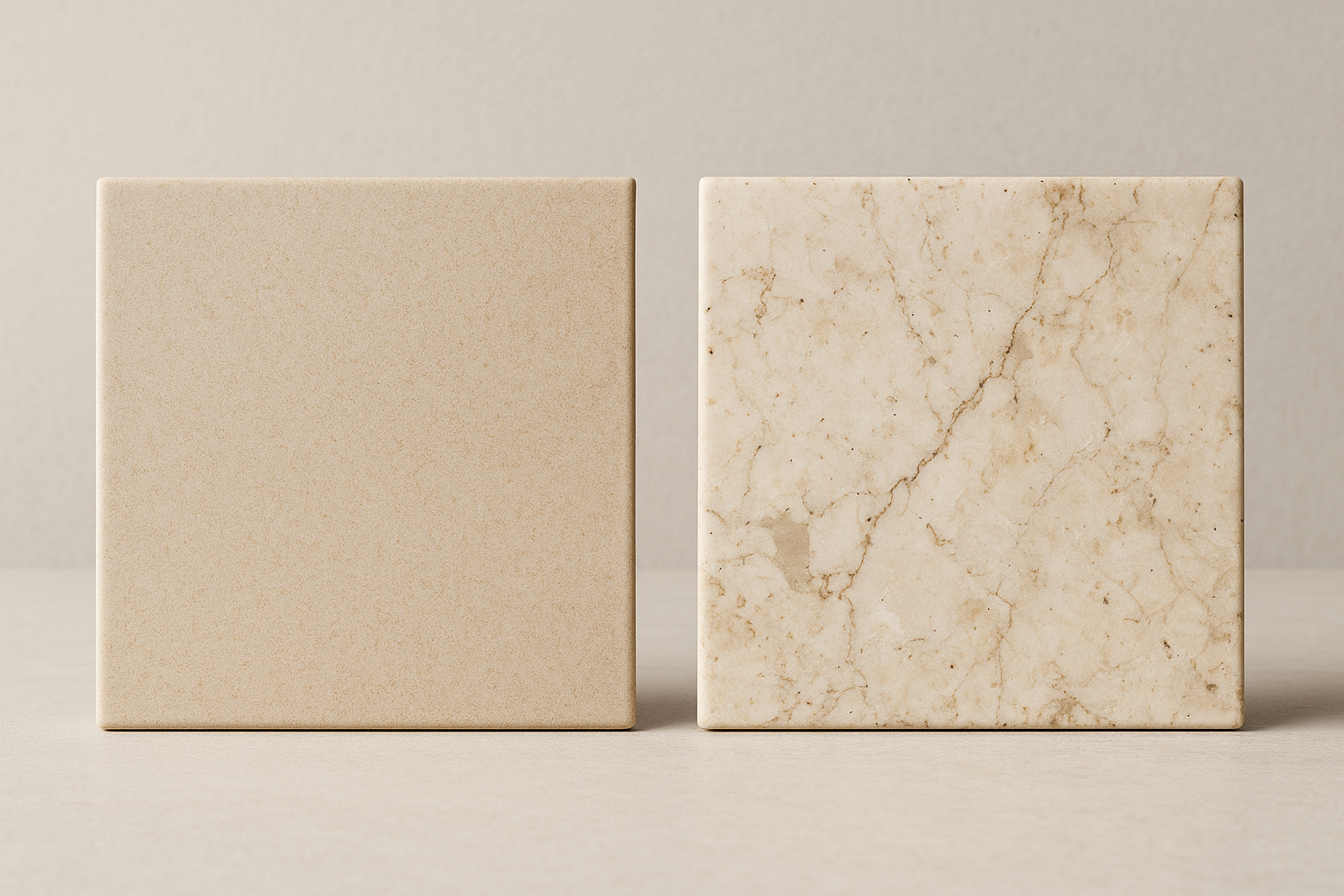
Ceramic vs. Real Natural Stone: An Honest Comparison
Ceramic tiles imitate stone better and better. But there are essential differences that only become visible after years — or sooner than expected. What should you consider?