White Deposits on Natural Stone: Cause, Prevention and Removal
White deposits (efflorescence) on natural stone are common but often misunderstood. Learn what they are, how they develop and what you can do about them.
DecoStone Natural Stone
Natural stone specialist · Amsterdam
Table of contents
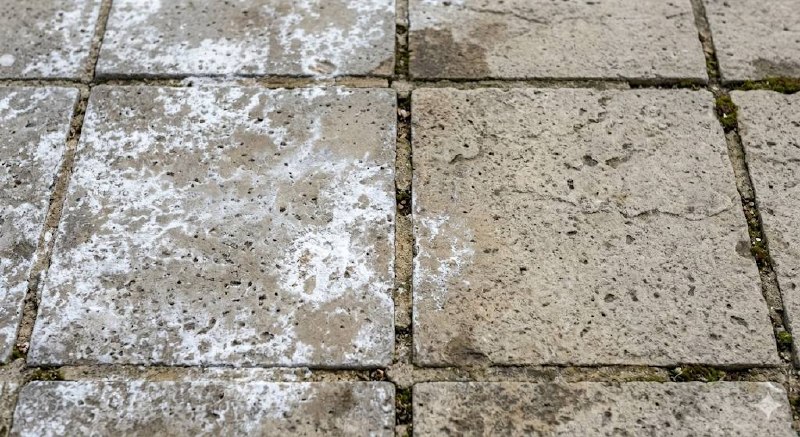
White deposits: frustrating but explainable
You lay a beautiful new bluestone floor. Everything looks good. Then, after a few weeks, white streaks, hazes or crystalline patches appear — precisely on the dark stone that looked so impressive.
White deposits, also known as efflorescence or lime bloom, are one of the most common complaints we receive at DecoStone. They are also among the most misunderstood.
Understanding what they are and what causes them is the first step toward a good solution.
What exactly is efflorescence?
Efflorescence is the phenomenon in which soluble salts (mainly calcium carbonate, but sometimes also sulphates, nitrates or chlorides) move to the surface of a stone through moisture transport and crystallise there.
The mechanism:
- Moisture is present in or beneath the stone (construction moisture, groundwater, rain)
- This moisture dissolves minerals present in the stone, mortar, substrate or concrete underneath
- The moisture moves to the surface by capillary action
- At the surface, the water evaporates
- The minerals remain behind as crystals — that is the white deposit
Efflorescence is therefore not a production fault in the stone. It is a symptom of moisture transport.
What causes it?
Construction moisture in new structures
The most common cause with newly installed stone: concrete, mortar beds and cement joints contain a lot of moisture that has to evaporate after installation. This evaporation is not even — part of it travels upward through the stone. Especially if there is a vapour barrier or PVC underneath, the moisture has nowhere else to go.
This type of deposit is temporary: as the structure dries out, the efflorescence decreases by itself. On average, this takes 3–12 months.
Impregnating too early
If you impregnate the stone while construction moisture is still inside, you seal the pores. The moisture can no longer move upward, so it finds another route and pushes the impregnation layer up from within. This causes white deposits that are more stubborn than normal efflorescence.
Rule: Never impregnate stone that still contains construction moisture. Wait at least 48–72 hours after grouting; for larger surfaces and thick mortar beds, sometimes longer.
Moisture problems in the substrate
If efflorescence does not decrease over time but keeps returning, there is a moisture problem in the substrate: rising damp, a leak, or insufficient waterproofing. This is a building-technical problem that must be addressed separately. Removing the deposit will then only have a temporary effect.
Using too much water when cleaning
A floor that is regularly mopped wet with too much water can show efflorescence. The water penetrates the stone, dissolves salts and brings them to the surface. Use as little water as possible when cleaning natural stone.
Efflorescence vs. limescale: the difference
Both are white and appear on stone, but there is a difference:
Efflorescence:
- Salts coming from within
- Powdery or crystalline in structure
- Sometimes blistering or flaking
- Often along joints and in concentrated areas
- Recurs when moisture problems are present
Limescale:
- Lime from tap water left on the surface after evaporation
- Thin, glossy, sometimes iridescent layer
- Typically around taps, shower heads and drip marks
- Disappears with cleaning and returns when untreated tap water remains
The approach differs: efflorescence is removed with a mildly acidic solution or a specialised efflorescence cleaner. Limescale is removed with a descaler suitable for natural stone.
Removing efflorescence
Step 1: Wait with new floors
If the stone was recently installed and the deposit is light and powdery, wait 4–8 weeks first. Much construction efflorescence resolves on its own as the structure dries. Brush away dry powdery deposits with a soft brush. Do not wet-clean, because that reactivates moisture transport.
Step 2: Dry cleaning
Remove loose powder with a soft brush. Do not smear it with a wet cloth; that spreads the salts further.
Step 3: Wet treatment
For stubborn deposits or crystal formation:
- Lithofin Efflorescence Remover or similar: prepare according to the product instructions, apply to the stain, allow to work for 5–10 minutes, then rinse with plenty of clean water
- Mild acid solution (maximum 5% hydrochloric acid solution), only on silicate-rich stone (granite, slate). Never on calcite-rich stone (marble, bluestone, limestone, travertine). This immediately causes etching.
Step 4: Check the cause
If efflorescence returns after cleaning, there is a moisture source that must be addressed. A building expert or specialist should identify the origin.
Preventing efflorescence
- Do not impregnate too early: wait until the stone and substrate are completely dry
- Use a good impregnator: after drying, use a high-quality impregnator that protects the pores. BioShield effectively protects pores and regulates moisture transport.
- Use as little water as possible when cleaning: use a well-wrung mop, not a bucket of water over the floor
- Ensure good drainage for outdoor stone: with terraces and paving, proper runoff is crucial
- Moisture isolation with problematic substrates: with rising groundwater or locations near ground level, always include a vapour barrier in the system
When should you call in a specialist?
- Efflorescence that returns after multiple cleanings
- Deposits combined with loose tiles
- Dark stains next to the white deposits (a combination of moisture and mould)
- Deposits on the inside of a cellar or damp room
- You have already tried to deal with it yourself but see no improvement
DecoStone analyses the cause and provides a concrete approach: not just treating the symptoms, but removing the source.
Need help? Contact DecoStone →
See also: Maintaining a bluestone floor: the complete guide
Need help?
Not sure about the right approach, or would you like to know what is possible? Send us a photo via WhatsApp and we will give you honest advice — without obligation.
Want to be sure which treatment is safe?
Send photos of the surface, room and problem. DecoStone assesses the material, damage pattern and risks before advising on a treatment or quotation.
Related articles
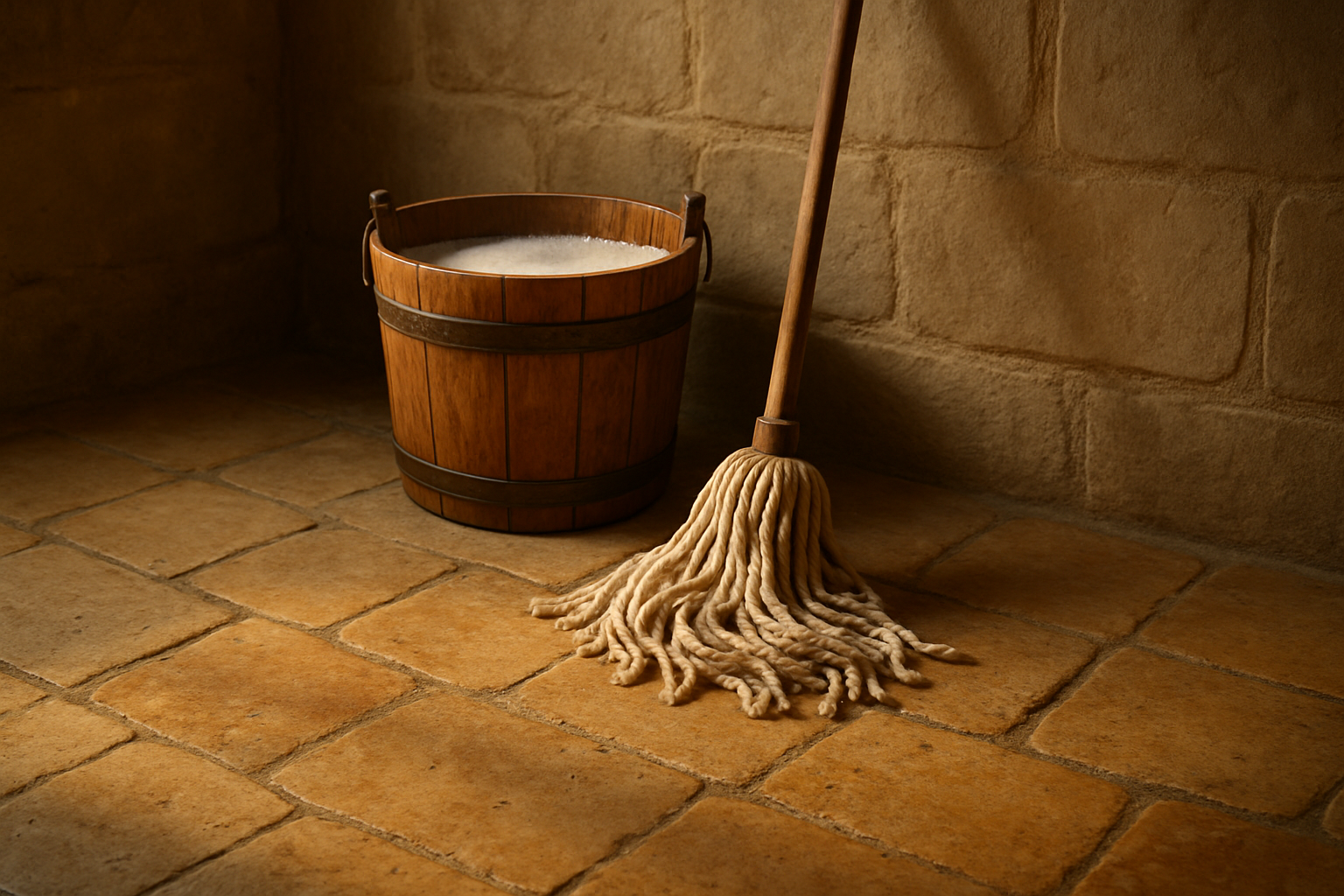
The Lime Soap Method for Antique Floors: What It Is and When to Use It
Lime soap is a traditional method for cleaning and protecting antique natural stone floors. It is not suitable for everything, but works well on the right floor.
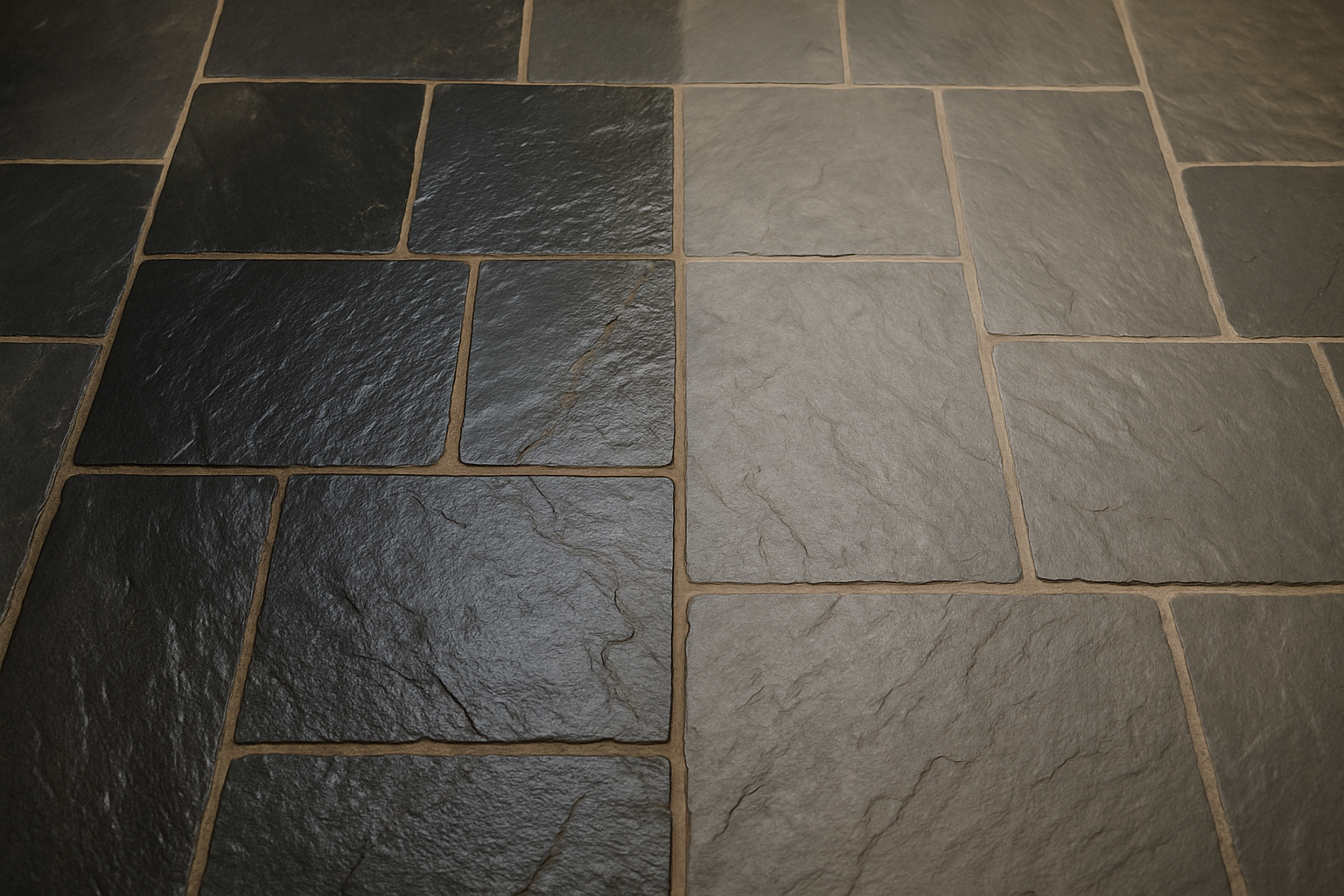
Slate Maintenance: Oil or Impregnate — Which Works Better?
Slate needs a different approach from marble or bluestone. Oiling and impregnation each give a different result. What you choose depends on the application.
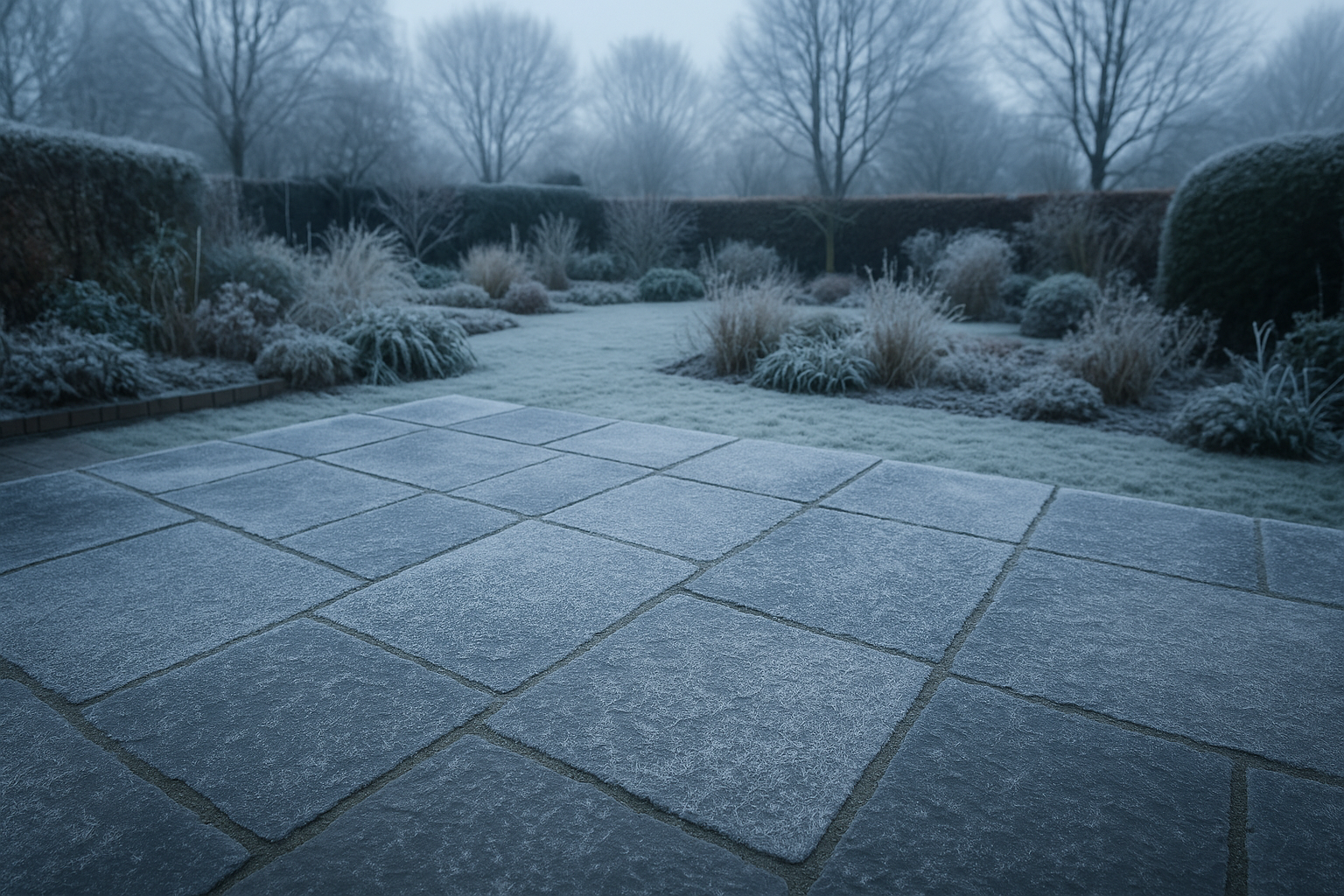
Preparing Outdoor Natural Stone for Winter: What Works and What Does Not
Frost damage to slate terraces, bluestone or limestone paving can often be prevented. But not with every product, and not always completely. An honest guide.