Maintaining a Bluestone Floor: The Complete Guide
Belgian bluestone is durable and timeless, but it requires specific maintenance. Everything about weathering, impregnation, daily cleaning and restoration.
DecoStone Natural Stone
Natural stone specialist · Amsterdam
Table of contents
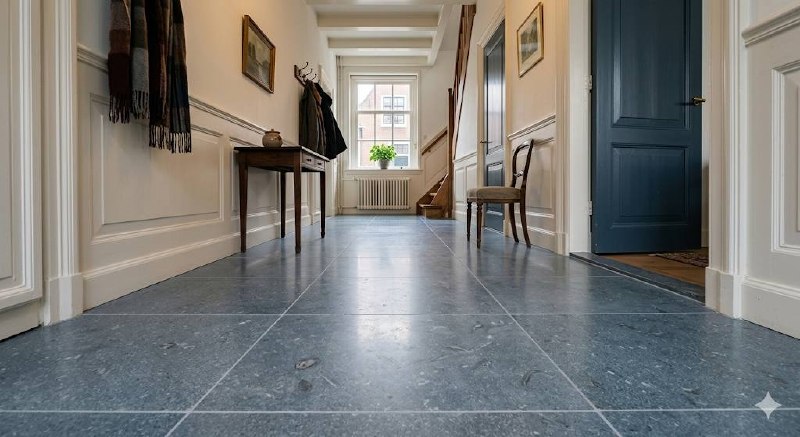
Bluestone: robust, but not carefree
Belgian bluestone (or petit granit) is one of the most popular natural stones in the Netherlands and Belgium. Its dark colour, high hardness and understated elegance make it a timeless material for floors, stairs, window sills and facades.
Still, many owners make the mistake of thinking that bluestone is maintenance-free. It is not. Bluestone has its own specific vulnerabilities, and anyone unaware of them will sooner or later run into white deposits, wear or stains that are difficult to remove.
This guide explains everything: from initial installation to daily maintenance and periodic restoration.
What exactly is Belgian bluestone?
Belgian bluestone is a dark grey to blue limestone quarried in the Belgian region around Namur and Hainaut. The stone is compact, has few pores compared with other limestones, and is particularly wear-resistant.
Properties:
- High compressive strength
- Frost-resistant (when treated correctly)
- Calcite-based: sensitive to acid
- Absorbent enough to impregnate
- Discolours in contact with iron (rust formation)
Applications:
- Entrance halls and stairs
- Kitchen and bathroom floors
- Terrace floors and pavements
- Window sills and thresholds
- Facades and plinths
Weathering: the mysterious phenomenon
If you buy a bluestone floor in the Netherlands or Belgium, sooner or later you will hear the Dutch word zoeten. What does it mean?
Freshly installed bluestone has a dark blue, almost black tone. Over time, usually over several months to a year, the surface changes to a lighter grey. This process is called zoeten in Dutch: the stone lightens as it dries and weathers.
It is a natural process: the stone dries out completely, lime migrates to the surface and the surface oxidises slightly. It is irreversible and not a defect.
What you should know about this weathering:
- It is normal and unavoidable with Belgian bluestone
- The final colour depends on the specific block of stone
- Slabs within one floor can weather slightly differently, creating small colour differences
- This also applies if part of the floor is protected (for example under furniture): those slabs weather more slowly
If you want to retain the dark colour: discuss the use of a colour-enhancing impregnator (such as Lithofin Color Intensifier) before installation. This can significantly slow the lightening process.
Impregnating bluestone
Bluestone should be impregnated to resist stains and regulate moisture transport. This applies both indoors and outdoors.
When to impregnate?
- New: immediately after installation, once the stone is completely dry (at least 48 hours after grouting)
- Existing: if the water absorption test gives a negative result (see below)
- After polishing or sanding: always impregnate again
Water absorption test
Drip water onto the floor. If the water:
- Remains as a drop: impregnation is still active ✓
- Soaks in slowly (>5 min): impregnation is weakening — consider reapplying
- Soaks in immediately (less than 2 min): impregnation is no longer working; impregnate as soon as possible
Which product?
For bluestone, we recommend BioShield or Lithofin MN Stain Stop. Both are solvent-free, environmentally friendly and suitable for calcite-rich stones.
Please note: Do not use oil-based impregnators on bluestone; they can cause yellow stains.
Daily maintenance of a bluestone floor
Cleaning
- Vacuum or sweep dry before wet cleaning: sand and dust are abrasive
- Wet cleaning: lukewarm water with a pH-neutral stone cleaner (Lithofin Easy Care or similar)
- Never: vinegar water, soda, bleach, tile cleaner or lemon-based products
- Use a mop with as little water as possible: too much water can promote white deposits
Outdoors (terrace, pavement)
- Sweep periodically to remove leaves and dirt
- In autumn: clean with a special outdoor cleaner to help prevent biological growth
- After winter: check for frost damage and clean any light deposits
Common problems and solutions
White deposits (efflorescence)
White deposits on bluestone are lime that moves to the surface with moisture and crystallises there. It looks like a white haze or streaks.
Causes:
- Impregnating too early (stone still damp)
- Moisture problems in the substrate
- Using too much water when cleaning
- A new floor that is still drying out completely
Solution: Mild white deposits can be removed with a specialised efflorescence cleaner (for example Lithofin Efflorescence Remover). With stubborn or recurring deposits, there may be a moisture problem in the substrate; consult a specialist.
Read all about white deposits on natural stone: cause and solution
Rust-coloured stains
Bluestone naturally contains iron particles. In combination with moisture and oxygen, these can oxidise into rust-coloured stains. This is worsened by:
- An iron-containing screed underneath
- Rusting tools or furniture legs
- Iron-rich water
Solution: A specialised water-based rust remover. Be careful: the wrong products can damage the stone. Preferably have this done by a professional.
More about removing rust discolouration from natural stone
White rings (limescale)
Limescale from hard water is normal in Amsterdam and the surrounding area. It is not damage, but it can look unattractive.
Solution: Lithofin Stain Remover or a special descaler for natural stone. Never use vinegar: it attacks the calcite in the stone.
Deep scratches or wear
With intensive use, the surface of bluestone wears, especially on stairs and threshold zones.
Solution: Sanding and polishing by a specialist, followed by renewed impregnation. DecoStone tackles this with professional sanding machines that restore the stone to its original condition.
When should you call in a specialist?
Daily cleaning and annual impregnation can be DIY tasks. But call us if:
- White deposits return after cleaning
- Rust-coloured stains are present
- The floor looks matte and dull
- Scratches or signs of wear are visible
- Joints come loose or discolour
- The outside floor has green or black deposits
Do you have a bluestone floor that needs maintenance? We would be happy to visit for a no-obligation inspection.
Need help?
Not sure about the right approach, or would you like to know what is possible? Send us a photo via WhatsApp and we will give you honest advice — without obligation.
Want to be sure which treatment is safe?
Send photos of the surface, room and problem. DecoStone assesses the material, damage pattern and risks before advising on a treatment or quotation.
Related articles
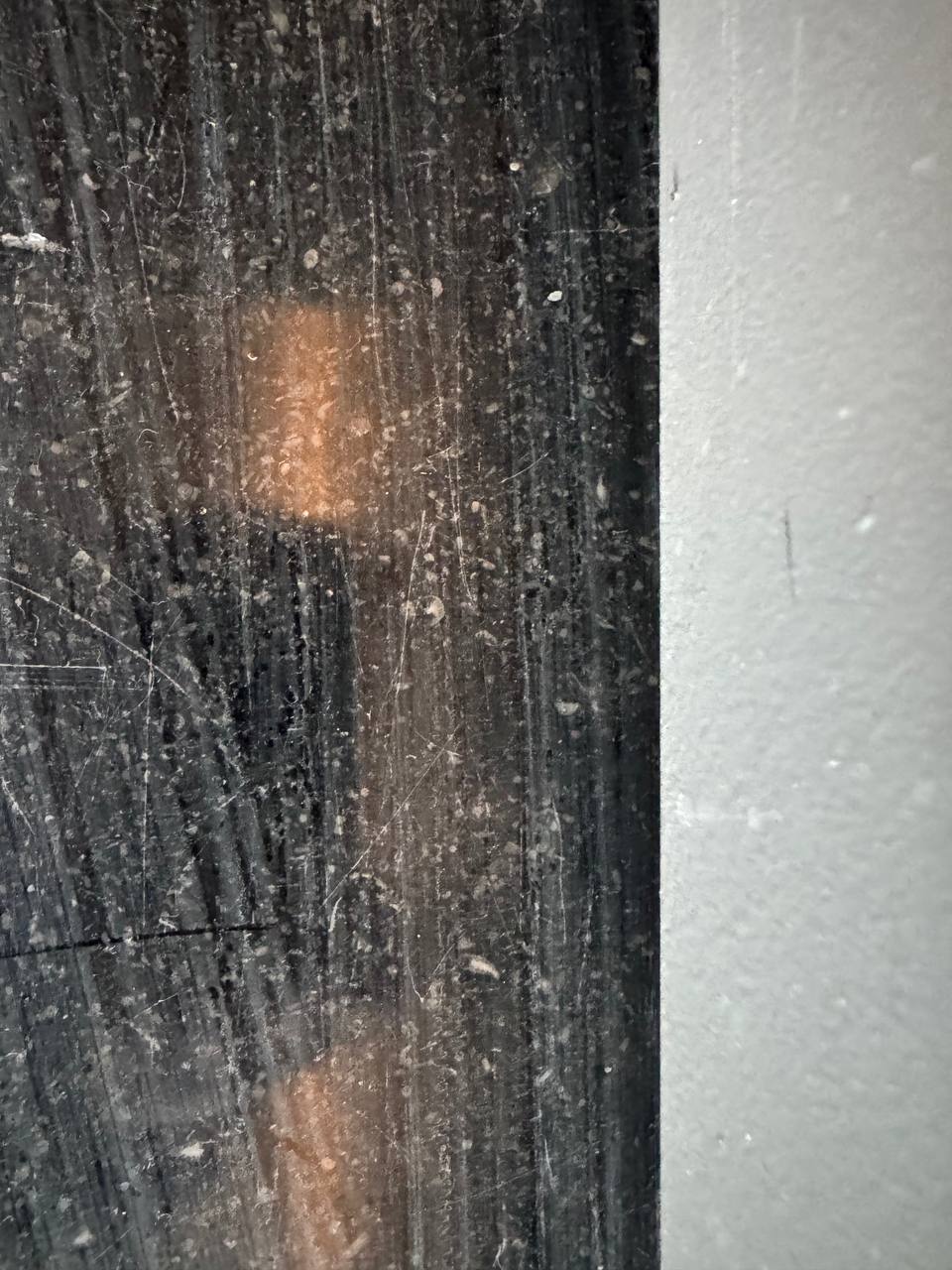
Scratches in Bluestone from Vacuum Cleaning: Cause, Recognition and Prevention
Why a vacuum cleaner with a metal or hard nozzle causes scratches in Belgian bluestone, how to recognise the damage and what you can do about it.
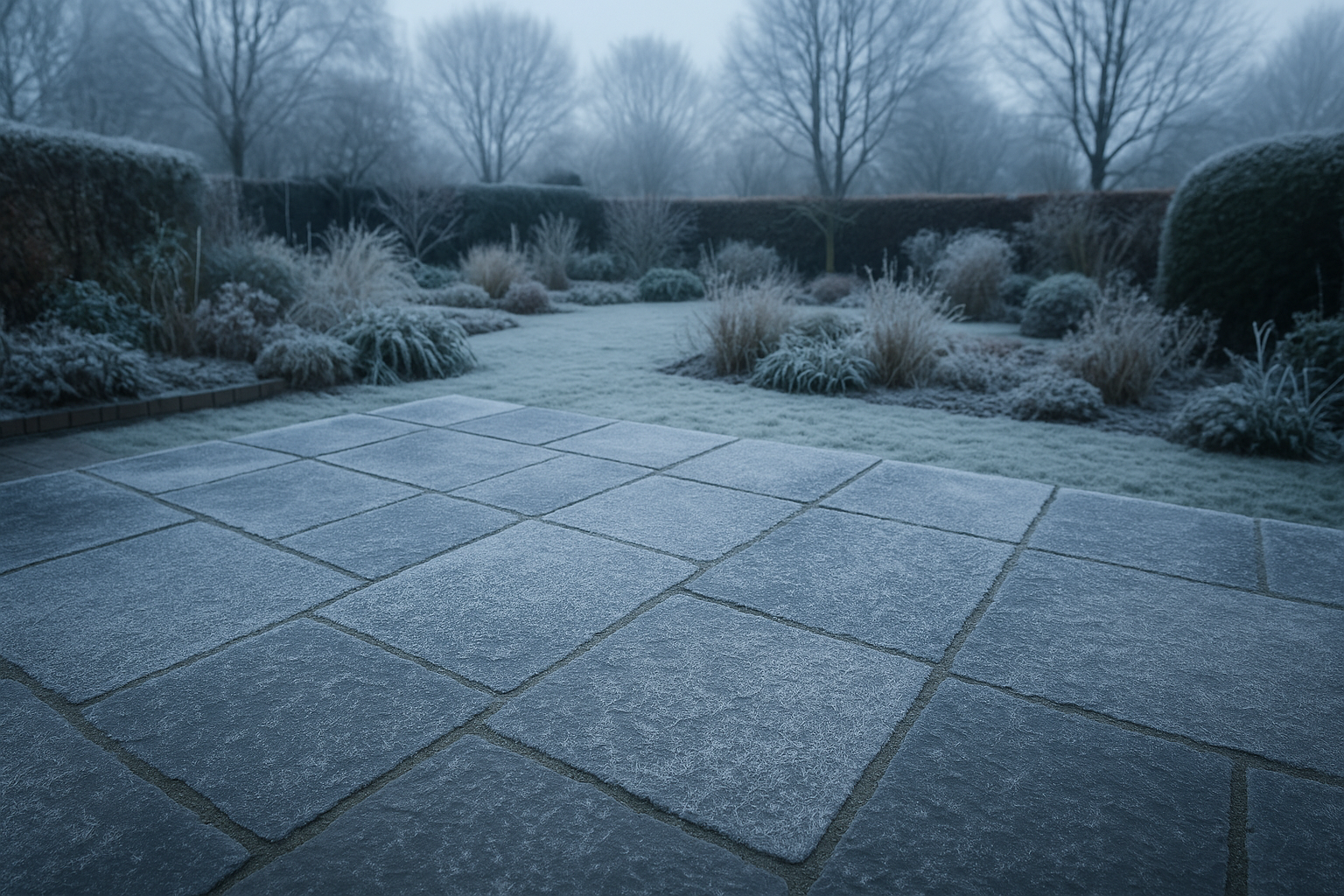
Preparing Outdoor Natural Stone for Winter: What Works and What Does Not
Frost damage to slate terraces, bluestone or limestone paving can often be prevented. But not with every product, and not always completely. An honest guide.
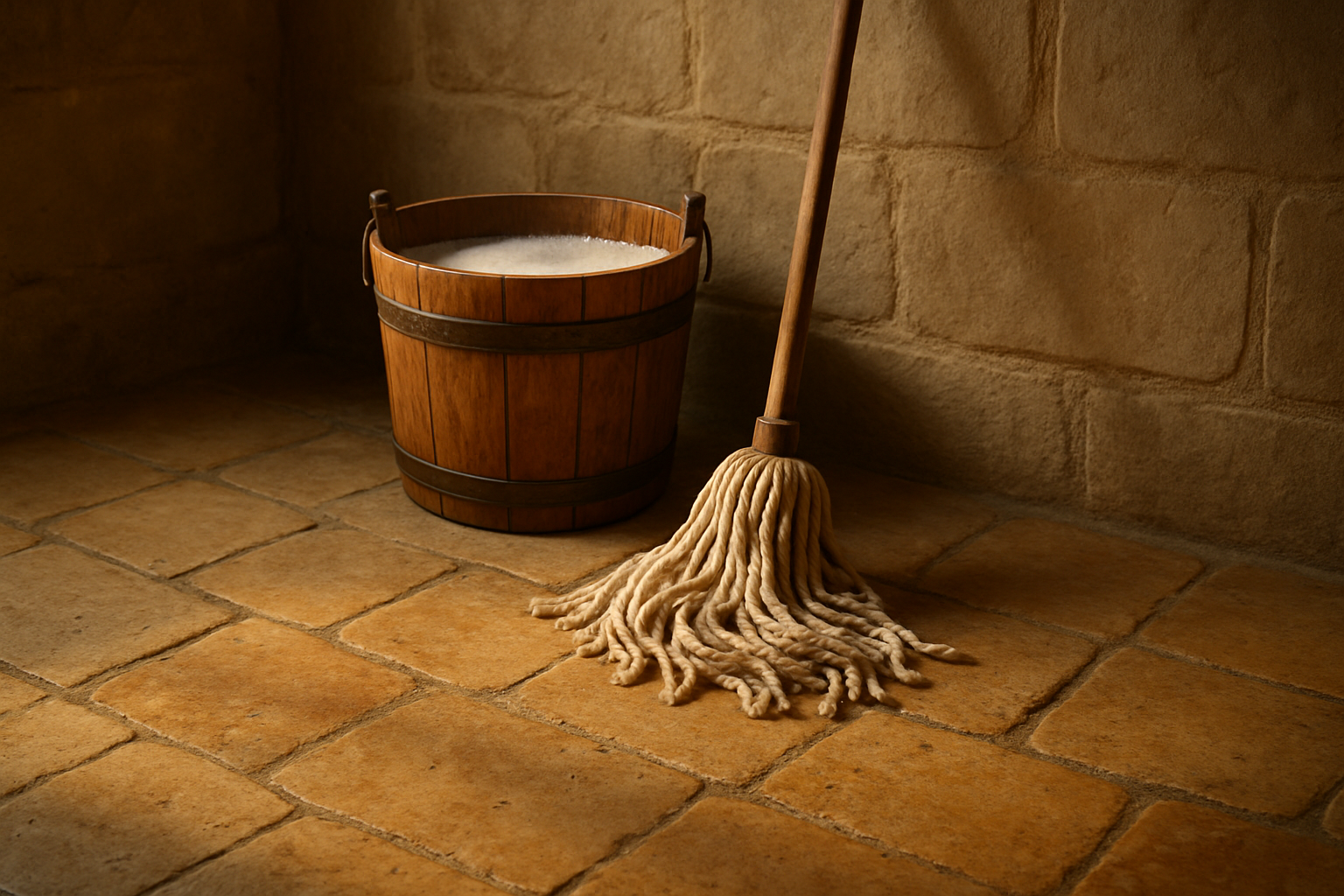
The Lime Soap Method for Antique Floors: What It Is and When to Use It
Lime soap is a traditional method for cleaning and protecting antique natural stone floors. It is not suitable for everything, but works well on the right floor.