Scratches in Bluestone from Vacuum Cleaning: Cause, Recognition and Prevention
Why a vacuum cleaner with a metal or hard nozzle causes scratches in Belgian bluestone, how to recognise the damage and what you can do about it.
DecoStone Natural Stone
Natural stone specialist · Amsterdam
Table of contents
The problem almost nobody recognises
You invest thousands of euros in a beautiful Belgian bluestone floor. You enjoy it for years. Then, one day, you notice it: fine, elongated scratches along the skirting boards. Always in the same direction. Always in the same places.
The culprit? Your vacuum cleaner.
It sounds harmless, but a vacuum cleaner with a metal or hard plastic nozzle is one of the most common causes of scratch damage to Belgian bluestone. The treacherous part is that you only notice it once the damage is already there.
How do these scratches occur?
Belgian bluestone (also known as petit granit) is a limestone with a relatively high hardness. But “hard” is not the same as “scratch-proof”. On the Mohs scale, bluestone scores between 3 and 4 — comparable to a copper coin. Metal, grains of sand or stone grit caught under the nozzle are harder.
When vacuuming along the skirting board, the nozzle moves repeatedly in the same direction: back and forth, parallel to the wall. Dirt, grains of sand or stone grit are not sucked up immediately, but are first dragged along. The result: fine, parallel scratches in the lengthwise direction of the skirting.
Why especially along the skirting board?
- Most dust and grit accumulates along skirting boards
- The nozzle is often pressed against the stone here with extra force
- The movement is always in the same direction, causing scratches to build up
- With an upstanding skirting board, the nozzle directly touches the vertical surface
Recognition: what vacuum-cleaner scratches look like
Typical features of vacuum-cleaner scratches:
- Direction: always parallel to the skirting board, lengthwise
- Location: only along skirting boards and edges, not in the middle of the floor
- Pattern: fine, parallel lines close together
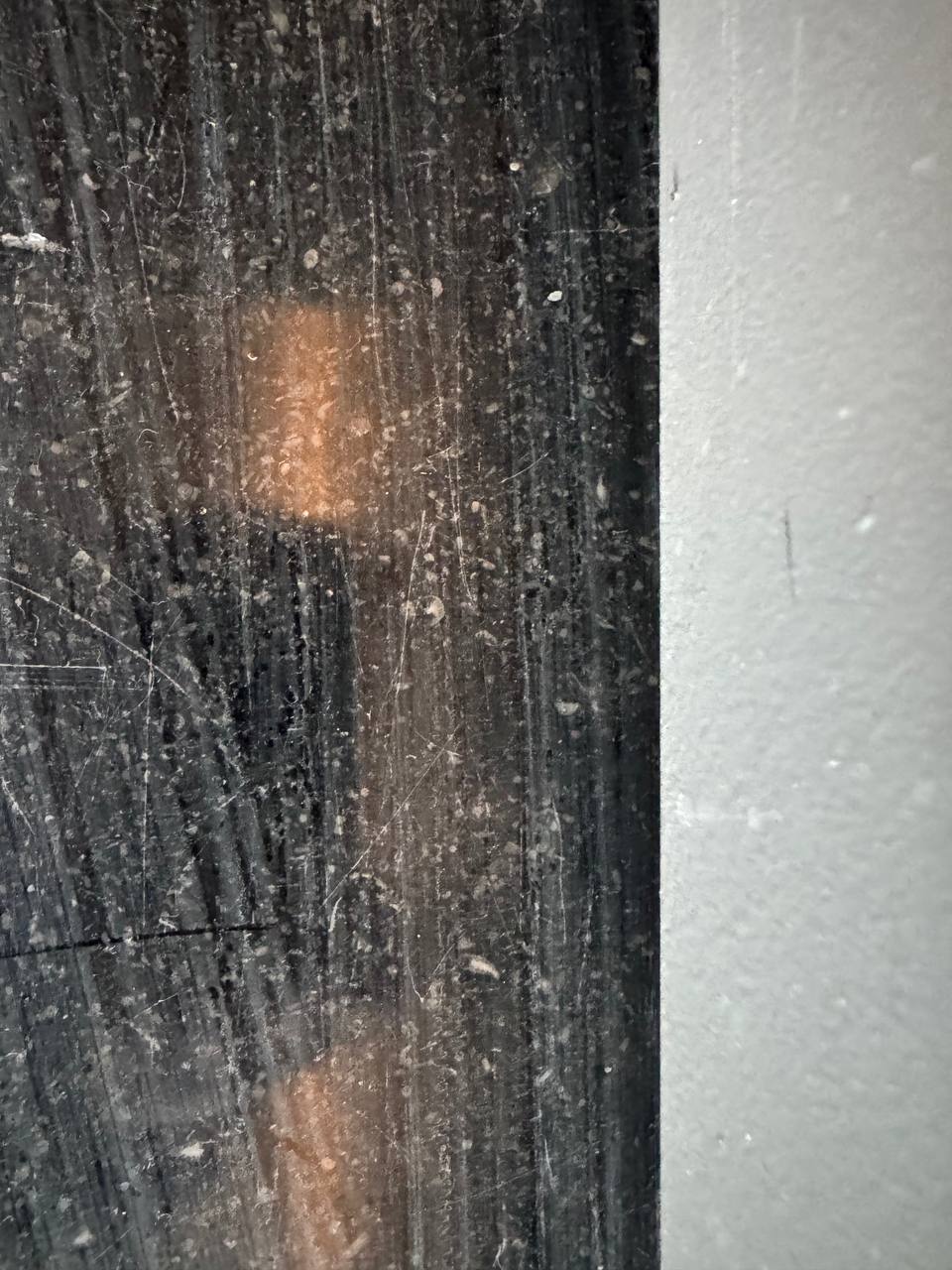
- Depth: superficial but visible, especially in raking light or on a polished finish
The photo with this article shows a typical example: a Belgian bluestone skirting board with clearly visible lengthwise scratches. The light reflection makes the scratches even more visible.
Which vacuum cleaners cause this?
Not every vacuum cleaner is a risk. The problem is in the nozzle:
Avoid
- Nozzles with a metal underside or metal strip
- Hard plastic nozzles without a rubber edge
- Nozzles with wheels that trap and drag sand
- Robot vacuum cleaners with hard brushes or unprotected wheels
Safe
- Nozzles with a soft rubber edge or felt underside
- Parquet nozzles (designed for vulnerable floors)
- Nozzles with natural-hair brushes
What can you do about it?
Prevention
-
Use a parquet nozzle. This is the simplest and least expensive solution. A parquet nozzle has soft brushes or a felt underside that does not damage the stone. It is available from every vacuum-cleaner manufacturer.
-
Do not vacuum along the skirting board. Use a soft hand brush or microfibre cloth along the edges instead.
-
Place a doormat at every entrance. Sand and stone grit from outside are the real scratch makers. The less dirt on the floor, the less damage during vacuuming.
-
Check the wheels of your vacuum cleaner. Jammed wheels that scrape across the floor cause the same scratches as the nozzle itself.
Repair
If the damage is already visible, there are several options depending on severity:
- Light scratches: a professional can locally re-hone or polish the stone. The scratches are ground away and the surface regains its original appearance.
- Deeper scratches: with more serious damage, the floor along the skirting may need to be fully repolished or re-honed. This is specialist work.
- Entire floor: if scratch damage is widespread, the full floor can be re-honed and impregnated. This is the most thorough approach.
Other common mistakes in bluestone maintenance
Vacuum-cleaner scratches are not the only risk. Other common mistakes include:
- Using cleaning vinegar: bluestone is a limestone and reacts to acids. Vinegar causes etching — dull, matt marks that can no longer be polished away by simple cleaning.
- Using acidic all-purpose cleaner: many household cleaners contain citric acid or acetic acid. Use only pH-neutral cleaners.
- Mopping too wet: bluestone is more porous than many people think. Excess water penetrates the stone and can cause white efflorescence.
Read the complete guide to maintaining a bluestone floor
More about white efflorescence on bluestone: cause and solution
Summary
| Aspect | Advice |
|---|---|
| Nozzle | Parquet nozzle with soft brushes or felt |
| Along the skirting | Hand brush or microfibre cloth |
| Cleaning product | pH-neutral, no vinegar or citric acid |
| Doormat | At every entrance, indoors and outdoors |
| Scratch repair | Honing or polishing by a professional |
Need help?
Does your bluestone floor have scratch damage or other wear? DecoStone restores Belgian bluestone by honing, polishing and impregnating. Contact us without obligation for an on-site assessment.
Want to be sure which treatment is safe?
Send photos of the surface, room and problem. DecoStone assesses the material, damage pattern and risks before advising on a treatment or quotation.
Related articles
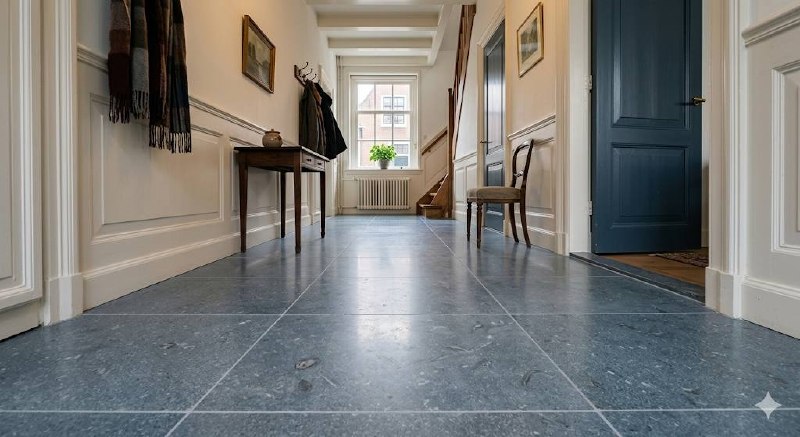
Maintaining a Bluestone Floor: The Complete Guide
Belgian bluestone is durable and timeless, but it requires specific maintenance. Everything about weathering, impregnation, daily cleaning and restoration.
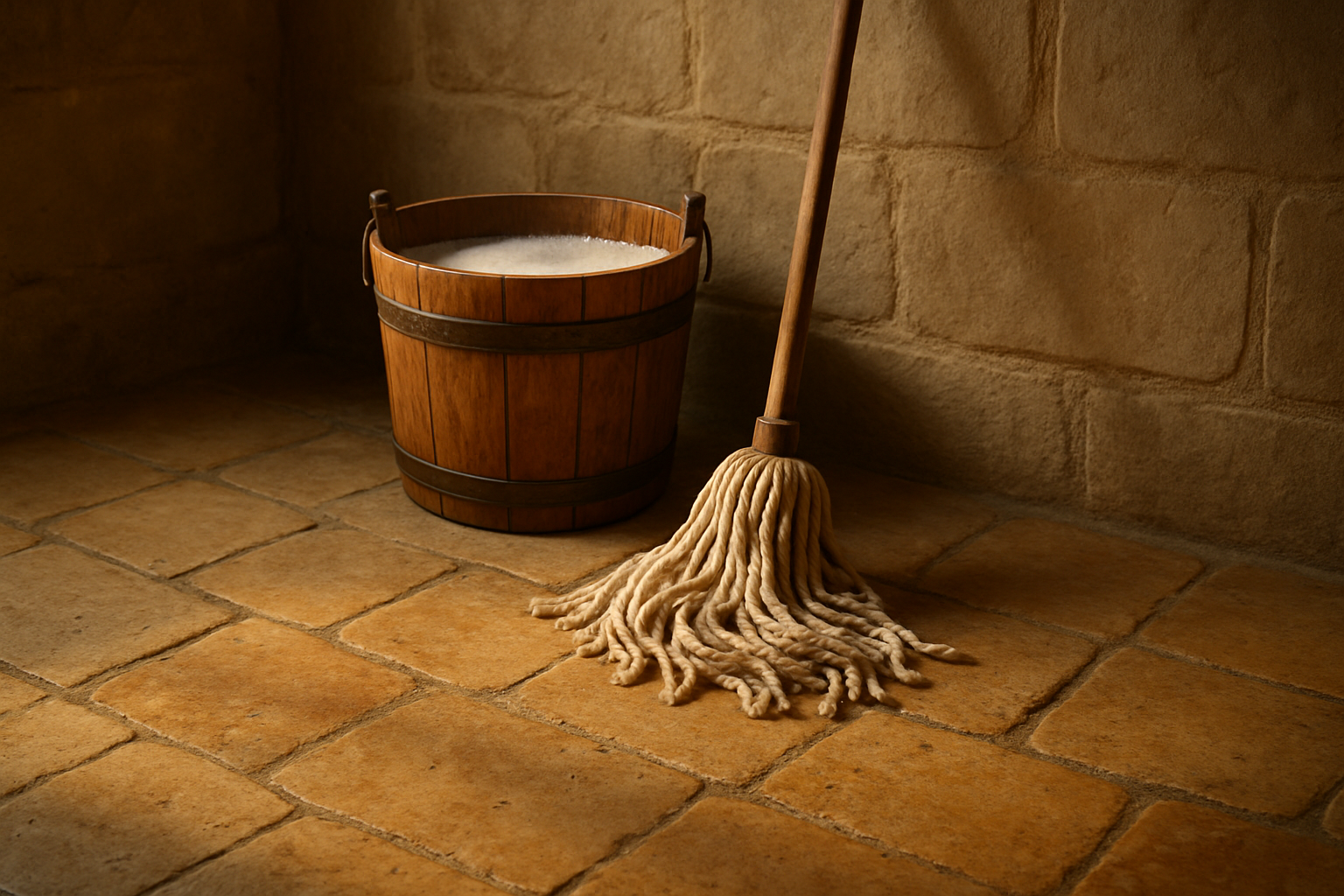
The Lime Soap Method for Antique Floors: What It Is and When to Use It
Lime soap is a traditional method for cleaning and protecting antique natural stone floors. It is not suitable for everything, but works well on the right floor.
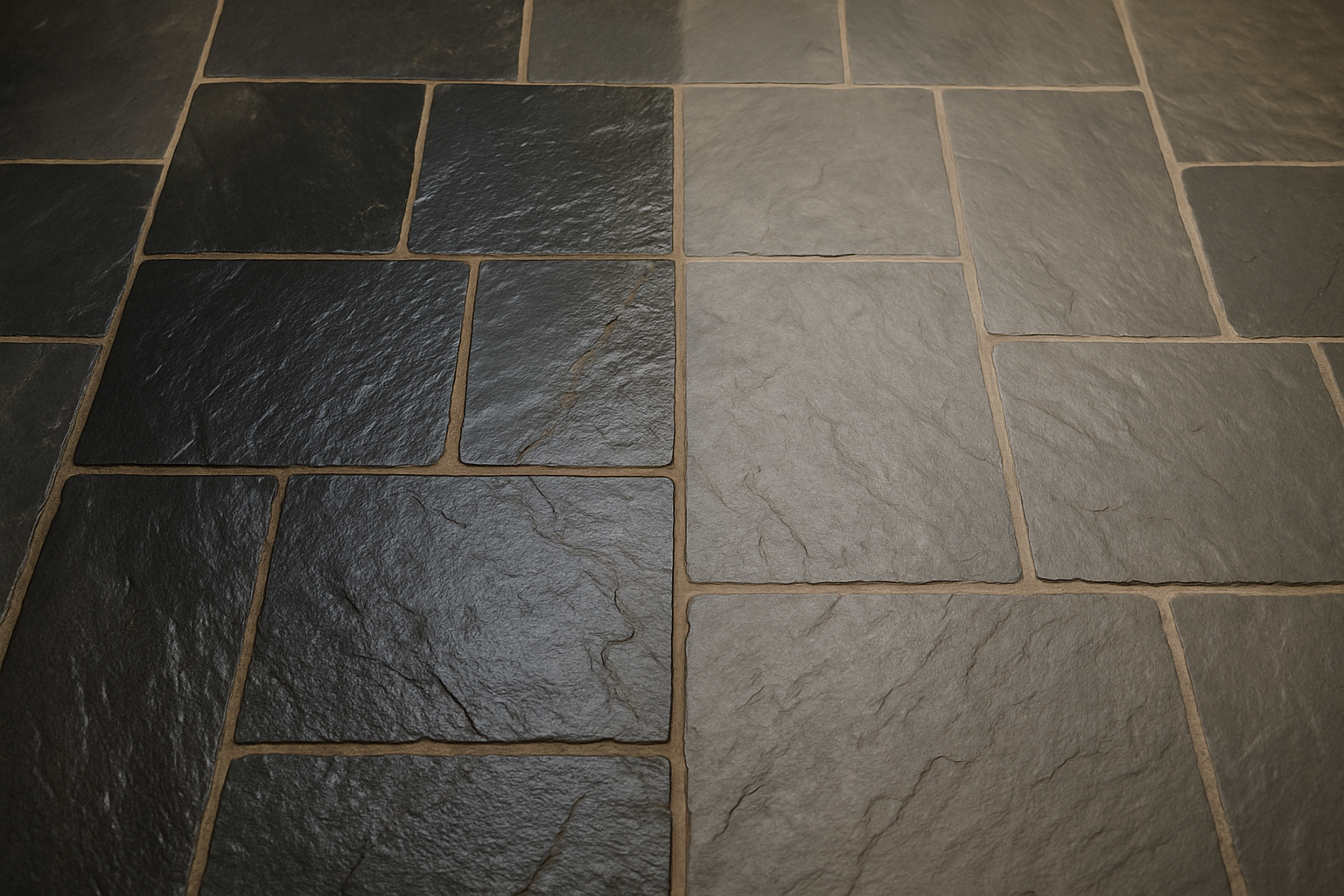
Slate Maintenance: Oil or Impregnate — Which Works Better?
Slate needs a different approach from marble or bluestone. Oiling and impregnation each give a different result. What you choose depends on the application.