Natural Stone around a Swimming Pool: What Is Chlorine-Resistant?
Chlorine, UV radiation, wet feet and temperature changes — a pool edge places extreme demands on stone. Not every natural stone survives it.
DecoStone Natuursteen
Natural stone specialist · Amsterdam
Table of contents
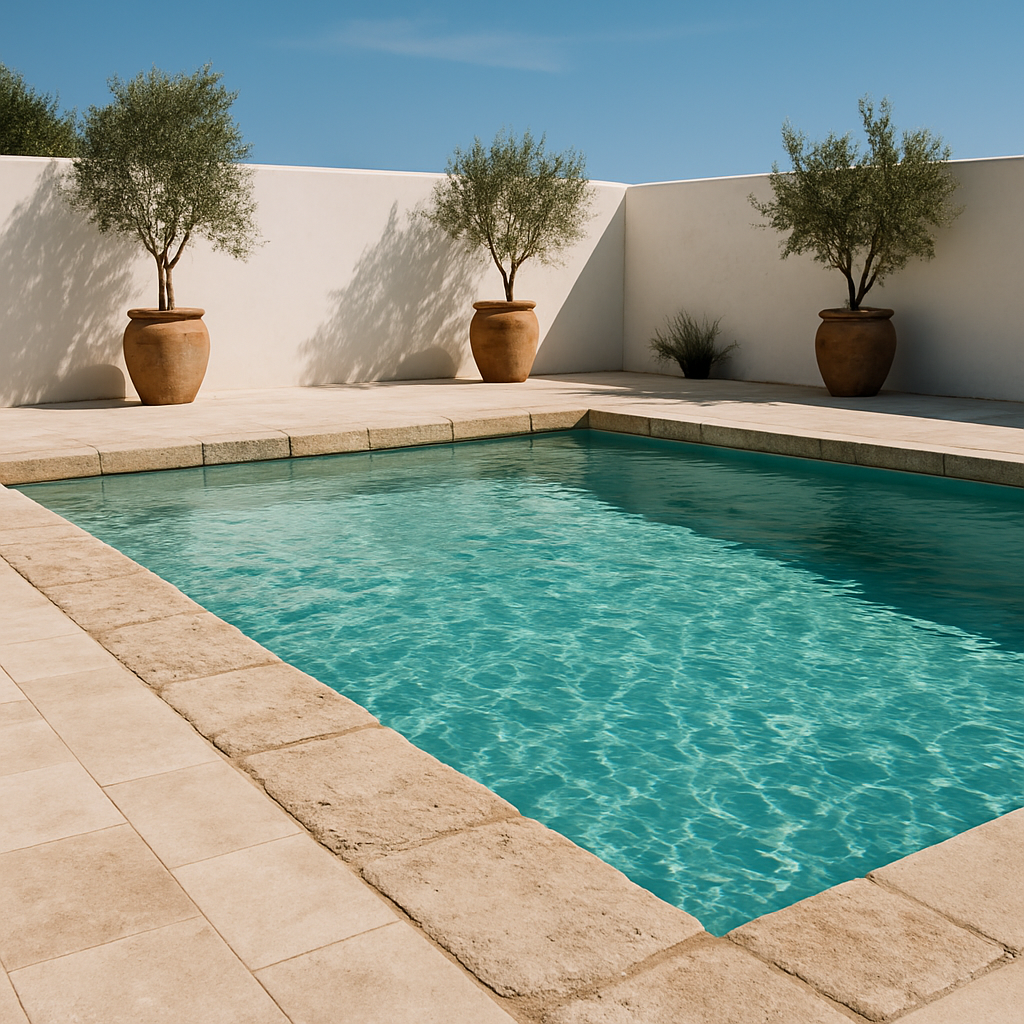
A pool edge is not an ordinary outdoor floor
Anyone who thinks pool finishing is the same as terrace paving underestimates what is involved. A pool edge is exposed to:
- Chlorine or salt (in saltwater pools) from splashes and vapour condensation on the stone
- UV radiation that attacks coatings and certain binders
- Constant moisture on the underside and direct contact with pool water
- Thermal shock: cold stone, warm water, sun heating the stone to 60°C
- Wet feet — slipperiness is a real safety risk
Stone that can handle this is not just any stone.
Chlorine: what does it do to stone?
Pool water contains chlorine (typically pH 7.2 to 7.6) or salt. Chlorine itself is fairly mild at normal concentrations — it is the combination of factors that causes problems.
Calcite-based stones react to acidic conditions. If the chlorine level is too high or the pH too low, a slightly acidic environment forms that attacks marble and limestone: etching, dulling and eventually structural loss.
Salt is more aggressive over time. Salt crystals left behind after evaporation can crystallise in pores and burst the stone from within — a process known as salt damage or sulphate weathering.
What this means for material choice:
- Marble and travertine are not good choices for direct pool-edge applications
- Limestone and soft sandstones are also unsuitable
- Granite and certain dense slates are much more resistant
Suitable stones for swimming pools
Granite — the standard
Granite is the most commonly used choice for professional pool projects, and rightly so.
- Low porosity — water hardly penetrates
- Hardness 6 to 7 — resistant to mechanical wear and scratches
- No calcite compounds — no reaction to chlorine or slightly acidic water
- Available in brushed or flamed finishes for anti-slip performance
- UV-resistant — granite hardly discolours in sunlight
Drawback: not all granites are the same. Some granites contain iron-bearing minerals that oxidise under constant moisture, causing rust discolouration. Choose low-iron granite, or ask your supplier specifically for pool-suitable granite.
Bluestone / Belgian bluestone
An option for dry pool areas or covered applications, but less suitable than granite in constantly wet environments because of its higher porosity.
Slate
Dense, homogeneous high-quality slate (Welsh or Spanish) can be used around pools — it has a natural anti-slip texture. Good impregnation is essential. Chinese slate, which is more porous, is less suitable.
Travertine
Popular for its Mediterranean look, but the open voids are problematic around a pool. Chlorinated water and dirt settle in the holes, and the limestone structure reacts to acid. Filled travertine with a good maintenance programme may be considered, but granite is always the safer choice.
Anti-slip: mandatory, not optional
A wet, slippery pool edge is dangerous for children and adults.
Safe finishes:
- Flamed granite: the surface is roughened by heat — excellent grip and durable
- Brushed granite: finely textured, pleasant for bare feet
- Honed bluestone: matt, lightly textured finish
- Groove pattern: milled grooves perpendicular to the walking direction
Avoid polished or heavily treated surfaces — beautiful in a dry showroom, dangerous beside a pool.
Impregnation for outdoor and pool use
Use only an impregnator specifically designed for outdoor use and heavy moisture load. Indoor impregnators do not have sufficient UV stability or water resistance for pool applications.
- Apply to completely dry stone
- Preferably treat in spring or autumn, not in full sun
- Granite: every 2 to 4 years depending on use
- Slate around a pool: annually
A good impregnator keeps pores closed, reducing penetration by chlorinated or salty water.
Joints and slope
Two practical points are often underestimated:
Joints: use waterproof, chlorine-resistant grout. Standard interior grout is not suitable for permanent water load. If joints crack or open, pool water penetrates beneath the slabs — and then you have a bigger problem.
Slope: ensure the paving falls slightly away from the pool. Water running back into the basin carries dirt with it; water running away to the garden keeps the edge drier and extends the life of the stone.
Summary
| Stone type | Suitable for pool | Points to note |
|---|---|---|
| Granite (low iron) | Excellent | Choose an anti-slip finish |
| Belgian bluestone | Moderate | Not for constantly wet zones |
| Slate (dense) | Good | Impregnate annually |
| Marble | Not suitable | Chlorine and pH are damaging |
| Travertine | Not recommended | Voids, calcite, maintenance-sensitive |
Need help?
Unsure about the right approach, or want to know what is possible? Send us a photo via WhatsApp and we will give you honest advice — without obligation.
Want to be sure which treatment is safe?
Send photos of the surface, room and problem. DecoStone assesses the material, damage pattern and risks before advising on a treatment or quotation.
Related articles
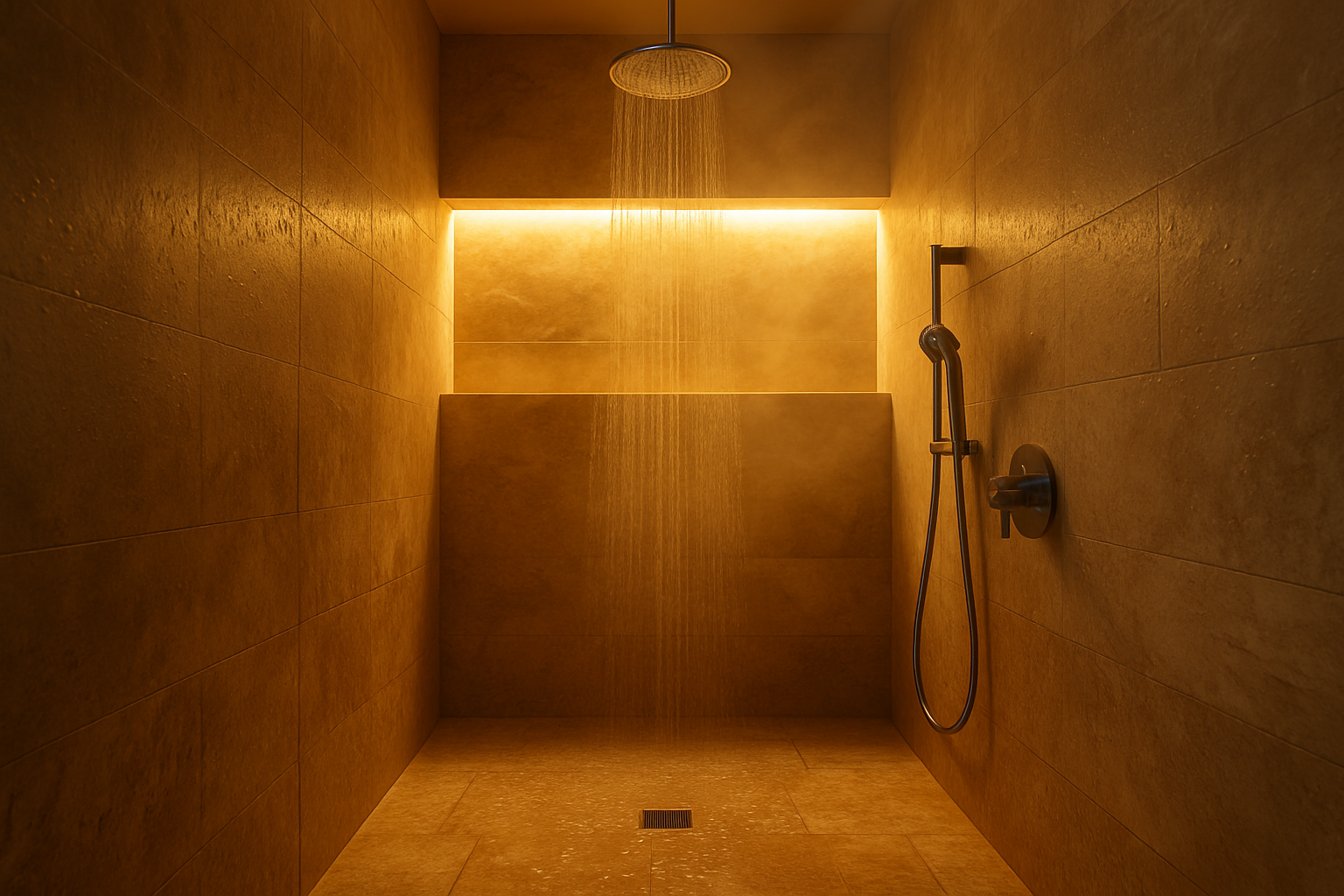
Natural Stone in the Shower: Which Type Works Where?
Not every natural stone is suitable for a wet shower. Marble, slate, granite and travertine all behave differently under constant moisture exposure.
Importing Natural Stone? Check Quality Control Before Handover
Importing natural stone yourself, or having it supplied through several parties, can work well, but it requires proper quality control. Especially with quartzite such as Taj Mahal, repair costs after installation can rise sharply.
Preparing for the Workday: How to Be Ready for DecoStone
DecoStone will soon visit for maintenance, repair, polishing or impregnation of natural stone. With this preparation, the workday can run calmly, neatly and efficiently.