Quartzite vs. Quartz Composite: What Is the Difference?
Quartzite is a natural stone; quartz composite is an engineered product. Both have serious advantages and disadvantages. This article compares them.
DecoStone Natural Stone
Natural stone specialist · Amsterdam
Table of contents
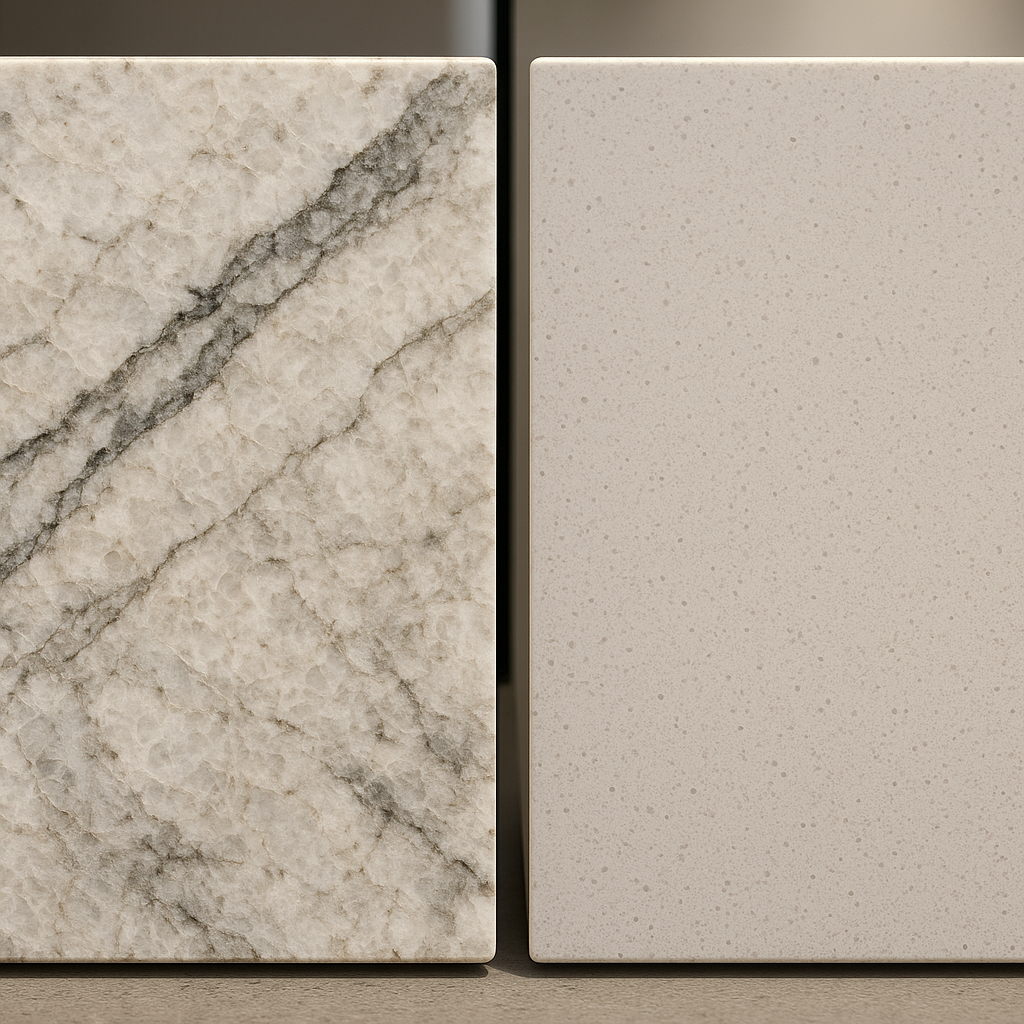
Two names, two worlds
Quartzite and quartz composite sound confusingly similar, but they are fundamentally different materials. The distinction begins with their origin: one stone was formed by nature, the other in a factory. That difference in origin affects almost every property that matters in practice — from hardness and maintenance to price and appearance.
Anyone considering a kitchen worktop, bathroom vanity top or floor will sooner or later encounter both options. This article explains what each product is and how they compare, without pretending that one is always better than the other.
What is quartzite?
Quartzite is a metamorphic rock. It formed from sandstone that was transformed under extreme heat and pressure — deep in the earth's crust — into a much harder, denser material. During that metamorphic process, the quartz crystals in the sandstone grew together into a continuous, interlocking structure. The result is one of the hardest natural stones used in construction.
Quartzite scores between 6.5 and 7.5 on the Mohs scale — comparable to, or harder than, most granites. It is quarried in Brazil, India, Norway, Namibia and other regions. Its colour varies from white and grey to pink, blue-grey and greenish tones, depending on mineral composition and region of origin. Many white quartzites have a clean, marble-like appearance with subtle veining — without marble's sensitivity to acids.
What is quartz composite?
Quartz composite is a factory-made product, also known as engineered quartz or quartz stone. It typically consists of 90 to 95 percent ground quartz crystals, bound with polyester resin and pigments. This binding allows manufacturers to control colour, pattern and surface structure very precisely. Brands such as Silestone, Caesarstone and Dekton fall into this category.
It is not stone in the geological sense — it is a composite slab whose mechanical properties come from the combination of mineral and synthetic resin. That resin determines much of its behaviour under heat and UV exposure.
Comparison on the main points
Hardness and scratch resistance
Quartzite wins on hardness. As a pure mineral, quartz scores 7 on the Mohs scale, and quartzite as a rock is in that range or above. Quartz composite does contain a great deal of quartz, but the resin binder is softer and partly determines the scratch resistance of the finished product. In practice, both materials are scratch-resistant enough for normal use, but with intensive use or abrasion, the resin binder in composite wears sooner than the rock itself.
That hardness is an advantage in use, but it makes repair after installation more labour-intensive. See also: repairing marks and polishing bands in Taj Mahal quartzite.
Heat resistance
Quartzite clearly performs better here. Natural stone can tolerate high temperatures; in most cases, placing a hot pan directly on a quartzite worktop is not a problem. Quartz composite has more difficulty with this: the polyester resin can discolour, crack or become dull under sudden or sustained heat. Trivets are not a luxury with composite; they are a requirement.
Acid sensitivity
Quartzite is naturally acid-resistant. Wine, lemon juice and vinegar leave no marks on a good quartzite worktop — a substantial advantage over marble and limestone. Quartz composite is also highly resistant to acids thanks to the resin binder. On this point, the two options are close.
Maintenance and impregnation
Depending on the type, quartzite has a certain porosity and should be impregnated periodically to prevent stains. The denser the stone, the less often this is needed. Some dense quartzites require very little attention. Quartz composite is non-porous and does not need impregnation. For those who want minimal maintenance, that is a practical advantage.
Appearance and uniqueness
Every quartzite slab is unique. The veining, colour variations and mineral patterns are determined by nature and cannot be replicated. This gives quartzite a character that composite, by definition, does not have. Quartz composite offers uniformity instead: the pattern is consistent through the slab, and slabs from the same batch can usually be matched well. For those seeking consistency and predictability — for example in large projects with multiple worktops — this can be an advantage.
Price
In the mid-range, quartz composite is usually slightly cheaper than quartzite of comparable quality. Price differences depend strongly on the type, thickness, edge finish and supplier. Special quartzites with rare veining can be considerably more expensive than standard composite slabs. But high-end quartz composite can also reach prices comparable to good natural stone.
UV resistance and outdoor use
For outdoor use, quartzite is the better choice. The polyester resin in quartz composite yellows or discolours with long-term UV exposure. Quartzite does not have that problem and, as a rock, is frost-resistant and weather-resistant, provided the specific type is suitable for that purpose.
When should you choose which?
Quartzite is a better fit if:
- You value the authenticity and uniqueness of natural stone
- The worktop or floor is outdoors or in direct sunlight
- You cook intensively and want to be able to set down hot pans
- You want a material that develops a patina over the years
Quartz composite is a better fit if:
- You need uniformity and predictable colour matching
- You want minimal maintenance (no impregnation)
- UV exposure is not an issue (indoors)
- Budget is decisive and you want a scratch-resistant, acid-resistant worktop
An honest verdict
If you expect us to name one of the two as the winner, we have to disappoint you. Quartzite is superior in hardness, heat resistance and character. Quartz composite wins on uniformity, ease of maintenance and often price in the mid-range. Which product best suits you depends on use, location, budget and personal taste.
Let someone who knows both materials advise you and explain honestly what makes the most sense in your specific situation. That is exactly what we at DecoStone are happy to do.
Also read the comparison: marble vs. granite vs. quartzite vs. composite
More about composite or natural stone: an honest comparison for the kitchen
Need help?
Not sure about the right approach, or would you like to know what is possible? Send us a photo via WhatsApp and we will give you honest advice — without obligation.
Want to be sure which treatment is safe?
Send photos of the surface, room and problem. DecoStone assesses the material, damage pattern and risks before advising on a treatment or quotation.
Related articles
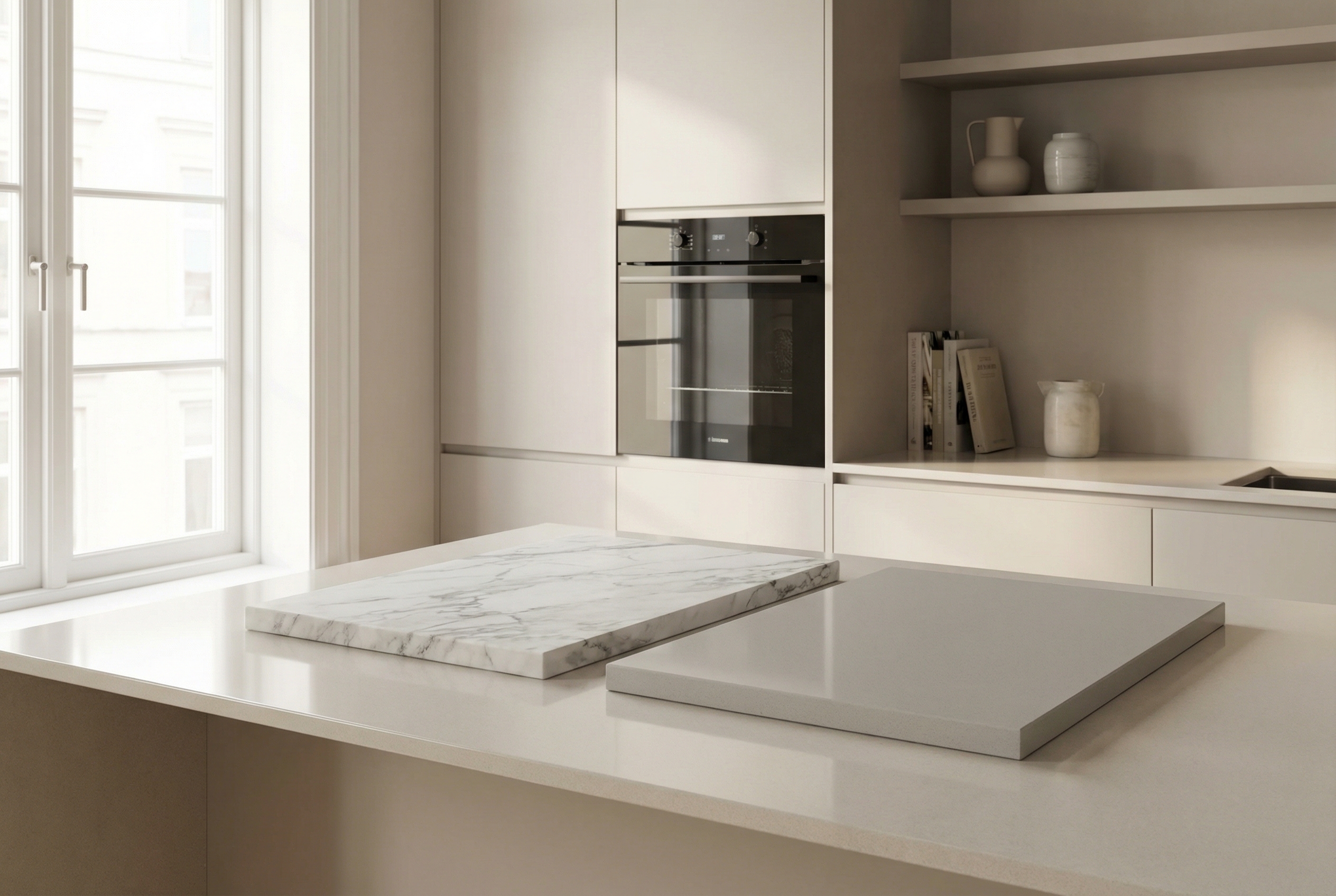
Composite or Natural Stone: An Honest Comparison for the Kitchen
Quartz composite or a granite or marble worktop? Both materials have real advantages and disadvantages. An honest overview without bias.
Cristallo Quartzite: Stone Profile, Maintenance and Points of Attention
Cristallo is a luxury quartzite with a crystalline, often translucent appearance. Read how to maintain, protect and assess this material safely.
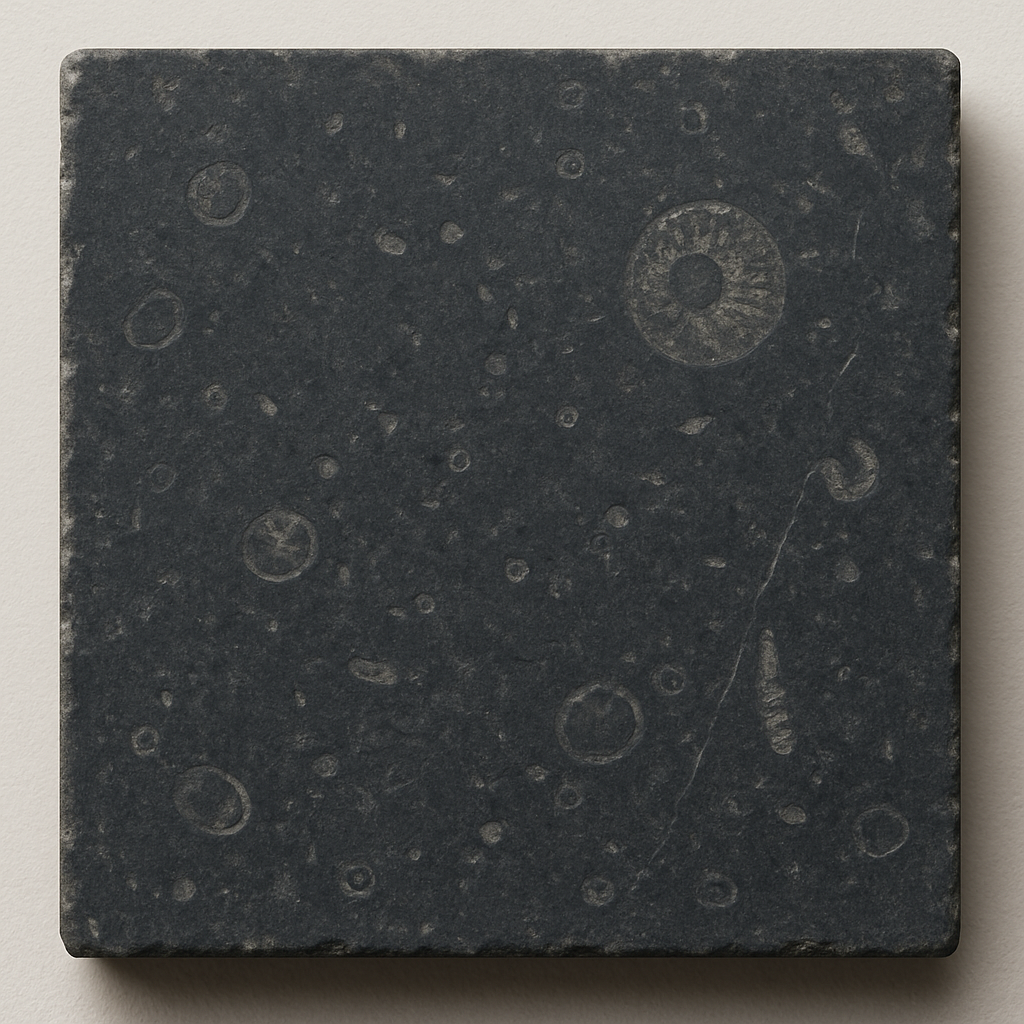
Arduin: What Exactly Is It and Where Is It Used?
Arduin is a dark grey to black natural stone that is often confused with Belgian bluestone. This article explains what arduin is and where it is used.