Cristallo Quartzite: Stone Profile, Maintenance and Points of Attention
Cristallo is a luxury quartzite with a crystalline, often translucent appearance. Read how to maintain, protect and assess this material safely.
DecoStone Natural Stone
Natural stone specialist · Amsterdam
Table of contents
Cristallo stone profile
Material: Cristallo quartzite
Category: luxury natural stone / quartzite
Use: kitchen worktops, bars, wall panels, bathrooms, tables and luxury interiors
Appearance: light, crystalline, often white to light grey with veins or warm tones
Special feature: some Cristallo slabs are partly translucent and are therefore also used with lighting behind the stone.
In the natural stone trade, Cristallo is usually sold as quartzite. This means that, in principle, it is a hard natural rock formed under high pressure and temperature. Because of its crystalline structure, Cristallo often has a sense of depth and a more luxurious appearance than standard granite or composite.
Is Cristallo the same as composite?
No. Cristallo quartzite is normally real natural stone. That is different from composite or quartz composite, where ground quartz is bound with resin into a factory-made product.
That difference matters for maintenance and repair. Real quartzite can be cleaned, impregnated and, where necessary, treated mechanically. Composite behaves differently because of the resin in the material and requires a different assessment.
Properties of Cristallo quartzite
Cristallo is usually harder than marble and better suited to daily use. That is why it is often chosen for kitchens and representative spaces. Even so, it is not a material that can be treated with just any cleaning product.
Important properties:
- hard and wear-resistant;
- luxurious natural pattern;
- often light in colour;
- sometimes translucent;
- suitable for exclusive worktops and wall panels;
- sensitive to incorrect cleaners if the exact composition or finish is unknown.
With Cristallo, practical assessment is especially important. Trade names are not always used consistently. Sometimes materials are sold as quartzite even though they contain softer zones, calcite-rich veins or open structures. DecoStone therefore prefers to test first rather than clean or polish blindly.
Maintenance advice
For daily maintenance, a pH-neutral cleaner is the safest choice. Use only a small amount of product, clean water and a soft cloth or flat mop. Do not leave dirt, grease or moisture on the surface unnecessarily long, especially with light-coloured stone.
Avoid the following on Cristallo:
- vinegar;
- limescale remover;
- chlorine;
- abrasive sponges;
- aggressive all-purpose cleaners;
- degreasers without natural stone advice;
- experimental household remedies.
This is particularly important for bathroom and kitchen surfaces. Limescale and grease can often be treated well, but the wrong product can cause more damage than the original problem.
Impregnation and protection
Cristallo is often denser than marble, but light quartzites can still absorb moisture, grease or colourants through pores, microstructure or open veins. Impregnation is therefore often sensible, especially for:
- kitchen worktops;
- bar tops;
- light or white stone;
- bathrooms;
- heavily used surfaces;
- places where oil, wine, coffee or grease occurs.
A good impregnation does not make the stone completely stain-proof, but it gives you more time to remove spills safely. Which impregnation is appropriate depends on the finish, absorption and application.
Dull marks, rings or stains
Dull marks on Cristallo can have several causes. Sometimes the issue is dirt or a film on the surface. Sometimes it is mechanical wear, limescale build-up, grease penetration or a local reaction in a vein zone.
That is why the first step is always to determine exactly what is happening.
DecoStone looks at, among other things:
- whether the material is truly quartzite;
- whether the surface is polished, honed or brushed;
- whether the mark is on the surface or in the stone;
- whether the mark reacts to water or light;
- whether acid, limescale remover or chlorine has already been used;
- whether open veins or natural hairline cracks are present.
Only after that can it be decided whether cleaning, a poultice treatment, impregnation, polishing or local repair is sensible.
Practical advice for customers
Do you have Cristallo at home and are unsure about maintenance or damage? For now, use only a pH-neutral product and send clear photos. Preferably provide:
- an overview photo of the whole worktop or surface;
- a close-up of the affected area;
- a photo with raking light from the side;
- a photo of the room or application, for example kitchen, bathroom or bar.
With that information, DecoStone can better assess whether the issue is normal soiling, staining, limescale, wear or real surface damage.
Short summary
Cristallo is usually a luxury natural quartzite: hard, exclusive and visually striking. It is often better suited to daily use than marble, but it still requires careful maintenance and proper material assessment. Do not use aggressive cleaners, and have stains, dull marks or limescale assessed before treating them yourself.
Need advice for Cristallo?
Send photos of the surface and the area you want advice about. DecoStone will assess the material, finish, risk and safest treatment with you.
Want to be sure which treatment is safe?
Send photos of the surface, room and problem. DecoStone assesses the material, damage pattern and risks before advising on a treatment or quotation.
Related articles
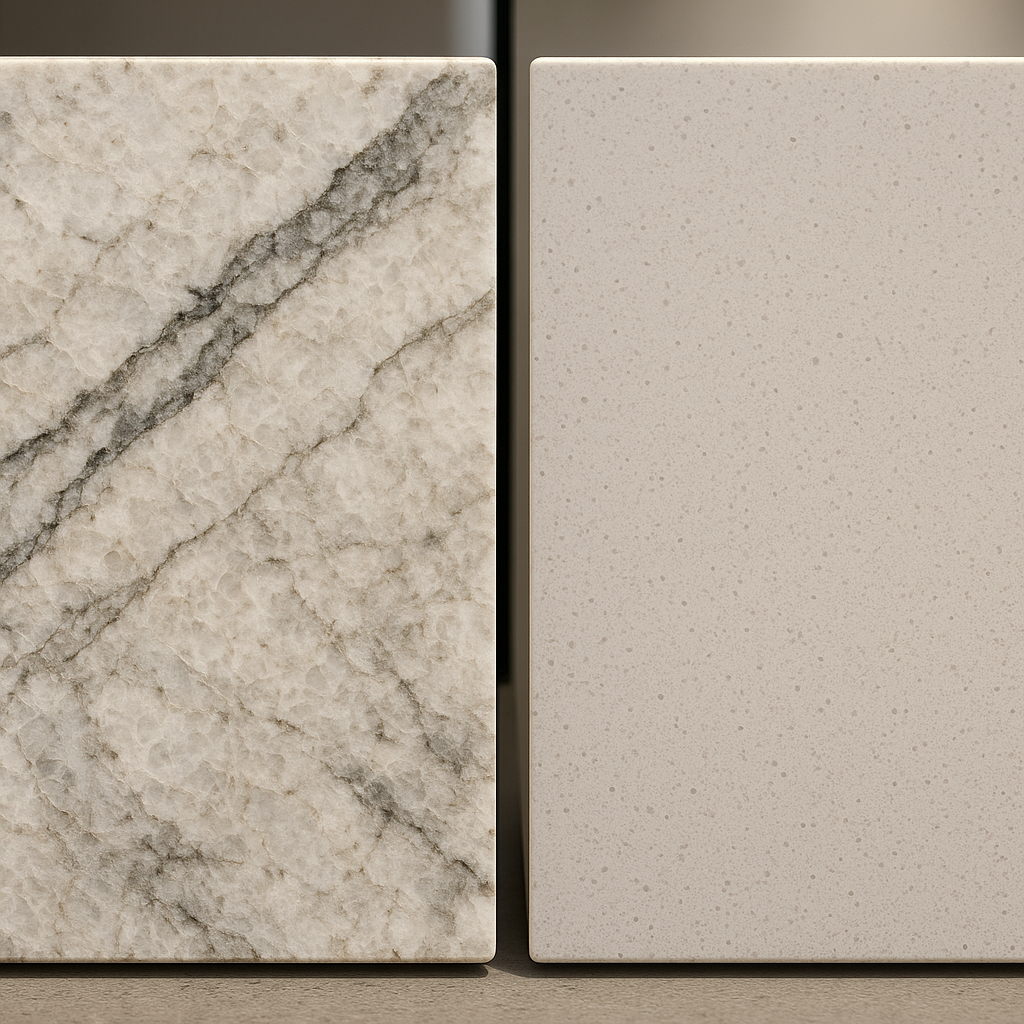
Quartzite vs. Quartz Composite: What Is the Difference?
Quartzite is a natural stone; quartz composite is an engineered product. Both have serious advantages and disadvantages. This article compares them.
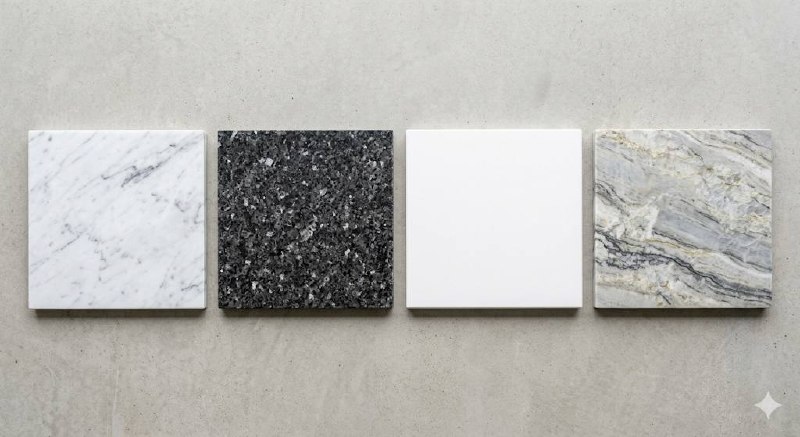
Marble vs. Granite vs. Quartzite vs. Composite: What Should You Choose for the Kitchen?
Marble, granite, quartzite or composite for your kitchen worktop? An honest, practical comparison of durability, maintenance, appearance and cost.
Preparing for the Workday: How to Be Ready for DecoStone
DecoStone will soon visit for maintenance, repair, polishing or impregnation of natural stone. With this preparation, the workday can run calmly, neatly and efficiently.