Granite: The Hardest Stone Explained
Granite is one of the best-known and most widely used natural stones in the world. This article explains what it is, where it comes from and how to maintain it.
DecoStone Natural Stone
Natural stone specialist · Amsterdam
Table of contents
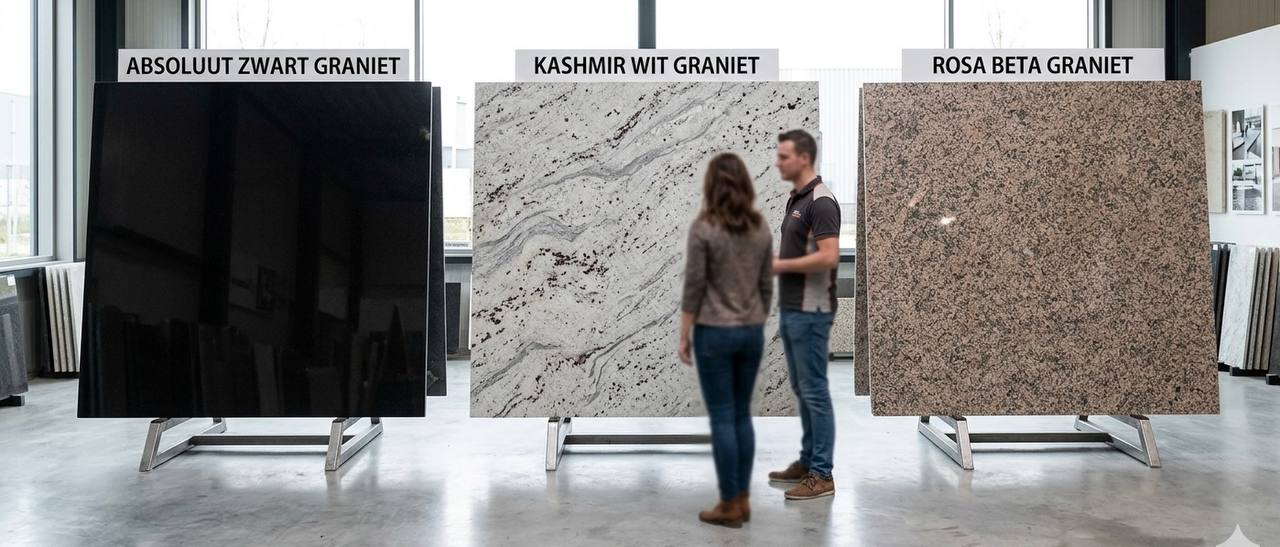
What is granite?
Granite is an igneous rock formed from magma that cooled slowly deep below the earth's surface. That slow cooling process creates large, visible crystals of quartz, feldspar and mica. The result is a hard, dense stone with a granular appearance. The name "granite" comes from the Latin "granum", meaning grain.
The stone is known for its strength and durability. It is quarried all over the world, with the largest production in China, India, Brazil and South Africa.
How do you recognise granite?
Granite is easy to recognise by its:
- Colour: grey, red, brown, green, black — often with a speckled pattern
- Structure: coarse, visible crystals of different minerals
- Surface: polished granite has a mirror gloss; flamed granite is rough and anti-slip
- Weight: heavy and massive
Each granite tile or slab surface is unique because of its natural crystal formation.
Applications
Granite is used widely, both indoors and outdoors:
Indoors: Floors, wall cladding, kitchen worktops, bathroom vanity tops and stair treads. It is ideal for spaces where hardness and hygiene matter. Polished granite gives a luxurious appearance; brushed or flamed granite suits a more robust concept.
Outdoors: Terraces, driveways, pavements, façade cladding and gravestones. Granite withstands all weather conditions and hardly ages. In historic cities you can see granite street setts that have lasted for a hundred years.
Kitchen worktop: Granite is a popular choice for kitchen worktops. It is hard, heat-resistant and acid-resistant. You can cut directly on it, although that will blunt your knives, and place a hot pan on it without damage.
Advantages
- Extremely hard: scores 6–7 on the Mohs scale and is scratch-resistant
- Heat-resistant: suitable for kitchen worktops; hot pans are not a problem
- Frost-resistant: very low water absorption, ideal for outdoor use
- Acid-resistant: no etch damage from lemon juice or vinegar
- Durable: lasts for decades without visible wear
- Hygienic: smooth surface that discourages bacterial growth
Disadvantages
- Weight: heavy and requires a strong subfloor or support
- Cold: feels cool underfoot, which can be solved with underfloor heating
- Price: more expensive than many other materials
- Natural variation: every slab is different, making matching difficult when extending later
- Limited repair options: deep scratches are difficult to repair
Maintenance
Impregnation
Granite is relatively dense and not very porous, but impregnation is still recommended to help prevent stains. Do this once after installation and repeat every 3–5 years. Use a water-based impregnator suitable for hard stone.
Daily cleaning
Clean granite with warm water and a neutral all-purpose cleaner. Abrasives are not necessary and can dull the gloss over time. For stubborn stains, use a mild abrasive or a stone cleaner.
Although granite is acid-resistant, it is still sensible to wipe up spills quickly.
Repair
Small scratches and dull patches can be sanded out and repolished by a stone restoration specialist. Deep damage is more difficult to repair.
Price indication
- Floor tiles (polished): €50–150 per m², depending on origin and colour
- Flamed outdoor tiles: €40–100 per m²
- Kitchen worktops: €200–600 per linear metre, including installation
Prices are guidelines and vary by supplier, size and finish.
Granite is an excellent choice for anyone looking for a hard, durable stone with a clean, modern appearance. Want to know which type of granite best suits your project? DecoStone will be happy to advise.
See also: Quartzite vs. Quartz Composite: What Is the Difference?, Belgian Bluestone: Everything You Need to Know
Need help?
Unsure about the right approach, or want to know what is possible? Send a photo via WhatsApp and we will give you honest advice — without obligation.
Want to be sure which treatment is safe?
Send photos of the surface, room and problem. DecoStone assesses the material, damage pattern and risks before advising on a treatment or quotation.
Related articles
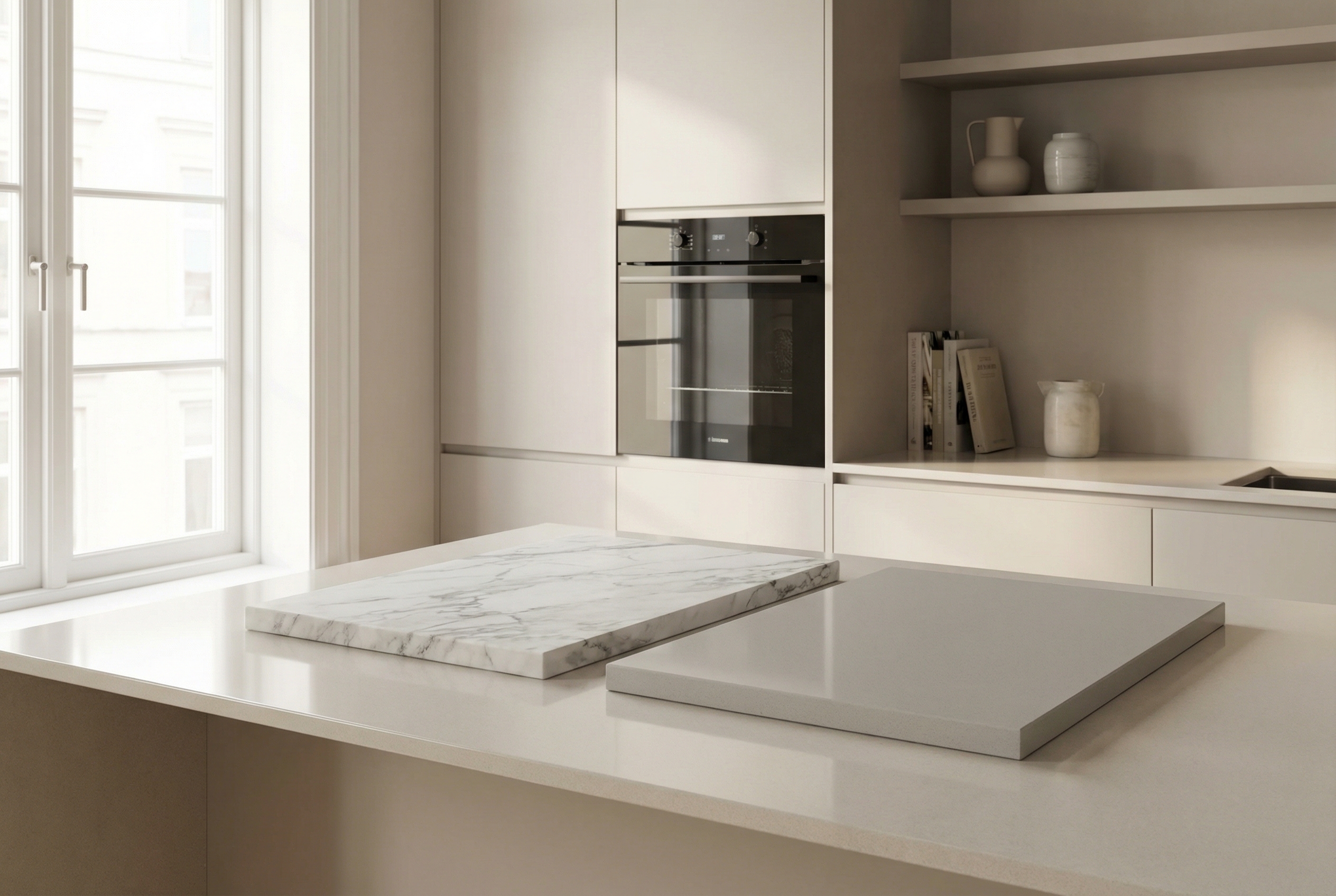
Composite or Natural Stone: An Honest Comparison for the Kitchen
Quartz composite or a granite or marble worktop? Both materials have real advantages and disadvantages. An honest overview without bias.
Cristallo Quartzite: Stone Profile, Maintenance and Points of Attention
Cristallo is a luxury quartzite with a crystalline, often translucent appearance. Read how to maintain, protect and assess this material safely.
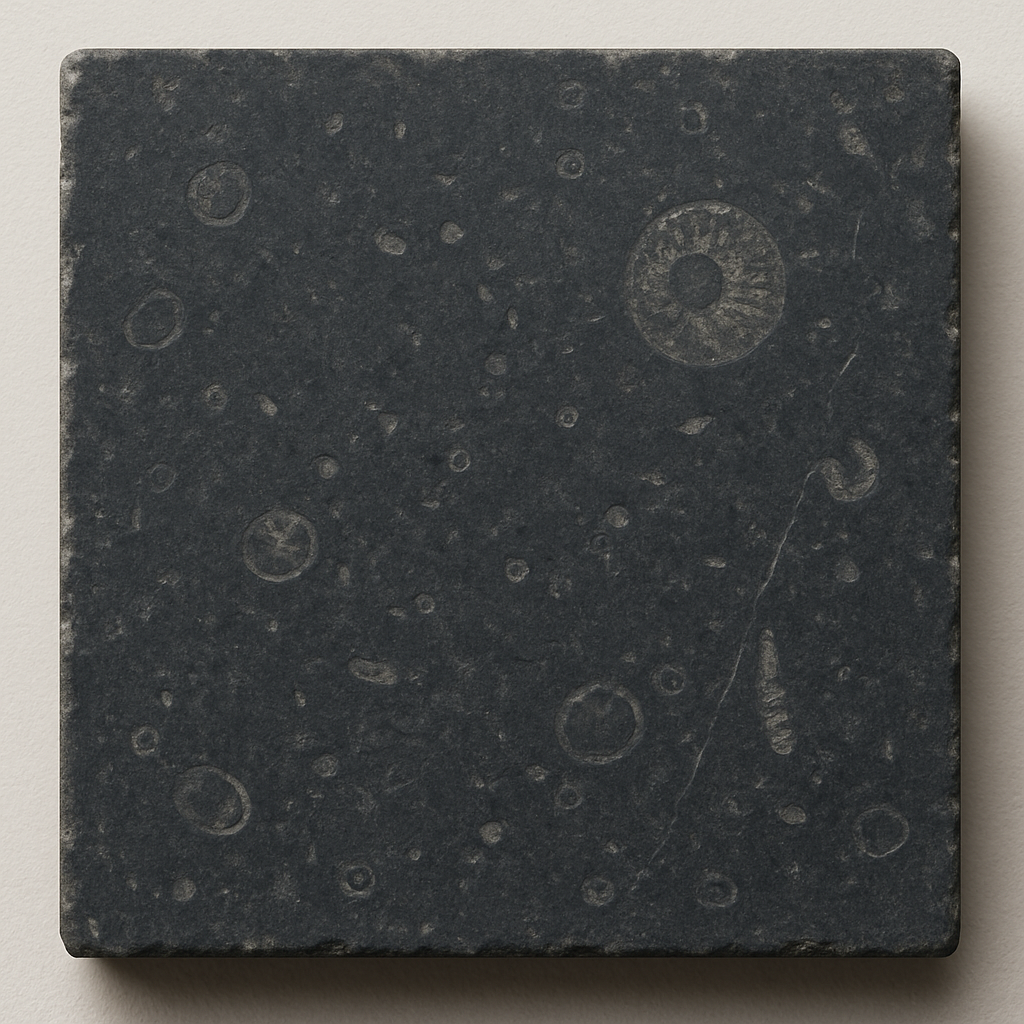
Arduin: What Exactly Is It and Where Is It Used?
Arduin is a dark grey to black natural stone that is often confused with Belgian bluestone. This article explains what arduin is and where it is used.