Natural Stone Restoration in Listed and Historic Buildings
Restoring natural stone in a listed building requires different knowledge, different products and more patience than standard renovation. What makes heritage work different?
DecoStone Natural Stone
Natural stone specialist · Amsterdam
Table of contents
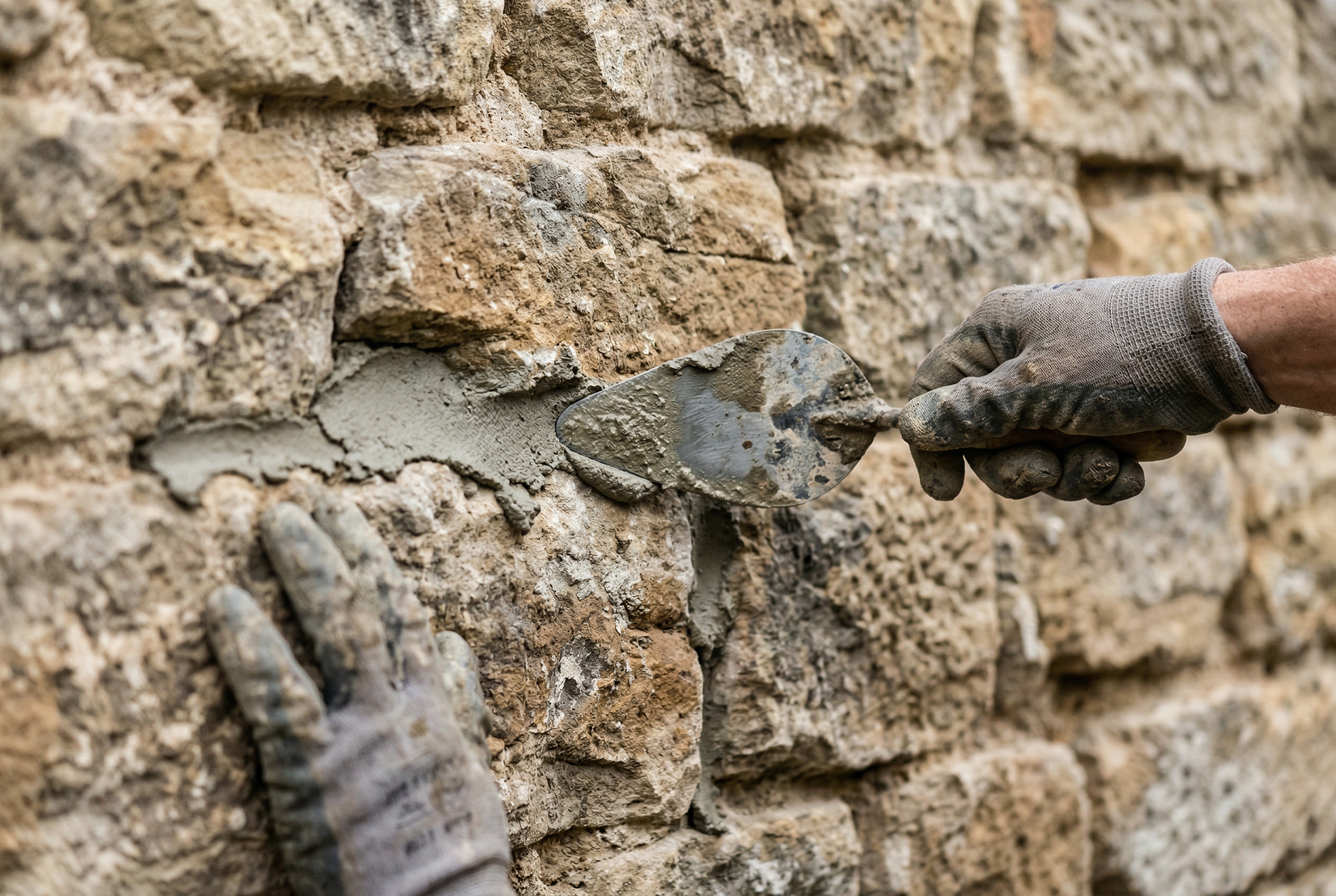
Historic stone deserves historic knowledge
A listed monument is not an ordinary building, and restoration is not ordinary renovation. Anyone working on natural stone in a protected building is working with materials that may be hundreds of years old, in a context where today’s choices will still be visible fifty years from now.
That requires restraint, craftsmanship and respect for the original. Not every problem is solved with the fastest or cheapest method. Sometimes the correct approach is the one that takes the longest.
What makes heritage work different?
Authenticity over aesthetics
In regular renovation, the final result leads: as good as possible, as invisible as possible. In heritage restoration, authenticity comes first. The repair must match the original material, the original working technique and the historical context.
That sometimes means a repair that remains visible but has been carried out correctly is preferable to a repair that looks perfect but is historically wrong.
Permission and consultation
Restoration work on protected buildings usually requires an environmental permit. This certainly applies to replacing historic stone elements, changing layouts or applying modern treatments.
When in doubt, consultation with the municipality or the Cultural Heritage Agency of the Netherlands (RCE) is sensible. Work carried out without permission can later have to be reversed at significant cost.
Compatibility of materials
Modern repair products are not always suitable for historic stone. Hard cement in soft sandstone, rigid epoxy in moving structures, aggressive biocides on vulnerable surfaces — sometimes they cause more damage than they repair.
One of the basic principles in heritage conservation is this: the repair material must never be harder than the original. Soft lime mortar in soft sandstone. Not Portland cement mortar that effectively clamps the surrounding stone in a vice.
Common issues in historic buildings
Sandstone and marl
Many historic buildings in the Netherlands were built with Belgian bluestone, Brabant marl or Namur limestone. These stones are porous, sensitive to black crust formation and affected by urban air pollution.
Marl is especially vulnerable: it is soft, contains fossils and has a fine internal structure that can easily disintegrate under aggressive cleaning or incorrect repair methods.
Bluestone (Belgian blue)
The classic kerb, threshold, step and pilaster strip in an Amsterdam canal house. Bluestone is compact and durable, but the surface can wear, become scratched or crumble because of frost damage.
Grinding and repolishing historic bluestone steps is possible and produces a good result. Replacement is sometimes necessary with severe mechanical damage, but preferably using new Belgian bluestone of comparable quality.
Jointing and lime mortar
Historic jointing in façades is rarely cement-bound. The original mortars are lime-based and therefore more flexible and vapour-permeable. Replacing lime mortar with cement mortar is a classic mistake: cement is harder, less flexible and blocks the moisture movement the stone needs.
The result: moisture build-up in the stone, frost damage and accelerated degradation.
Black crust formation
A black crust layer on historic buildings consists of dust, soot, sulphur and biological components that have built up over decades. Chemical removal is risky on sensitive stone types. Laser cleaning is the preferred method: targeted, without chemicals, without water pressure.
Repair strategy for heritage stone
Repair does not remove the cause
The same applies to heritage work: repairing the stone treats the symptom. If the cause of the damage is structural — settlement, moisture, a failing gutter, a missing joint — the damage will return. In heritage restoration, addressing the cause is often even more important because the stone is irreplaceable and cannot simply be swapped out.
We always first look at what is causing the damage before we repair it. A repair that is needed again in ten years does not do justice to the monument.
Minimal intervention
The first principle: do as little as possible. Leave the original as intact as is responsible. A crack that is stable and not growing is sometimes better left alone than injected.
Reversibility
Anything you apply should in principle be removable without damaging the original. Irreversible interventions require especially careful consideration.
Documentation
Photos before, during and after the work. A description of the materials and methods used. This is not only for the file, but also for future maintenance rounds that may be carried out by someone else in ten or twenty years.
Repair techniques
Stone consolidation
A crumbling or powdering stone surface can be strengthened with a consolidant based on silicic acid or synthetic resin. This is absorbed deep into the stone and reinforces the internal bonding structure without changing the surface.
Stone indents and paste reconstruction
Missing pieces can be filled with stone paste: a mixture of stone powder (from the original stone type), binder and pigment. When properly carried out, the result is almost invisible and matches the colour and texture of the original.
Lime-mortar jointing
When repointing historic façades and constructions, a lime mortar is chosen with a composition that matches the original. Sometimes a sample of the existing jointing is analysed to determine the correct mixing ratio.
Cooperation with architect and supervisor
For major restoration projects, DecoStone works with the restoration architect and, where applicable, the municipality’s heritage adviser. We are used to working within the framework of specifications and understand that historic restoration does not have a universal approach.
Do you have a monument or historic building with natural-stone problems? We would be pleased to visit the property for an inspection and help think through the right approach.
Read also about renovating a marble floor step by step
Need help?
Are you unsure about the right approach, or would you like to know what is possible? Send a photo via WhatsApp and we will give you honest, no-obligation advice.
Want to be sure which treatment is safe?
Send photos of the surface, room and problem. DecoStone assesses the material, damage pattern and risks before advising on a treatment or quotation.
Related articles
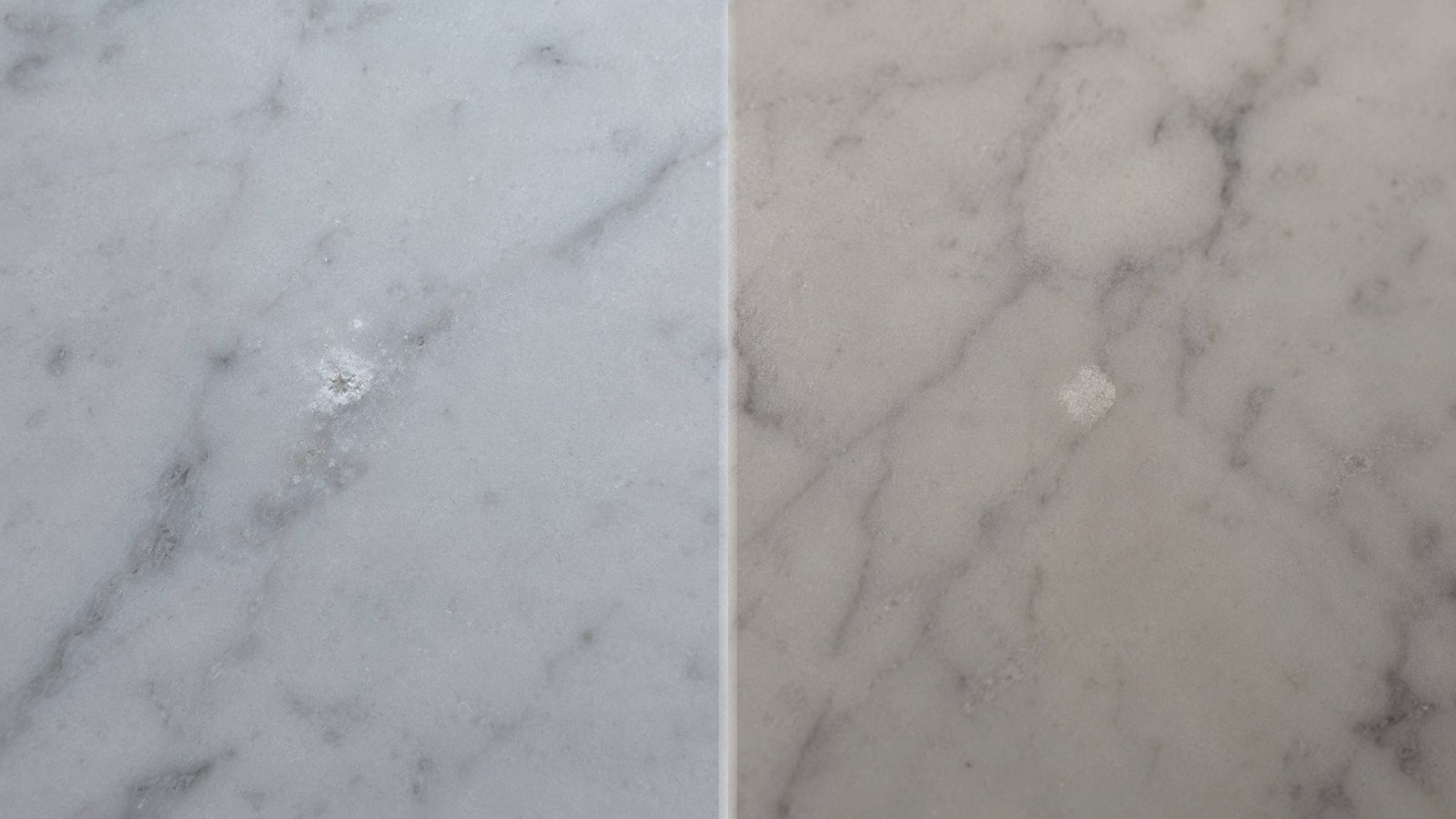
Impact Bruising in Marble: White Marks from Impact or Point Load
A light or white mark in marble after an impact is often not an ordinary stain, but impact bruising: broken crystals caused by impact or point load.
Marks and Polishing Bands in Taj Mahal Quartzite: What Repair Is Realistic?
Taj Mahal quartzite is hard, light-coloured and valuable. Marks or polishing bands after installation are difficult to correct. Read what makes repair realistic and when inspection should come first.
Restoring Dull Spots in Natural Stone: Does the Whole Floor Have to Be Cleared?
Does your natural stone floor have local dull spots? Learn when local repair is possible, when a larger area looks better and which photos are needed for advice.