Restoring Dull Spots in Natural Stone: Does the Whole Floor Have to Be Cleared?
Does your natural stone floor have local dull spots? Learn when local repair is possible, when a larger area looks better and which photos are needed for advice.
DecoStone Natuursteen
Natural stone specialist · Amsterdam
Table of contents
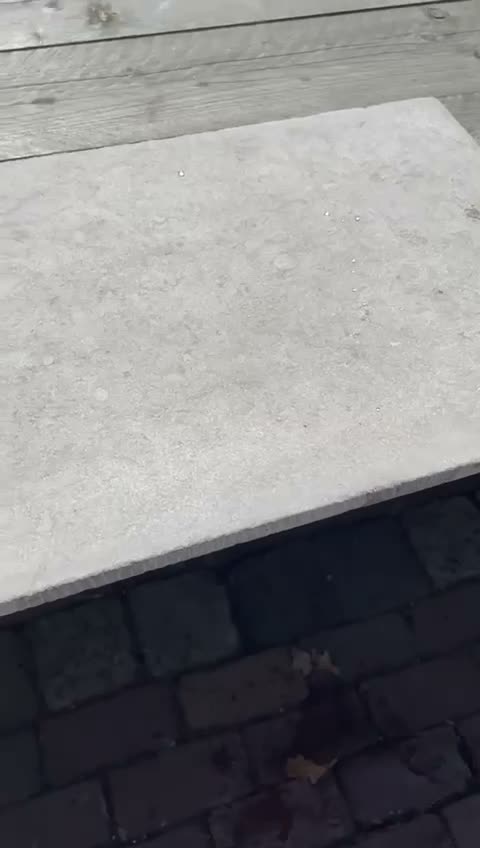
A natural stone floor rarely becomes dull everywhere at once. It is often a walkway, a spot near the kitchen, a sliding door, a dining table area or a section that has been cleaned slightly differently for years.
The logical question is: can only that dull part be treated, without clearing the entire room or kitchen?
The honest answer: targeted improvement is often possible, but it depends on the stone type, the existing finish and, above all, the transition to the rest of the floor.
When is local repair possible?
Local repair is usually promising when:
- the stone is structurally sound and not loose;
- the dull spot is mainly superficial wear or light etching;
- the rest of the floor has roughly the same finish;
- the area to be treated can be logically bounded, for example to a walkway, kitchen zone or tile field;
- the goal is “better and calmer”, not necessarily factory-new.
With light wear, DecoStone can often clean, lightly hone and repolish. We then assess whether protection or impregnation is needed.
When does a larger area look better?
Sometimes treating only the small dull area is technically possible, but not the best visual choice. This is especially true with glossy floors. A freshly treated section may reflect slightly differently from the rest.
A larger area is wiser when:
- the floor is high gloss;
- the dull zone lies in the middle of the sightline;
- the transition to untreated stone could be distracting;
- the surrounding floor already has light wear;
- old coating, wax or incorrect maintenance products are present.
In that case we prefer to treat a naturally defined area: the whole kitchen zone, a walkway up to a joint line, or the visible area between pieces of furniture.
Which treatment is usually used?
For dull spots, the approach often has three steps.
1. Cleaning and degreasing
First we need to establish what is dirt and what is actual surface attack or wear. Grease, soap, old maintenance products or dirt can create a dull film.
2. Light honing or sanding
If the surface is open, matt or attacked, the top layer is carefully evened out. This is done with suitable diamond pads or sanding/honing steps. Not every stone requires the same approach.
3. Polishing and protection
The finish is then brought back towards the existing floor: matt, satin or gloss. Depending on the stone, suitable protection or impregnation may be advised.
What should you not try yourself?
Do not experiment aggressively on natural stone. Especially with marble, limestone, travertine and Belgian bluestone, the wrong cleaning attempt can make the dull spot larger.
For now, avoid:
- vinegar;
- limescale remover;
- chlorine;
- abrasive sponges;
- aggressive all-purpose cleaner;
- steam cleaners on unknown stone;
- gloss coatings without a diagnosis.
A gloss layer from a bottle can seem to give quick results, but later cause stains, streaks or adhesion problems.
Which photos do we need?
For a good first assessment, you do not need to clear the whole room immediately. Send three types of photos first:
- Overview photo of the room, so we can see where the spot is.
- Close-up of the dull spot and the surrounding stone.
- Photo with raking light: light coming across the floor at an angle, so differences in gloss, scratches and dull zones become visible.
Also mention:
- which room it is;
- whether you know the stone type;
- how long the spot has been dull;
- which products have been used before;
- whether furniture or kitchen appliances can be moved.
What does local repair cost?
A fixed price without photos or an inspection would not be fair. Costs depend on accessibility, stone type, gloss level, size of the area and desired finish.
As a rough indication:
- small local improvement: often from half a day to one working day;
- targeted floor zone cleaning, light honing and polishing: often from one working day;
- larger area or high-gloss matching: depends on m² and condition.
DecoStone prefers a clear scope over a vague promise. That way you know beforehand whether we will treat only the spot, advise a larger area or first make a test patch.
Will it get exactly the same gloss again?
Sometimes yes, sometimes not completely. Natural stone lives and ages. The goal is usually to make the difference calmer and make the floor look cared for again. On existing floors, a subtle transition is sometimes more realistic than an invisible repair.
That is why we always assess:
- material;
- current finish;
- degree of wear;
- previous treatments;
- light incidence;
- sightlines in the room.
DecoStone advice
Do you have local dull spots in a natural stone floor? Send photos and ask for advice first. Then we can judge whether local repair is sensible or whether a larger area will look better.
Maintenance advice after repair
See also: Natural stone polishing: when is it needed and what does it cost? and When should natural stone be impregnated?.
Want to be sure which treatment is safe?
Send photos of the surface, room and problem. DecoStone assesses the material, damage pattern and risks before advising on a treatment or quotation.
Related articles
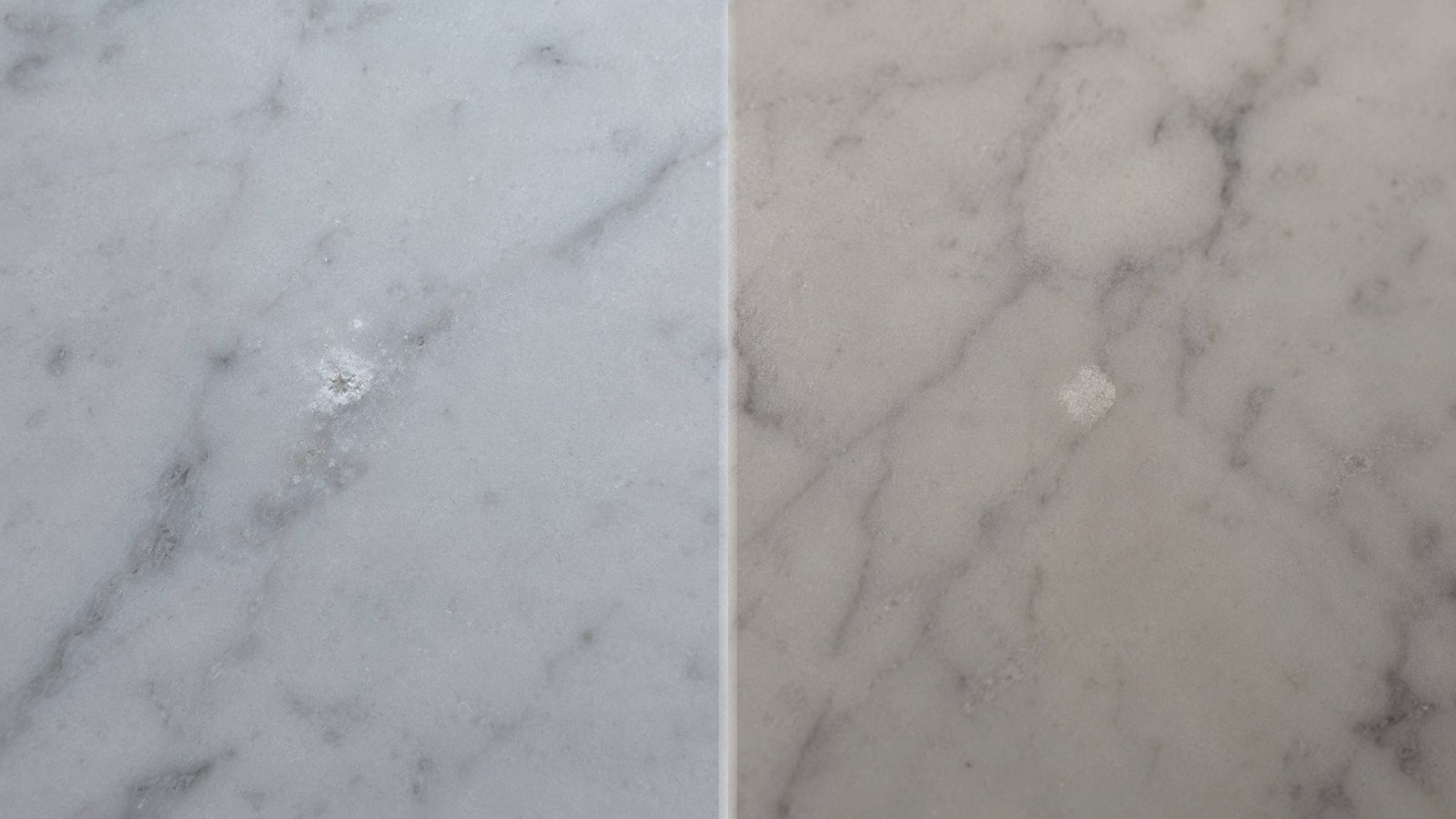
Impact Bruising in Marble: White Marks from Impact or Point Load
A light or white mark in marble after an impact is often not an ordinary stain, but impact bruising: broken crystals caused by impact or point load.
Marks and Polishing Bands in Taj Mahal Quartzite: What Repair Is Realistic?
Taj Mahal quartzite is hard, light-coloured and valuable. Marks or polishing bands after installation are difficult to correct. Read what makes repair realistic and when inspection should come first.
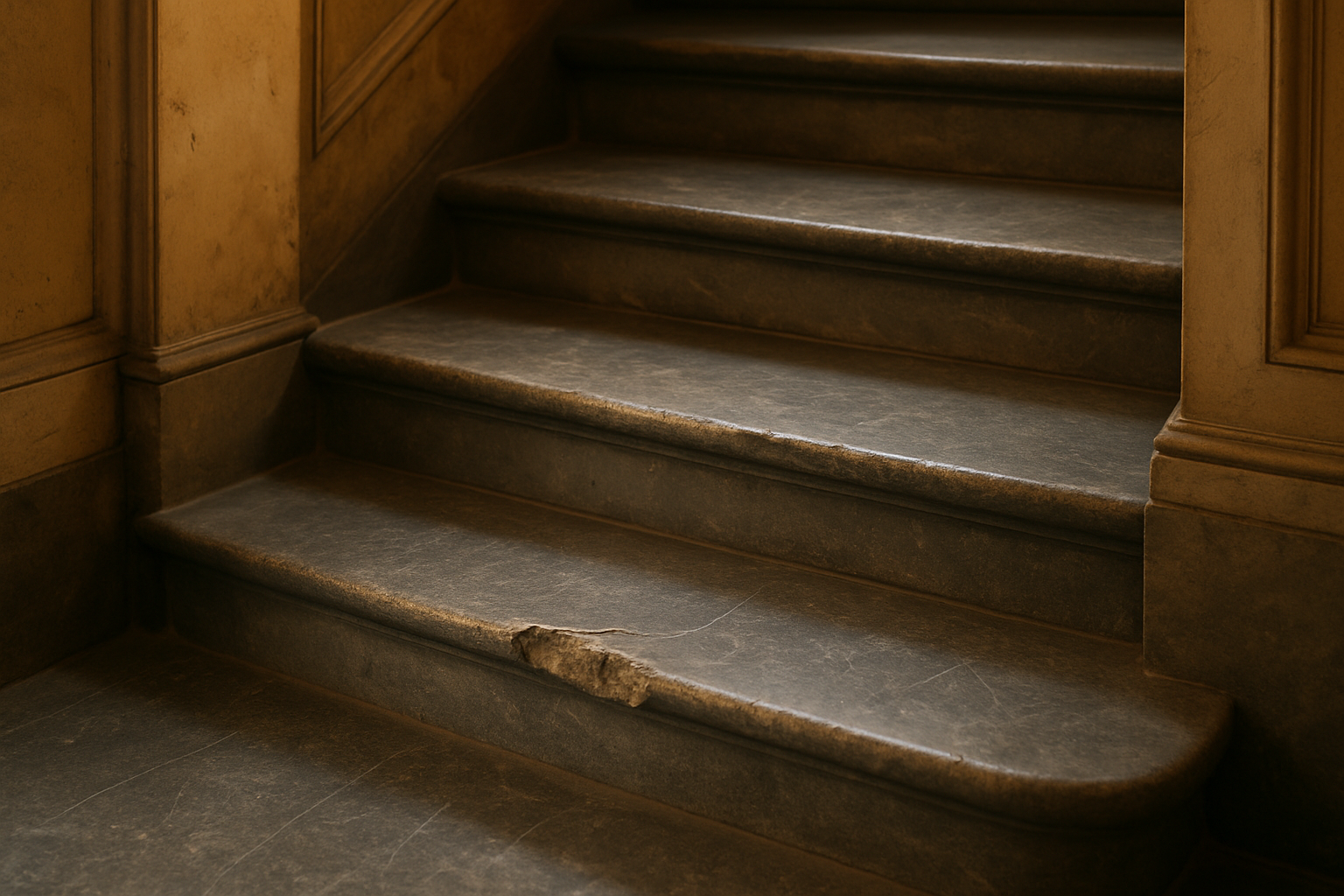
Repairing Damaged Natural Stone Stair Treads
Crumbled corners, deep wear, cracks or loose treads: damaged natural stone stair treads can often be repaired. But there are limits.