Belgian Bluestone vs. Chinese Bluestone: What Is the Difference?
They can look the same, but their properties differ significantly. Belgian bluestone and Chinese bluestone are often confused. Read what to look for.
DecoStone Natural Stone
Natural stone specialist · Amsterdam
Table of contents
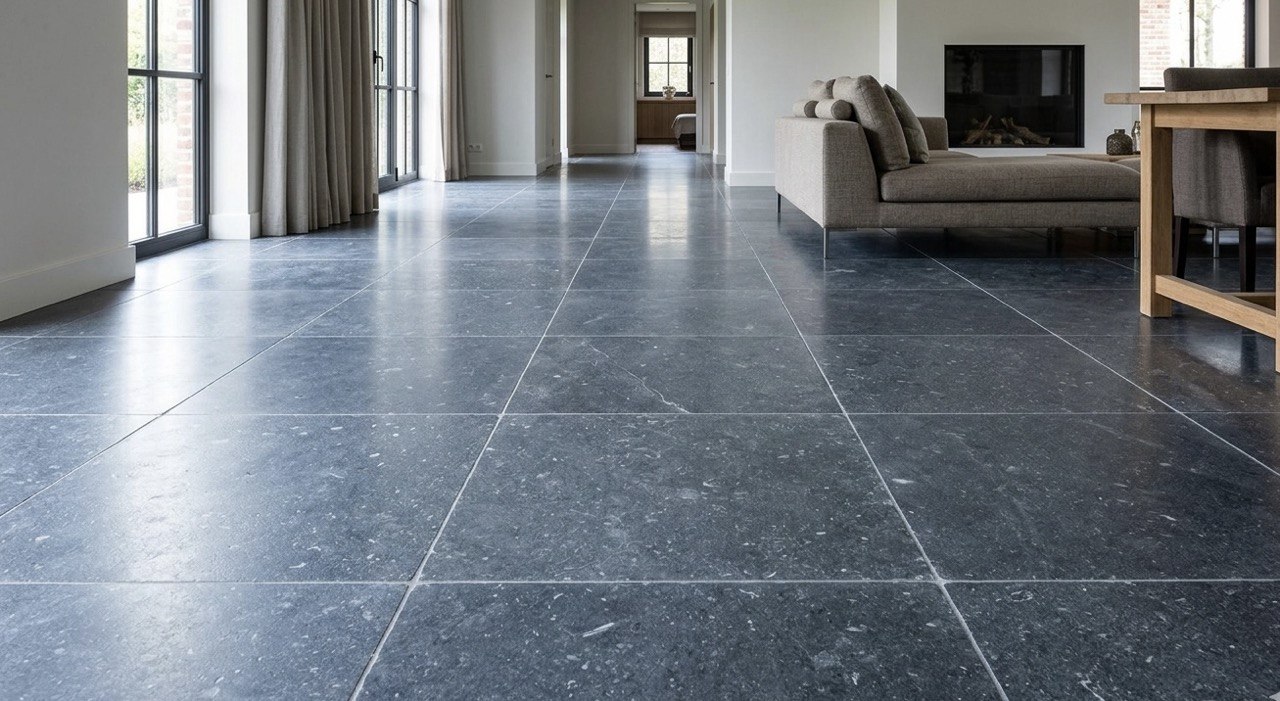
The same name, a very different stone
"Bluestone" is a widely used term in the Netherlands and Belgium for any dark grey to blue limestone that resembles the classic Belgian look. But under that label, two fundamentally different materials are sold: genuine Belgian bluestone (petit granit) and Chinese bluestone, also known as "Chinese blue stone".
To the customer, they can look identical in the showroom. But after years of use — outdoors, in a hall or on a staircase — the differences become visible.
This article explains the distinction, where it matters and how you can check what you are buying.
What is Belgian bluestone (Petit Granit)?
Belgian bluestone is a limestone of marine origin, quarried in a relatively narrow area around Namur and Hainaut in Belgium, especially Soignies and Aiseau-Presles. It is geologically stable, has been quarried for hundreds of years and has a unique mineral composition.
Properties:
- Colour: dark grey-blue, uniform in tone
- Structure: compact grain, few open pores
- Compressive strength: on average 200–250 MPa
- Frost resistance: excellent, with low water absorption
- Calcite content: approximately 85–90%
- Origin: certified from Belgian quarries
Historic use: Belgian bluestone has been used in architecture for centuries: churches, bridges, cathedrals and pavements of historic buildings. It is a proven material.
What is Chinese bluestone?
"Chinese bluestone" is a collective term for dark grey to blue limestones quarried mainly in the Chinese provinces of Hebei, Shanxi and Shandong. Origin and composition vary greatly by quarry and by delivery.
Properties (variable):
- Colour: dark grey, sometimes bluer or warmer than Belgian bluestone
- Structure: sometimes more compact, sometimes more porous, strongly dependent on the quarry
- Compressive strength: varies from 100–250 MPa
- Frost resistance: variable; some types perform very well, others do not
- Calcite content: variable
- Quality control: inconsistent, less standardised than Belgian bluestone
The four most important differences
1. Quality consistency
Belgian bluestone comes from a limited geographic area with centuries of knowledge of the material. The quality is high and consistent: what you order is what you receive, batch after batch.
Chinese bluestone does not have standardised origin certification. Quality varies by supplier, quarry and batch. A good supplier can deliver consistent high-quality Chinese bluestone, but there is more risk of variation in colour, frost resistance and structure.
2. Frost resistance
This is the critical difference for outdoor applications.
Belgian bluestone generally has water absorption below 0.5% (EN 1925). This makes it highly frost-resistant: little water enters the pores where it could expand during freezing and split the stone.
Chinese bluestone has water absorption of 0.2–1.5%, depending on the batch. Stones with higher absorption are riskier in Dutch winters. Always ask for the test report.
3. Colour and greying
Belgian bluestone greys in a predictable way: the dark blue tone gradually fades to a warmer grey. This is a known and accepted phenomenon.
Chinese bluestone also greys, but the final colour is less predictable. Sometimes it happens unevenly across one batch; sometimes the tone becomes yellower or browner than expected. Indoors this is less relevant, but on large outdoor floors it can be noticeable.
4. Price
Chinese bluestone is cheaper, sometimes by 20–40%, because of lower production and labour costs and, historically, lower transport costs. That makes it attractive for large projects.
Belgian bluestone is more expensive but offers greater certainty in quality, origin and predictable behaviour.
When does the difference matter?
Outdoors: always relevant For terraces, façades, pavements and outdoor stairs, frost resistance is crucial. This is where the risk of Chinese bluestone of unknown origin is greatest. Always ask for the frost resistance test (EN 12371) and the water absorption measurement.
Monuments and restoration: use Belgian For restoration of historic buildings or monuments, where matching existing material is essential, Belgian bluestone is the only correct choice. Chinese bluestone never matches 100% in tone and texture.
Indoors: less critical For indoor flooring, frost resistance is not relevant. The quality differences are then smaller. A good batch of Chinese bluestone for an indoor hall can be technically fully acceptable.
How do you recognise the difference?
Visually: with difficulty. Even professionals sometimes make mistakes.
What you can do:
- Ask for the certificate: Belgian bluestone can be supplied with proof of origin, such as the BVHG quality mark or equivalent
- Ask for the test report: water absorption, frost resistance (EN 12371) and compressive strength
- Compare the price: if it is significantly cheaper than Belgian bluestone, it is almost always Chinese bluestone
- Ask for the quarry: a serious supplier can provide this information
Our recommendation
We work with both, but we always advise transparently about the distinction:
- Outdoor application or monument: choose certified Belgian bluestone, or Chinese bluestone with a documented frost resistance test
- Indoor application: high-quality Chinese bluestone from a reliable supplier is fine; pay attention to colour consistency across the batch
- Restoration of existing work: always Belgian bluestone
Unsure about the quality of what you have been offered? DecoStone can help with assessment and advice.
Need help? Contact DecoStone →
See also: Maintaining a bluestone floor: the complete guide
Need help?
Unsure about the right approach, or want to know what is possible? Send a photo via WhatsApp and we will give you honest advice — without obligation.
Want to be sure which treatment is safe?
Send photos of the surface, room and problem. DecoStone assesses the material, damage pattern and risks before advising on a treatment or quotation.
Related articles
Belgian Bluestone: Everything You Need to Know
Belgian bluestone is one of the most widely used and valued natural stones in the Netherlands and Belgium. This complete guide explains what it is and how to use it.
Cristallo Quartzite: Stone Profile, Maintenance and Points of Attention
Cristallo is a luxury quartzite with a crystalline, often translucent appearance. Read how to maintain, protect and assess this material safely.
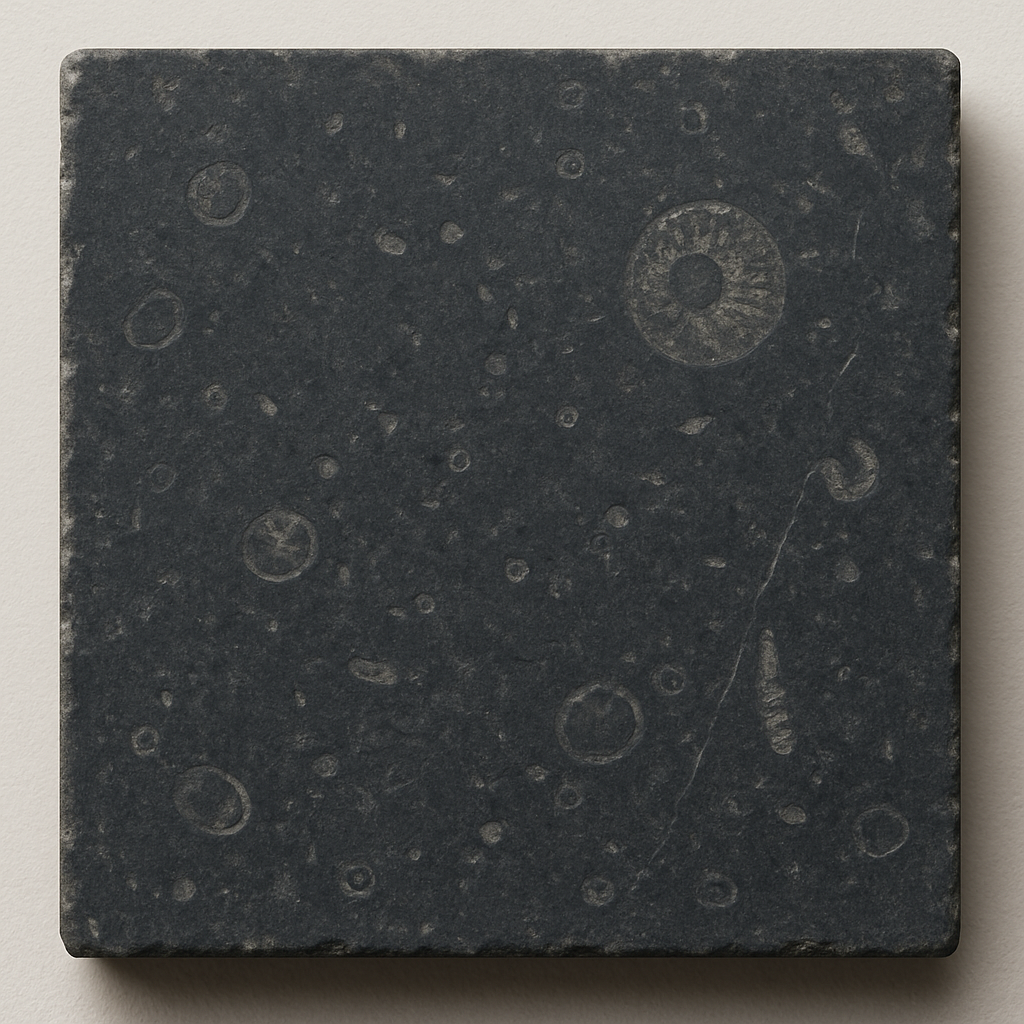
Arduin: What Exactly Is It and Where Is It Used?
Arduin is a dark grey to black natural stone that is often confused with Belgian bluestone. This article explains what arduin is and where it is used.