Cleaning Limestone Without Damage: What Works and What Does Not
Limestone is one of the most acid-sensitive stone types. One wrong product can cause real damage. Learn how to clean it safely and avoid common mistakes.
DecoStone Natural Stone
Natural stone specialist · Amsterdam
Table of contents
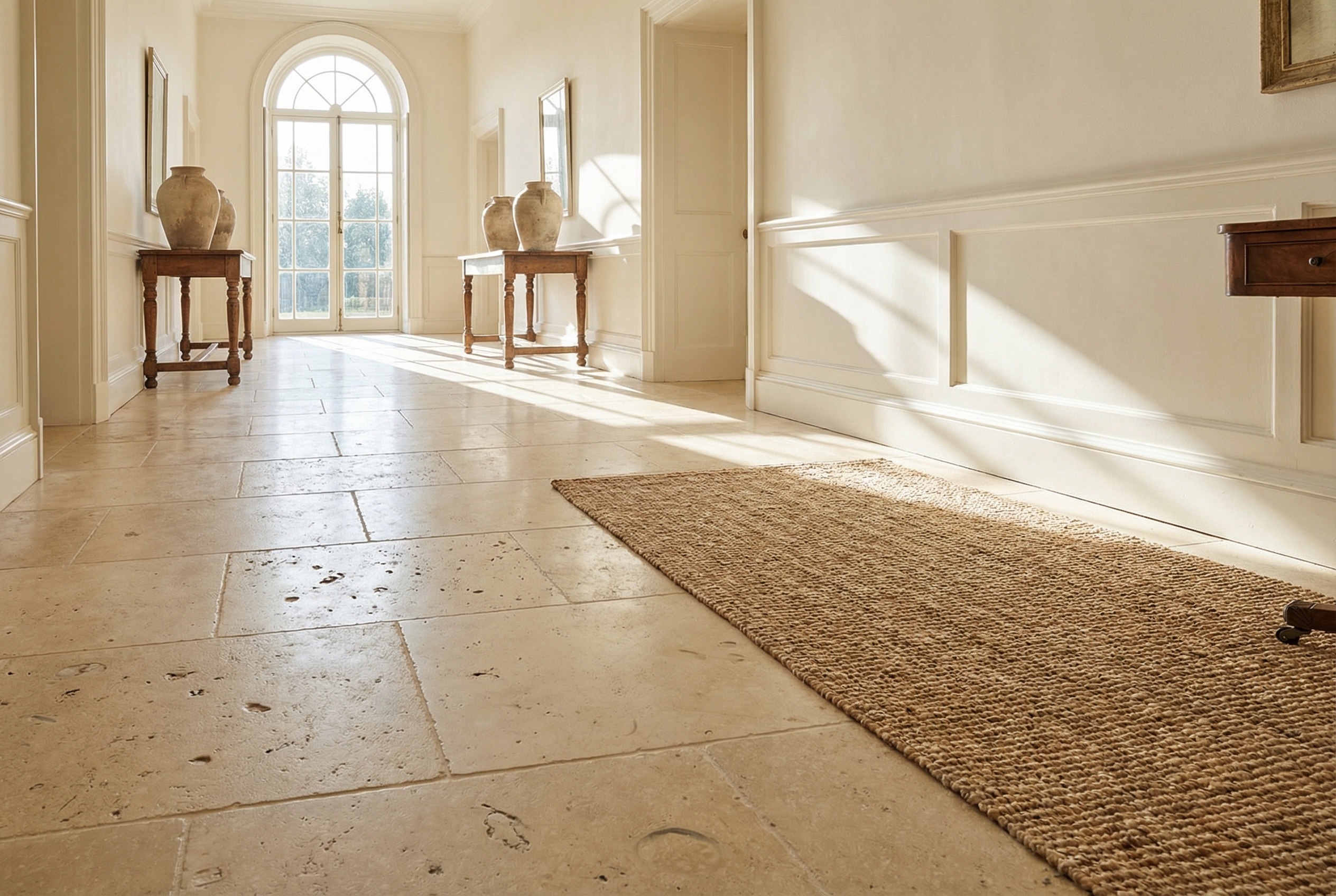
Why limestone is so vulnerable
Limestone is made up of calcite (calcium carbonate). Calcite is the mineral that reacts immediately when it comes into contact with acid. The reaction is simple: the acid dissolves the calcite. The surface becomes rough, dull and affected. This is called etching.
The problem is that many everyday products contain acid. Not only vinegar or lemon juice, but also many cleaning agents, supermarket floor cleaners and even certain soaps. Anyone who cleans limestone with an unsuitable product damages it with every clean, often without realising it, until the floor begins to look dull and worn.
Etching is not a stain. It is damage to the mineral surface. You do not remove it by cleaning better. It has to be ground away.
What is limestone and where is it used?
Limestone is a sedimentary rock formed from the remains of shells, corals and other organisms with calcareous skeletons. It is soft to medium-hard (Mohs 3), relatively porous and sensitive to mechanical and chemical damage.
In interiors, limestone is used for:
- Floor tiles in halls, living rooms and bathrooms
- Wall cladding
- Steps and landings
- Window sills and thresholds
Popular varieties include Jura limestone (yellow-beige), Burgundy limestone (warm grey) and various Belgian and French types.
Common cleaning mistakes
Vinegar and vinegar water
The most common mistake. Vinegar is often promoted as an environmentally friendly alternative to cleaning products. It works well on many materials. On limestone it is destructive. Vinegar is acetic acid, and limestone reacts to it immediately. Never use it.
Cleaning vinegar
The same product, a higher concentration, more damage.
Supermarket all-purpose cleaner
Most all-purpose cleaners have a pH of 4 to 6 — acidic to mildly acidic. For limestone, that is too low. Always check the pH before using a product on limestone. Only products with pH 7 to 9 are safe.
Tile cleaner
Tile cleaners are made for ceramic tiles and are often strongly acidic. On limestone, one use can be enough to cause etching.
Steam cleaner
Steam on limestone is risky, especially on a polished surface. The thermal shock and moisture that penetrates deeply can dull the surface, damage it or cause cracking with repeated use.
Too much water
Limestone is porous. Standing water or an overly wet mop allows moisture to penetrate deeply. This can cause white efflorescence and affect the joints.
What does work?
Daily cleaning
-
Vacuum or sweep dry before wet cleaning. Sand and dust are abrasive: they create microscopic scratches that become visible over time as dullness.
-
Wet clean with a well-wrung mop and a pH-neutral stone cleaner. Products such as Lithofin Easy Care or BioShield daily stone cleaner are safe for limestone. Use lukewarm water, never hot.
-
Wipe dry afterwards with a dry cloth or mop to remove excess moisture.
Deep cleaning
For caked-on dirt or absorbed deposits, use a mildly alkaline stone cleaner (pH 9 to 11) that is specifically suitable for calcareous stone. Allow it to work briefly, scrub with a soft brush, rinse and dry.
Never proceed without testing: apply the product first to an inconspicuous area and wait five minutes.
Removing stains from limestone
Water marks and limescale
Limescale around a tap or footprints from standing water are calcium deposits. Use a descaler specifically made for limestone: not a standard descaler, because those are acidic. Lithofin Stain Remover or a comparable product for calcite-rich stone is suitable here.
Oil stains
Oil penetrates deeply into limestone. A fresh stain should be wiped away with a dry cloth. If the stain has been absorbed, use a poultice: absorbent powder (cornflour, clay powder) mixed with acetone or white spirit. Apply it, cover with film and leave for 24 hours. Repeat if necessary.
Organic stains (wine, coffee, tea)
A poultice with hydrogen peroxide (3%) works for light organic stains. Do not use it on dark limestone: hydrogen peroxide can bleach it.
Rust-coloured stains
Iron-rich water or a rusting furniture leg can create stubborn stains. Use a water-based rust remover specifically suitable for stone. Never use hydrochloric acid or other strong acids.
Etching
Dull, rough marks caused by acid contact. This is not a stain but surface damage. Cleaning will not solve it; polishing can — but that is specialist work.
Impregnating limestone
Limestone is porous. Without impregnation, liquids absorb quickly. Impregnation is not a luxury but a necessity.
How does it work?
A quality impregnating product penetrates the stone structure and makes the surface water-repellent and stain-resistant. It does not form a layer on top; it works from within.
When?
- Immediately after installation, once the joints are dry (48 hours minimum)
- After every professional grinding or polishing treatment
- Check annually with the water absorption test: place a drop of water on the stone. If the drop remains on the surface, the protection is active; if it absorbs, re-impregnate
Which product?
Use a solvent-free impregnator suitable for limestone. BioShield is very suitable: it penetrates deeply, does not discolour the stone and is environmentally friendly. Avoid oil-based impregnators; they can cause discolouration.
How to apply it?
- Clean thoroughly and allow to dry completely (at least 24 hours)
- Apply the impregnator with a soft cloth or brush
- Allow it to penetrate for five to ten minutes
- Remove excess product before it dries; dried residue leaves a white haze
- Allow 24 hours to dry before use
When should you call in a specialist?
You can handle daily maintenance and periodic impregnation yourself. Professional help is necessary in these situations:
- Etching: dull or rough marks caused by acid contact. Only polishing helps
- Absorbed stains that remain after several poultice treatments
- Recurring white efflorescence: may indicate a moisture problem under the floor
- Overall dullness of the floor despite correct cleaning
- Loose joints or loose tiles
- Scratches or wear zones in intensively used areas
DecoStone restores limestone floors with professional equipment, from surface polishing to deep cleaning and renewed impregnation.
Do you have doubts about your limestone floor, or are there stains or damage you cannot solve yourself? We are happy to take a look with you.
Read more about limestone types and their properties
Need help?
Not sure about the right approach, or would you like to know what is possible? Send us a photo via WhatsApp and we will give you honest advice — without obligation.
Want to be sure which treatment is safe?
Send photos of the surface, room and problem. DecoStone assesses the material, damage pattern and risks before advising on a treatment or quotation.
Related articles
The Lime Soap Method for Antique Floors: What It Is and When to Use It
Lime soap is a traditional method for cleaning and protecting antique natural stone floors. It is not suitable for everything, but works well on the right floor.
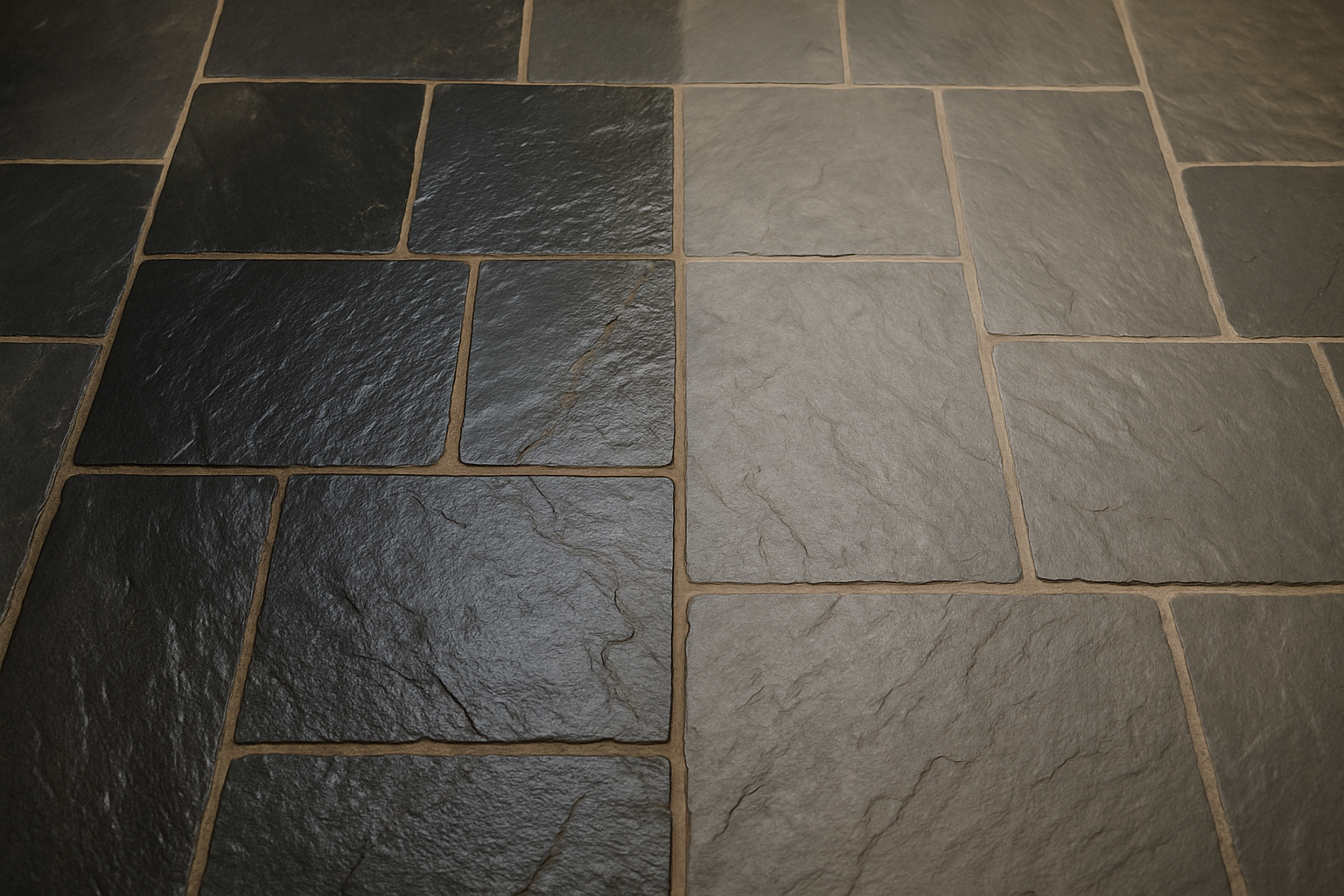
Slate Maintenance: Oil or Impregnate — Which Works Better?
Slate needs a different approach from marble or bluestone. Oiling and impregnation each give a different result. What you choose depends on the application.
Preparing Outdoor Natural Stone for Winter: What Works and What Does Not
Frost damage to slate terraces, bluestone or limestone paving can often be prevented. But not with every product, and not always completely. An honest guide.