Bookmatched Joints in Natural Stone: What You Need to Know
A bookmatched joint in natural stone creates a spectacular result, but a perfectly seamless transition is never possible. Read what is realistic and why.
DecoStone Natural Stone
Natural stone specialist · Amsterdam
Table of contents
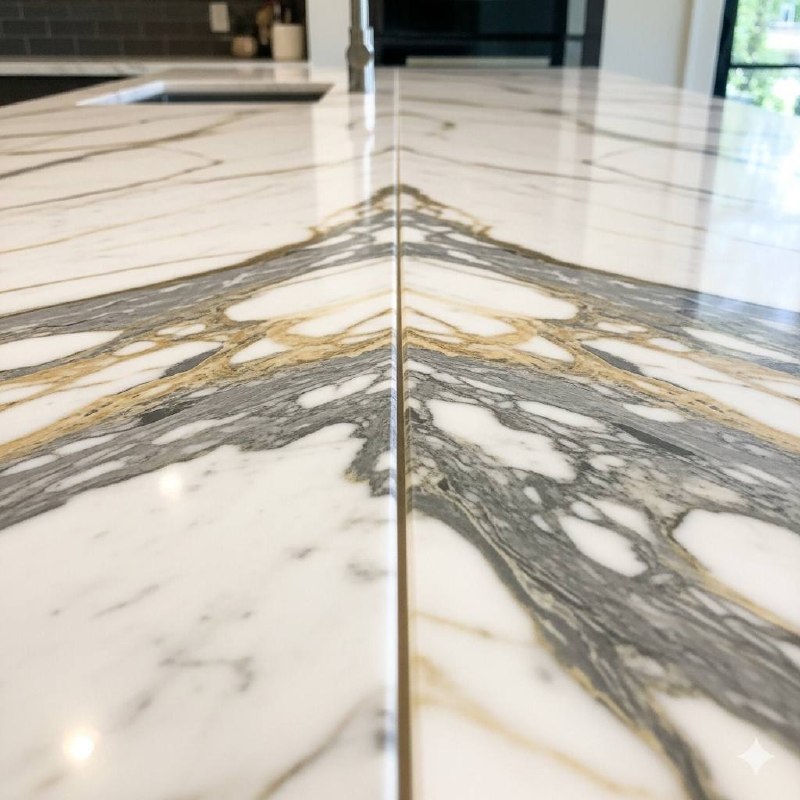
What is a bookmatched joint?
With a bookmatched joint — also known simply as a bookmatch — two consecutive slabs from the same block of natural stone are placed side by side. Like the pages of an open book, the natural pattern of the stone mirrors itself, creating a symmetrical and visually impressive image.
This is one of the most sought-after and exclusive ways to process natural stone. You often see it in:
- Marble kitchen worktops with strong veining
- Tiled walls in bathrooms and showers
- Representative entrances and reception areas
- Floors in villas and office buildings
The bookmatch technique brings out the maximum potential of the stone's unique pattern. Materials such as Calacatta Oro, Arabescato, Fantastico and Bianco Carrara Venato are especially well suited to it.
Why is a perfect match impossible?
This is the question we hear most often from customers having a bookmatched worktop or wall installed. The honest answer: a 100% seamless transition does not exist with natural stone. This is due to four unavoidable factors.
1. The saw cut
When slabs are cut from the block, material is always lost — the so-called saw cut, usually 3 to 5 millimetres wide. As a result, the pattern at the seam shifts very slightly in relation to the mirror image. This is an inherent consequence of the production process and cannot be prevented.
2. Edge finishing
After cutting, the slab edges are processed further: polished, honed or tumbled. This process removes another fraction of material from the edge, so the pattern at the cut line can never align exactly.
3. Positioning on site
The slabs have to fit within the dimensions of your kitchen, bathroom or wall. Sometimes a slab cannot be shifted any further to improve the pattern match simply because it would fall outside the required dimensions. The stonemason always seeks the optimum position, but there are physical limits.
4. Natural variation in the material
Veins and colour shades in natural stone never run in a perfectly straight line. Even with a mathematically perfect mirror image, veins at the seam can show a slight jump. That is not a fault — that is nature.
What can you expect?
A bookmatched joint is an effort to achieve the best possible match. Skilled stonemasons and installers work carefully on this, but the outcome is always an approximation.
What is normal and falls within quality standards:
- A small pattern shift at the seam (1–5 mm)
- Veins that do not continue perfectly across the seam
- Slight colour differences at the seam caused by the grinding process
Also read about colour differences in natural stone: normal variation or a defect?
What is not normal:
- Large irregularities in the seam itself (joint width)
- Height differences between the two slabs
- Visible damage to the edges
Tip: With materials that have a strong, expressive vein pattern, such as Calacatta or Arabescato, a bookmatched joint is at its most spectacular — but it is also most visible when the match is not perfect. The more unique the material, the more acceptable a small pattern jump usually is.
Our approach to bookmatching
We do not settle for an average result. In a bookmatch project, we work as follows:
- Slab selection: We keep the slabs in sequence and assess which pair gives the most beautiful mirror effect.
- Trial layout: Before final placement, we lay out the slabs and assess the match on site.
- Discussion with the customer: We discuss where the seam is best placed and which compromise looks most attractive.
- Skilled installation: The seam is kept as narrow as possible; jointing material is colour-matched to the stone.
- Final inspection: After installation, we assess the result together with you.
Frequently asked questions
Can the seam be made invisible?
With the right joint compound in a matching colour, the seam can be greatly reduced, but never made completely invisible. A sealant joint or epoxy joint in the dominant tone of the stone works best.
Which material gives the most beautiful bookmatch?
Materials with a clear, diagonal vein pattern give the most impressive results: Calacatta Oro, Arabescato Corchia, Statuario and Nero Marquina. Plain stone types such as Nero Assoluto or Belgian Black are less suitable for bookmatching.
How much does a bookmatched worktop cost?
This depends on the material, dimensions and processing. Contact us for a no-obligation custom quotation.
Do you have a specific question about your project? Call us or send a WhatsApp message. We are happy to advise you.
Need help?
Not sure about the right approach, or would you like to know what is possible? Send us a photo via WhatsApp and we will give you honest advice — without obligation.
Want to be sure which treatment is safe?
Send photos of the surface, room and problem. DecoStone assesses the material, damage pattern and risks before advising on a treatment or quotation.
Related articles
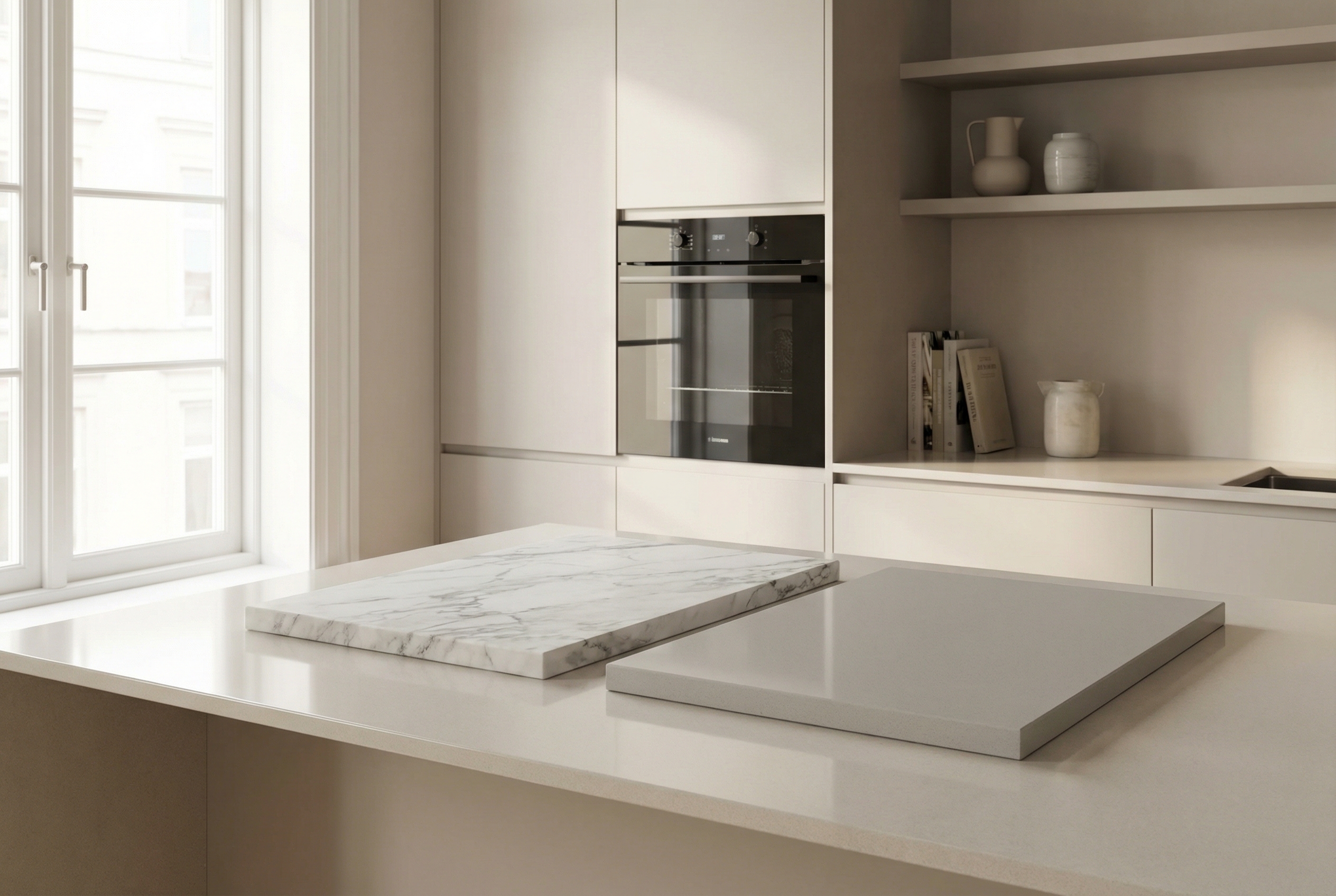
Composite or Natural Stone: An Honest Comparison for the Kitchen
Quartz composite or a granite or marble worktop? Both materials have real advantages and disadvantages. An honest overview without bias.
Cristallo Quartzite: Stone Profile, Maintenance and Points of Attention
Cristallo is a luxury quartzite with a crystalline, often translucent appearance. Read how to maintain, protect and assess this material safely.
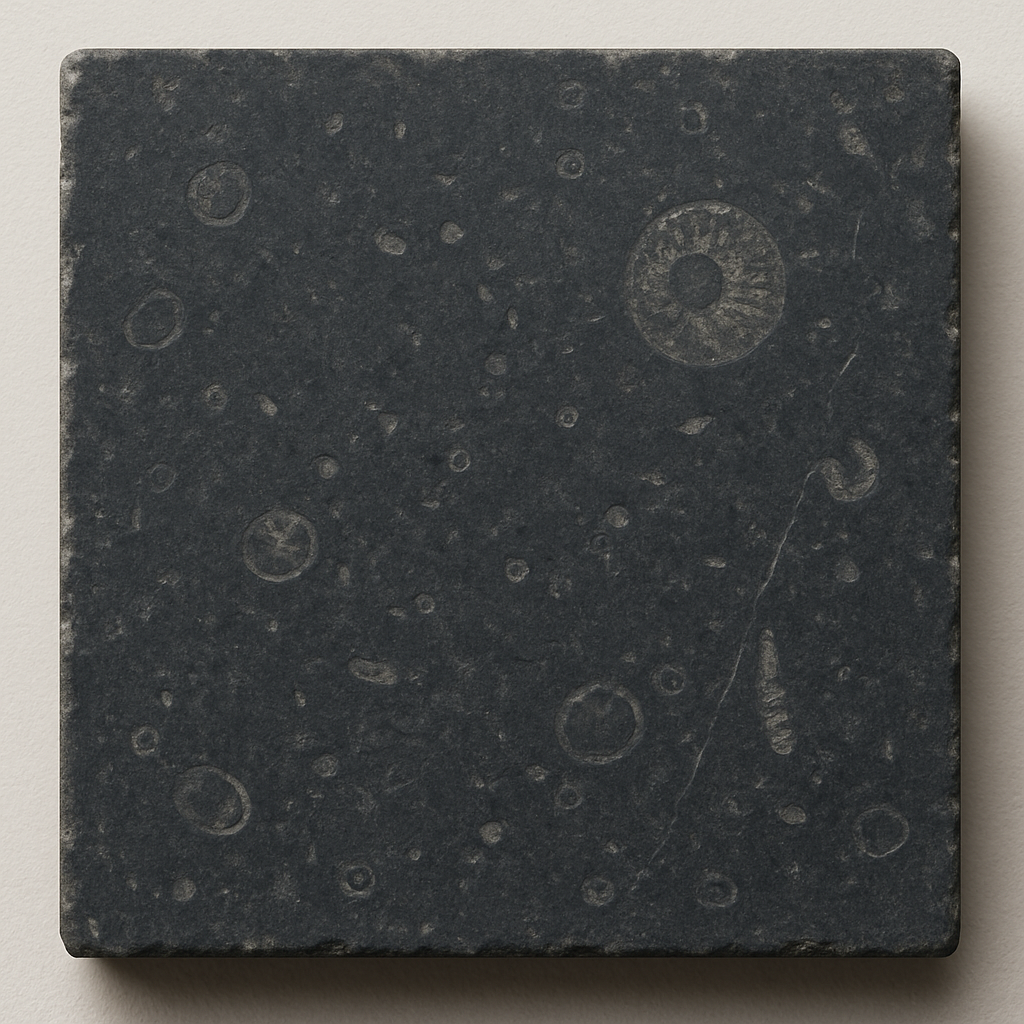
Arduin: What Exactly Is It and Where Is It Used?
Arduin is a dark grey to black natural stone that is often confused with Belgian bluestone. This article explains what arduin is and where it is used.