Maintaining a Travertine Floor: Cleaning, Filling and Protecting
Travertine is beautiful but requires specific care. Everything about daily cleaning, filling pores, impregnation and what acid does to this stone.
DecoStone Natural Stone
Natural stone specialist · Amsterdam
Table of contents
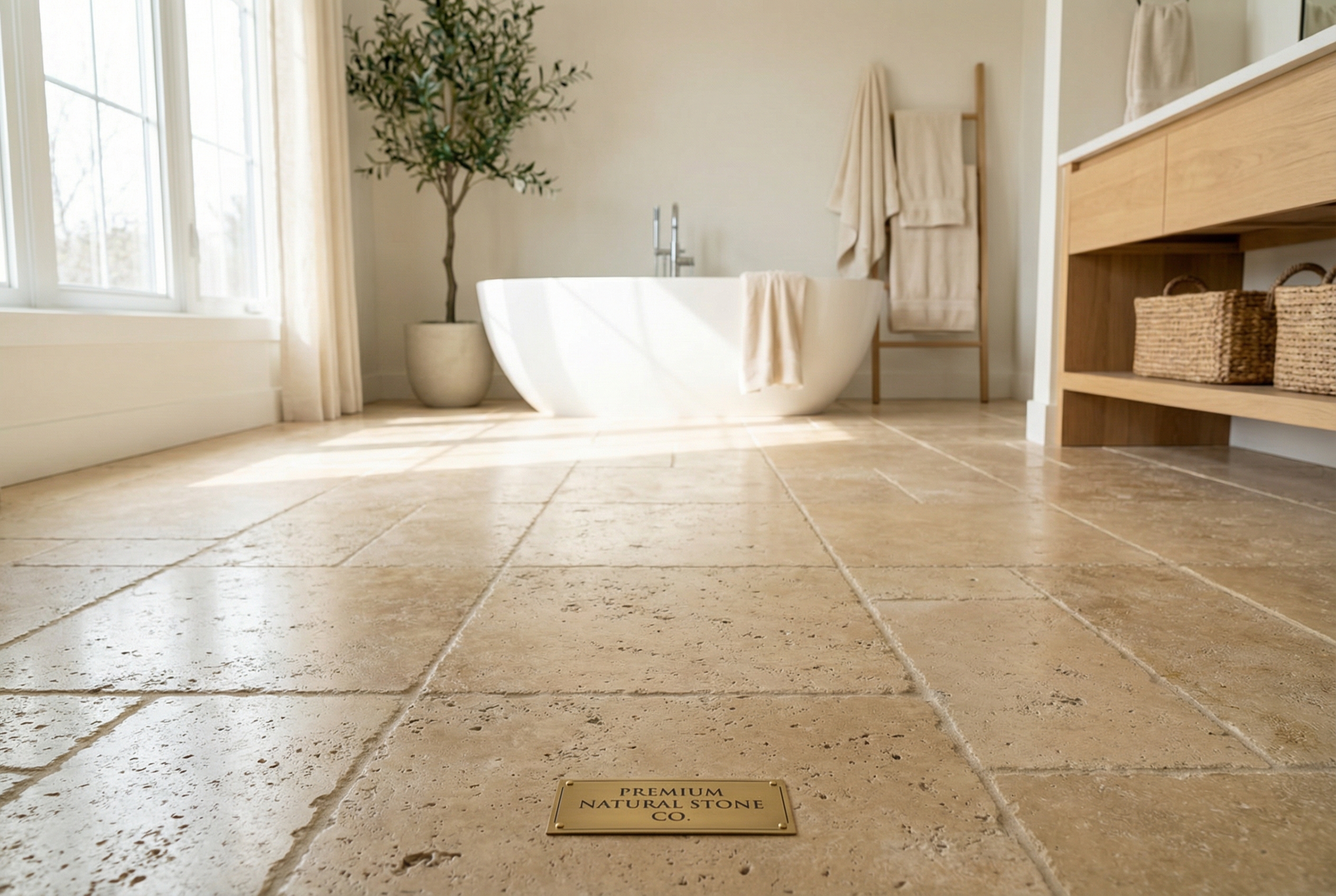
Travertine: warm, open and vulnerable
Travertine has a warmth that few other stones can match. The soft tone, the open pores, the variation in pattern — it is easy to understand why it is so popular for floors, stairs and bathrooms.
But travertine is also limestone. And limestone has a specific vulnerability that not everyone knows about. Anyone who starts cleaning without knowledge, or uses the wrong products, can cause damage that is costly to repair afterwards.
This guide explains how travertine behaves, what the greatest risks are and how to keep the floor in good condition.
What makes travertine different from other stone?
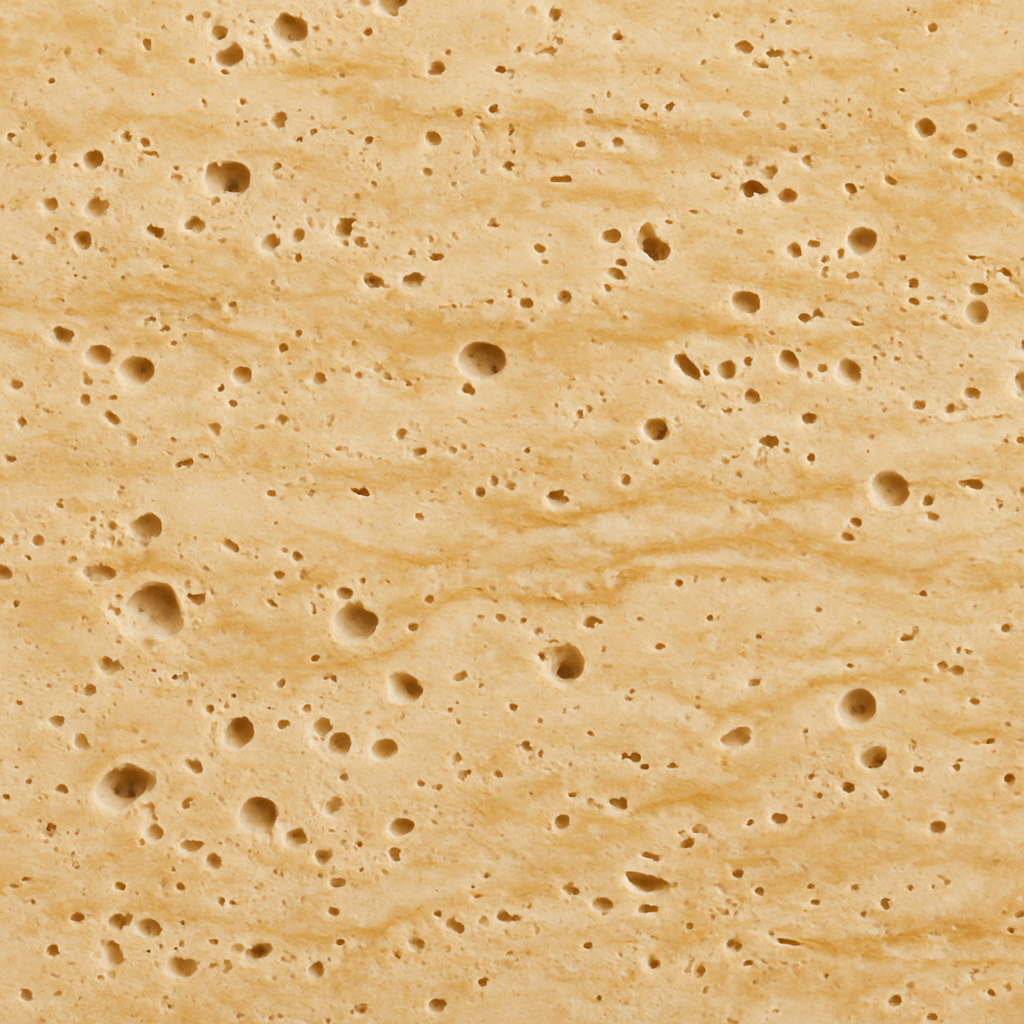
Travertine is a sedimentary rock, formed by lime-rich springs or hot springs. Its characteristic pores are cavities created during formation by escaping gases.
This has two practical consequences:
1. The pores are open or filled. Travertine is supplied in two variants: filled and unfilled (or open-pore). Filled travertine has the cavities closed with cement or resin. Unfilled travertine leaves the cavities open — deliberately, for a rougher, more artisanal character.
2. It is acid-sensitive. As a limestone, travertine reacts immediately to acid. Vinegar, lemon, soft drinks, wine, cleaning vinegar — they attack the surface. The damage is called etching: a matt, rough mark that looks as if it has been burned into the surface. This is not a stain but actual damage to the mineral surface.
Everything about etching on marble — travertine reacts to acid in the same way
Filled or unfilled: what you need to know for maintenance
With filled travertine, the pores are closed. Dirt cannot penetrate deeply. Cleaning is easier and impregnation works better.
Also read about impregnating your stone
With unfilled travertine, the pores are open. Dirt, grease and water penetrate deeply into the cavities. This requires a different approach.
Filling open pores later
If you have an unfilled travertine floor and over time you become bothered by pores collecting dirt, there are two routes:
- Professional filling: a specialist fills the cavities with stone adhesive in a matching tone, followed by grinding and finishing.
- Impregnation as an interim solution: a good impregnator limits the absorption of liquids even in unfilled travertine, but does not eliminate the problem completely.
For floors in busy areas (kitchen, hall, bathroom), filled travertine or professional filling is strongly recommended.
Daily and weekly cleaning
Daily
- Vacuum or sweep the floor dry before wet cleaning. Grains of sand and dust are abrasive and create small scratches that become visible over time.
- Use a pH-neutral stone cleaner diluted in lukewarm water. Products such as Lithofin Easy Care, or equivalent stone cleaners, are suitable.
- Use a well-wrung mop. Too much water causes moisture to accumulate in pores and joints.
What you must never use
This may sound like a standard warning. It is not. Travertine does not forgive this:
- Vinegar: even diluted — etching
- Cleaning vinegar: same result
- Lemon juice and lemon cleaners: acidic
- All-purpose cleaner or bathroom cleaner: often acidic or strongly alkaline
- Bleach (chlorine): discolouration and surface damage
- Soda: too alkaline for frequent use
- Steam cleaner on unfilled travertine: steam penetrates pores and can cause cracking with temperature changes
Etching: what now?
If a matt mark has been caused by contact with acid, cleaning will not solve it. The surface has been attacked. Mild etching can be repaired by polishing, but this requires professional equipment and knowledge of the correct abrasive. Sanding it yourself almost always creates a bigger problem.
Impregnation: how, when and with what
Impregnation seals the stone’s pores from within. A good impregnator does not form a layer on top but penetrates into the stone structure and makes the surface water-repellent and stain-resistant.
How do you know if impregnation is needed?
Place a drop of water on the floor and wait two minutes.
- Does the water remain as a bead? The impregnation is active.
- Does the water soak in? The protection has worn off or is no longer working.
When to impregnate?
- Immediately after installation, once the joints are dry (at least 48 hours)
- After every professional sanding, honing or polishing treatment
- When the water absorption test shows that the protection has gone
- Generally once every one to two years, depending on use
Which product?
Use a solvent-free impregnator suitable for calcareous stone. BioShield is a good choice: environmentally friendly, deeply penetrating and without risk of discolouration. Lithofin MN Stain Stop is a good alternative.
Never use an oil-based impregnator on travertine. Oil can penetrate the pores and leave dark marks that are very difficult to remove.
How to apply it?
- Clean the floor thoroughly and allow it to dry completely.
- Apply the impregnator with a soft brush or cloth, working in small sections.
- Wipe away excess product before it dries; white residue can appear if you wait too long.
- Allow 24 hours to dry before normal use.
Pores, joints and limescale
Joints
Travertine is often grouted with a cement-based grout. That grout is softer than the stone and wears faster. Discolouration or a loose joint is not a sign that the stone itself has failed, but it does need to be addressed. Loose grout allows water to get under the slabs.
Limescale
In areas with hard water, limescale can form on the floor, visible as white deposits around the tap or shower. Use only a limescale remover suitable for limestone: regular descalers are acidic and damage travertine immediately.
When should you call in a specialist?
Daily cleaning and annual impregnation are things you can do yourself. But there are situations where professional intervention is necessary:
- Etching: matt or rough marks caused by acid contact
- Deep scratches or wear in busy areas
- Open pores that you want to have filled
- Recurring white deposits despite correct cleaning
- Crumbling joints over large areas
- Loose slabs or moisture problems under the floor
DecoStone treats travertine floors from inspection to full restoration — including pore filling, polishing and renewed impregnation.
Would you like a no-obligation assessment of your travertine floor? We will be happy to visit.
Need help?
Are you unsure about the right approach, or would you like to know what is possible? Send a photo via WhatsApp and we will give you honest advice — without obligation.
Want to be sure which treatment is safe?
Send photos of the surface, room and problem. DecoStone assesses the material, damage pattern and risks before advising on a treatment or quotation.
Related articles
Travertine: Characteristics, Advantages and Disadvantages
Travertine is one of the best-known decorative natural stones in the world. Warm in colour and full of character — but also demanding in maintenance. Read what you need to know.
The Lime Soap Method for Antique Floors: What It Is and When to Use It
Lime soap is a traditional method for cleaning and protecting antique natural stone floors. It is not suitable for everything, but works well on the right floor.
Slate Maintenance: Oil or Impregnate — Which Works Better?
Slate needs a different approach from marble or bluestone. Oiling and impregnation each give a different result. What you choose depends on the application.