Maintaining a Granite Worktop: Why It Is Easier Than You Think
Granite is one of the most robust materials for the kitchen. Still, a few rules matter. Everything about daily cleaning, impregnation and stain removal.
DecoStone Natural Stone
Natural stone specialist · Amsterdam
Table of contents
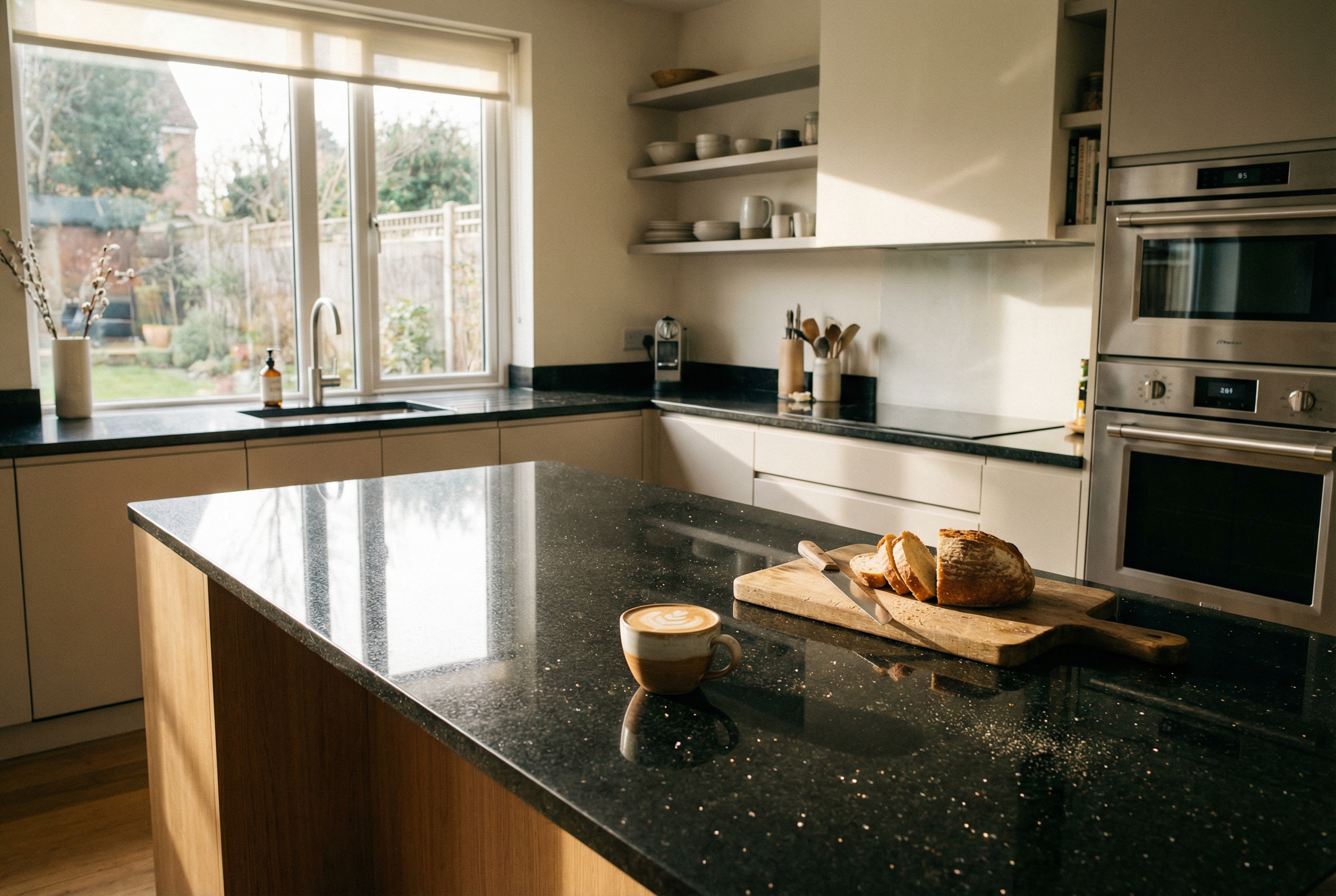
Granite: the least demanding kitchen stone
Of all natural stone types used in kitchens, granite is by far the least sensitive. It is an igneous rock made up of quartz, feldspar and mica. Quartz is one of the hardest minerals on earth. That makes granite resistant to scratches, heat and moisture at a level that marble and limestone cannot match.
But robust does not mean indestructible. A few habits help a granite worktop last for decades without problems. Without those habits, sooner or later you may encounter stains, dullness or edge damage that could have been prevented.
Why granite is so easy
Acid resistance
Granite contains very little calcite. That makes it virtually immune to contact with acids. Lemon juice, vinegar, wine, coffee — on marble these are direct causes of etch damage. On granite, the surface remains intact. You can cook without worrying about splashes.
Scratch resistance
The quartz crystals in granite are harder than almost any kitchen utensil. Knives do not cut a mark into granite. Even so, every stonemason recommends using a chopping board — not to protect the granite, but to protect your knives.
Heat resistance
Putting a hot pan directly on granite is technically not a problem for the stone. The risk lies in thermal shock from extreme temperature differences: from the freezer straight to the hob, for example. When in doubt, use a trivet.
Daily cleaning
Granite is easy to clean with a damp cloth and a pH-neutral cleaner. Nothing more is needed.
The right routine
- Wipe away crumbs and liquids immediately after use. Not because granite stains quickly, but because dried-on residues become harder and can scratch the stone as they dry.
- Use a soft microfibre cloth: no abrasive sponges or steel wool.
- For normal cleaning, water with a drop of pH-neutral washing-up liquid or a stone cleaner such as Lithofin Easy Care is sufficient.
- Dry the stone after cleaning. Standing water can enter the pores and leave limescale edges or marks in hard-water areas.
What to avoid
- Abrasive products: scratches are rare but not impossible with abrasive scrubbing
- Bleach: can affect the impregnation and leave discolouration patterns on dark granite
- Oil-based care products: greasy residue can soak into the stone and is difficult to remove
Impregnating granite
Granite is denser than marble or limestone, but it still has pores. Light-coloured granites absorb more than dark ones. Without impregnation, liquids can soak in and cause permanent stains.
Does your worktop need impregnation?
Carry out the water absorption test: place drops of water on the worktop and wait.
- If the water remains on the surface as a bead: the impregnation is active.
- If the water soaks in within two to five minutes: re-impregnate.
- If it soaks in immediately: the stone is unprotected.
For most granites, impregnation once every one to two years is sufficient. Dark granite with a fine structure (such as Absolute Black) sometimes needs hardly any impregnation. Light granite (such as Kashmir White) needs more attention.
How to impregnate
- Clean the worktop thoroughly and let it dry completely.
- Apply the impregnator with a soft cloth. BioShield is a reliable product suitable for granite and safe for contact with food after drying.
- Let the impregnator penetrate for five to ten minutes.
- Wipe away excess impregnator immediately; dried residues leave a white haze that is difficult to remove.
- Wait 24 hours before use.
Removing stains
Granite stains less easily than other stone, but it is not impossible.
Oil stains
Olive oil, frying fat, butter — these can soak into the stone and create a dark stain. Fresh stains can be wiped away with a dry cloth. For absorbed stains, use a poultice: a paste made from absorbent powder (clay powder or cornflour) with acetone or white spirit. Apply it, cover with film and leave for 24 hours. The paste draws the oil out of the stone.
More about removing stains from marble
Coffee and tea deposits
Light granite can show marks after prolonged contact with coffee or tea. A stone cleaner with a mild degreasing action usually resolves this. For stubborn marks: use a poultice with hydrogen peroxide (3%).
Limescale from hard water
White deposits around the tap or sink are limescale. Use a descaler specifically made for natural stone: regular descalers contain acid and are not intended for granite, even though granite is less sensitive than limestone. Caution remains the standard.
Resin residues, sealant or paint
Let it harden and then remove it carefully with a plastic scraper. Never use a metal scraper or utility knife.
When should you call in a specialist?
Granite is forgiving, but there are situations where doing it yourself causes more damage than it repairs:
- Deep scratches or pits: rare, but they can occur through abrasive work or a dropped object. Repair requires sanding and polishing.
- Absorbed stains that do not respond to a poultice: sometimes the surface has been affected or the stain is too deep.
- Edge damage or a broken piece: granite can split under a heavy impact. Bonding and refinishing is specialist work.
- General dullness: if the worktop looks dull and worn despite being clean, the surface has become matt through wear or incorrect cleaning. Polishing restores the gloss.
- Discolouration over large areas: this may indicate that an unsuitable cleaner has been used.
DecoStone restores granite worktops on site, without requiring you to remove the kitchen counter.
Do you have doubts about the condition of your granite worktop? We will be happy to assess it.
Read also about etch damage on marble — granite does not have that problem, but limestone does
Need help?
Are you unsure about the right approach, or would you like to know what is possible? Send a photo via WhatsApp and we will give you honest, no-obligation advice.
Want to be sure which treatment is safe?
Send photos of the surface, room and problem. DecoStone assesses the material, damage pattern and risks before advising on a treatment or quotation.
Related articles
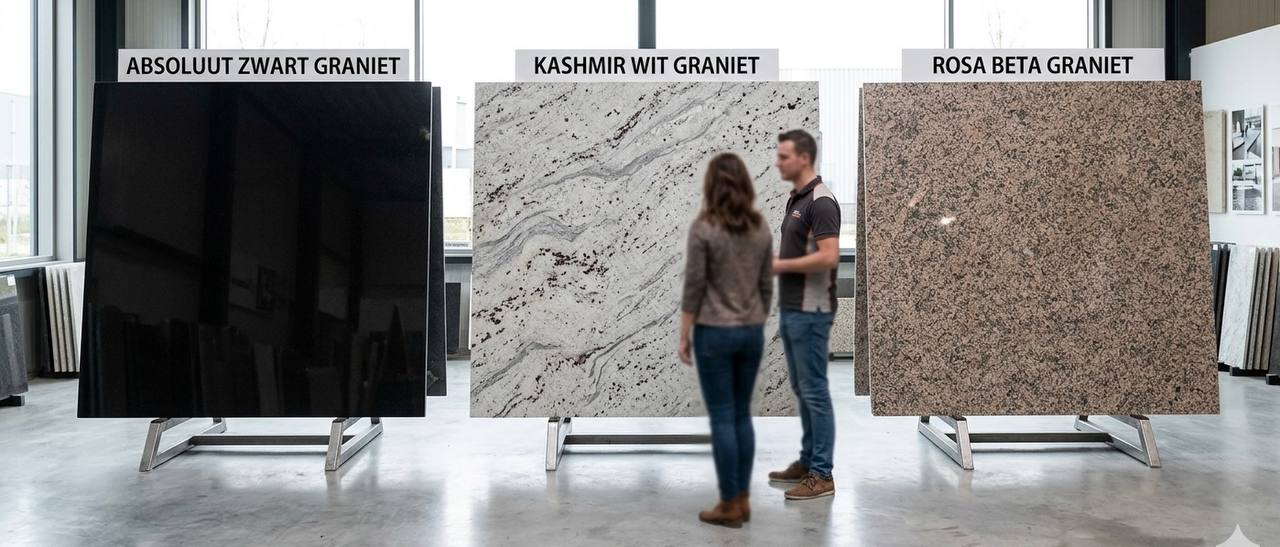
Granite: The Hardest Stone Explained
Granite is one of the best-known and most widely used natural stones in the world. This article explains what it is, where it comes from and how to maintain it.
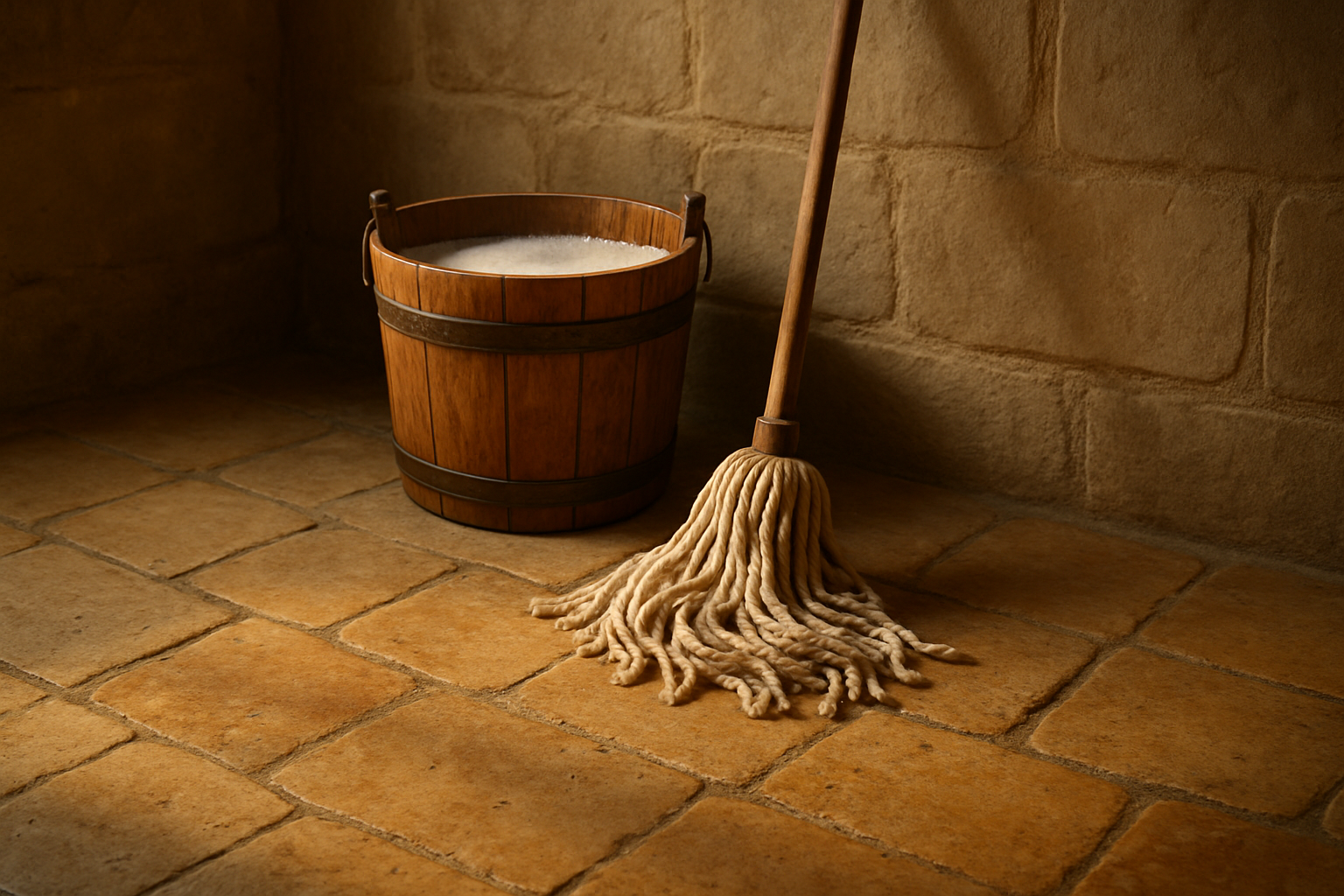
The Lime Soap Method for Antique Floors: What It Is and When to Use It
Lime soap is a traditional method for cleaning and protecting antique natural stone floors. It is not suitable for everything, but works well on the right floor.
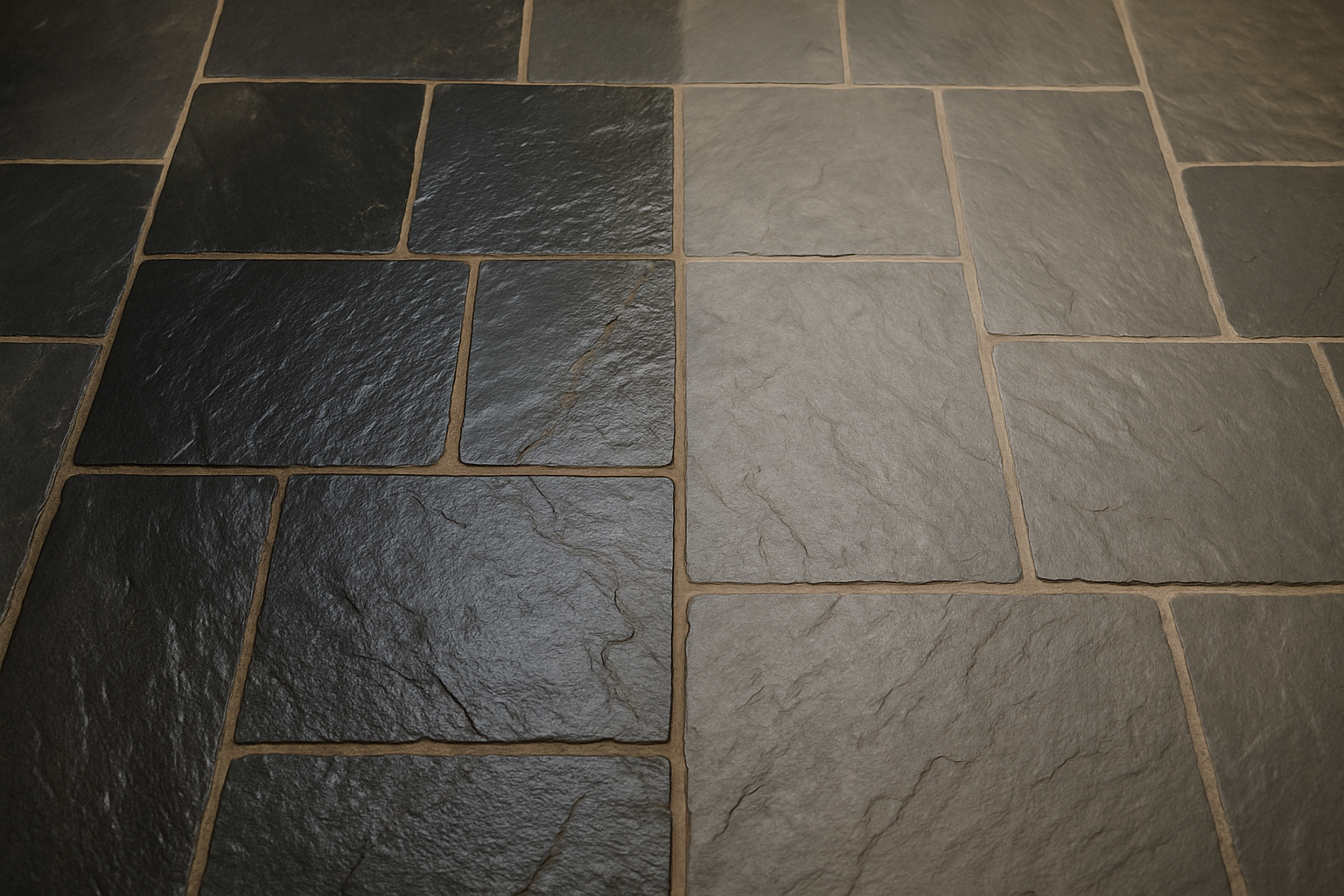
Slate Maintenance: Oil or Impregnate — Which Works Better?
Slate needs a different approach from marble or bluestone. Oiling and impregnation each give a different result. What you choose depends on the application.